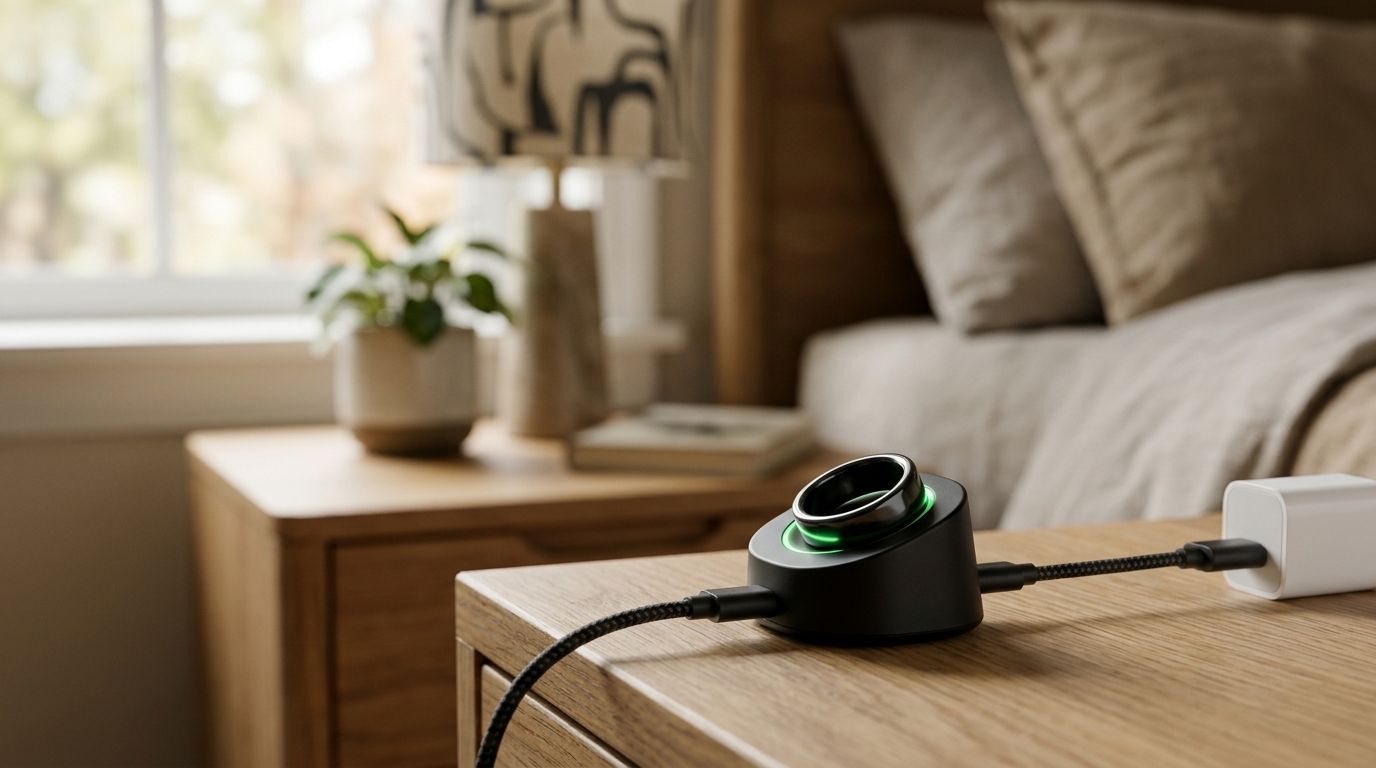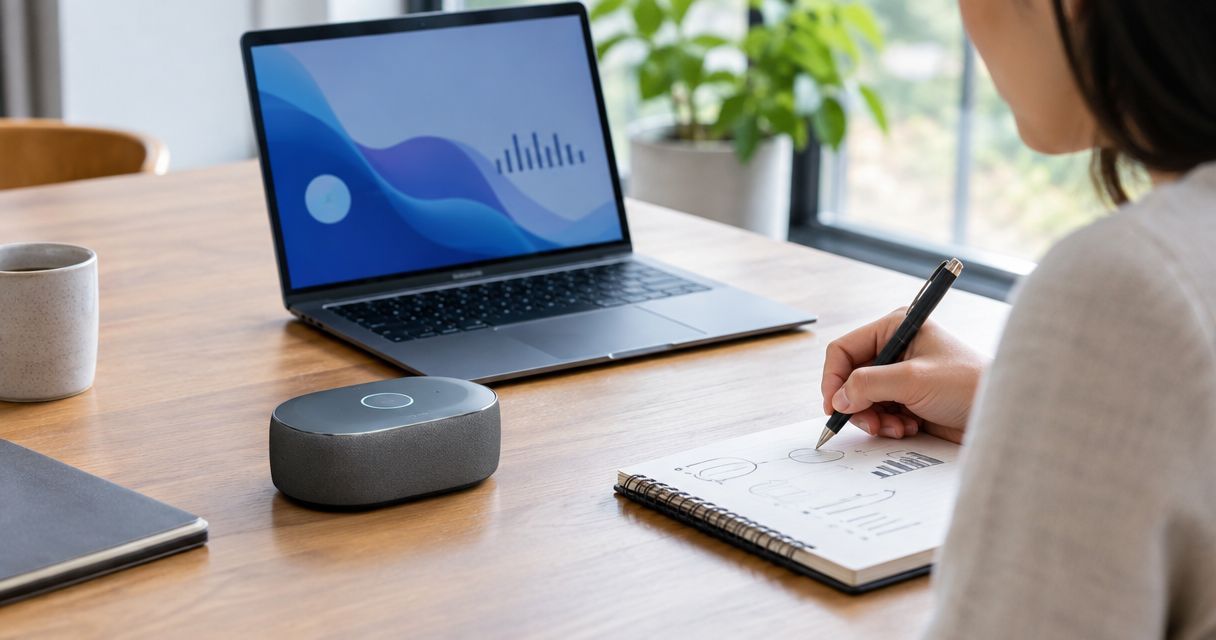
Best overall: PLAUD NOTE for recording meetings at a desk. Best for screenless idea capture: Present Ring AI R1, which is pre-launch. Best for a wearable alternative to a ring: PLAUD NotePin. The right AI note taker device depends on where your thoughts happen and whether you want to carry, wear, or set down a recorder.
- PLAUD NOTE is the best AI note taker device here for desk-based meetings.
- Present Ring AI R1 is the screenless, finger-worn choice for spoken ideas, but it is pre-launch.
- PLAUD NotePin suits people who want wearable voice capture without wearing a ring.
- Choose the form factor first; then check how each device handles transcription and your recordings.
Why this matters
A recorder that works well on a meeting table is not automatically the right device for a thought you have while walking. In 2026, the useful distinction is physical: where does the device sit when you need it? That choice shapes whether recording feels like a deliberate task or something you can start without reaching for a phone.
Transcription matters, but it is only part of the decision. You also need to know how to start and stop a recording, where the resulting notes appear, and how you can review or delete them. Do not treat those details as interchangeable across devices.
What makes the best AI note taker device?
Use these criteria before comparing features. A device that fits your routine is more useful than one with a longer feature list you never touch.
- Capture position: Decide whether the recorder belongs on a table, on your clothing, or on your finger. Match that position to the moments you want to remember.
- Recording control: Check how you start, stop, and confirm a recording. A quiet form factor should not leave you unsure whether a conversation was captured.
- Transcript access: Find out where spoken words become readable notes and what you need to do to retrieve them.
- Review workflow: Look for a way to return to the original recording when a transcript loses context or identifies a speaker incorrectly.
- Consent and privacy: Know when the microphone is active. Tell other people when you are recording them, and follow the rules that apply where you are.
The best AI note taker devices at a glance
| Device | Best for | Standout feature | Key limitation |
|---|---|---|---|
| Present Ring AI R1 | Screenless, finger-worn idea capture | A microphone built into a smart ring | Pre-launch; not a device to choose for immediate use |
| PLAUD NOTE | Desk-based meetings | A dedicated voice recorder with AI note-taking | You must carry and place it when you want to record |
| PLAUD NotePin | Wearable capture without a ring | A wearable form factor for voice notes | Its form factor will not suit someone who specifically wants a ring |
The table separates three different habits. R1 stays on your finger, PLAUD NOTE is a dedicated recorder you bring to a conversation, and PLAUD NotePin offers another way to wear a recorder. If you need a device you can use now, do not make a pre-launch ring your only note-taking plan.
1. Present Ring AI R1: best for screenless idea capture
R1 is a pre-launch smart ring with a built-in microphone. Its stated purpose is to transcribe spoken ideas and conversations for note-taking. There is no screen to consult on the ring, which makes its proposed role clear: capture a thought without turning that moment into a phone session.
Present Ring AI R1 is best for people who want a screenless AI note taker device for spoken ideas, provided they can wait for its launch. That qualification is part of the verdict. A pre-launch device cannot replace a recording method you need for your next meeting.
The ring format makes sense if your notes begin as short observations during the day. You speak, then return to the words later. It is a less natural first choice if your main task is recording a scheduled group discussion: you would need to assess how the ring captures voices in that setting before relying on it.
Present Ring AI R1 pros:
- Finger-worn design keeps the capture device separate from a phone screen.
- Built-in microphone directly matches the task of recording spoken thoughts.
- Transcription is part of the stated note-taking purpose.
Present Ring AI R1 cons:
- R1 is pre-launch, so it is not the pick for a recording need you have today.
- The supplied details do not establish how recordings are controlled, reviewed, or deleted.
- The supplied details do not establish how it performs when several people speak in a room.
Best for: Someone planning a quieter way to capture personal ideas, rather than replacing an existing meeting recorder immediately.
Verdict: Wait. Keep using a recording method you can depend on today. Reassess R1 when its recording controls and note-review workflow are clear.
2. PLAUD NOTE: best for meetings at a desk
PLAUD NOTE is a dedicated AI voice recorder. Put the recorder where you intend to capture a conversation, then return to its recording and notes afterward. Its appeal is not that it disappears into what you wear; it is that recording becomes a distinct part of a planned meeting.
That distinction helps when your calendar, rather than a passing thought, creates the need for notes. You can prepare to record before the discussion begins. You can also make the recording visible to other participants instead of leaving them to guess whether a wearable microphone is active.
PLAUD NOTE pros:
- Dedicated recorder makes the device's purpose clear during a planned session.
- Desk-based use fits a conversation held in one place.
- AI note-taking provides a route from a voice recording to text you can review.
PLAUD NOTE cons:
- It is another object to bring to a meeting and place before speaking begins.
- A recorder set aside for meetings is less convenient for an unexpected idea away from your desk.
- It does not meet the brief if you specifically want a finger-worn, screenless device.
Best for: People whose note-taking starts with scheduled, seated conversations.
Verdict: Buy for desk-based meetings. Before depending on it, check its current recording, transcript, and data controls against the conversations you intend to capture.
3. PLAUD NotePin: best for wearable capture without a ring
PLAUD NotePin is a wearable AI voice recorder. It occupies the middle ground between setting a recorder down and wearing one on your finger. Consider it when the idea of wearable capture appeals to you but a smart ring does not.
A wearable device changes the questions you should ask. Can you tell when it is recording? Will you remember to tell people nearby? Can you get from a captured moment to a note you can actually find? Those checks matter more than whether the device seems unobtrusive.
PLAUD NotePin pros:
- Wearable format suits recording needs that arise away from a desk.
- It offers an alternative to both a handheld recorder and a ring.
- Its voice-recording purpose is more focused than opening a general phone app.
PLAUD NotePin cons:
- Wearing a recorder is a poor fit if you prefer to leave recording devices off your body.
- It does not deliver the finger-worn form factor that defines R1.
- You still need to check its recording controls and note-review process before making it part of your routine.
Best for: Someone who wants a wearable AI note taker device but does not want a ring.
Verdict: Buy if the wearable format solves a real problem for you. If most of your notes come from meetings at a table, choose a desk-based recorder instead.
Match the device to the moment
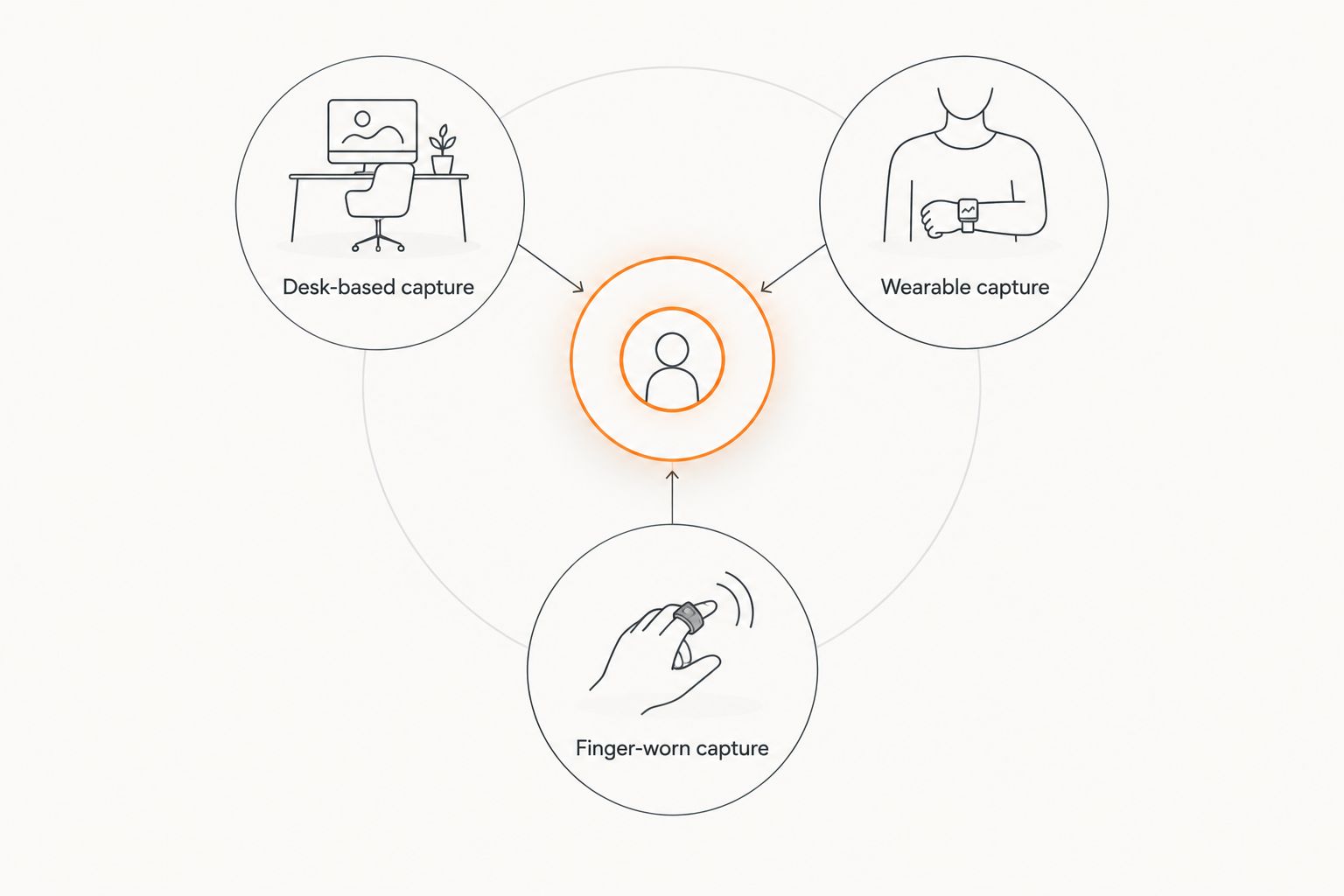
The strongest purchase decision begins with a recent moment you wanted to remember. Picture where you were, who else was there, and what you needed afterward. Then choose the recording position that fits that moment.
- Desk-based capture: Choose this for planned conversations that happen in one place. PLAUD NOTE is the match in this list.
- Wearable capture: Choose this when thoughts arise away from your desk and you do not want a ring. PLAUD NotePin is the match.
- Finger-worn capture: Choose this when avoiding a screen is central to the habit you want to build. Present Ring AI R1 fits that goal, subject to its pre-launch status.
This is also a useful way to reject a device. If you never want to place a recorder on a table, do not buy one because its meeting features sound appealing. If you do not want to wear a microphone, a wearable will not become comfortable merely because its transcripts are useful.
Check the recording workflow before you commit
An AI-generated note is not a substitute for the original conversation. Transcription can omit a pause, confuse a name, or turn an uncertain remark into a confident-looking sentence. Keep access to the recording in mind whenever the exact wording matters.
Start with a simple test of the workflow, not a feature checklist. Determine how you would capture an idea, locate its transcript, correct a mistake, and remove material you do not want to keep. If you cannot describe those actions clearly, you do not yet know whether the device will make note-taking easier.
For conversations, add a consent step before recording. Make the microphone's use clear to the other people involved and check the rules that apply to your location and situation. A smaller recorder does not make that responsibility smaller.
This matters especially for a device you wear. Other people can see a recorder on a table; they may not recognize a ring or another wearable as a microphone. In 2026, treat clarity about recording as part of a good note-taking habit, not as a setting to investigate after you buy.
How we ranked these devices
The ranking follows the capture position, recording purpose, transcript workflow, and limitations set out above. It is a decision tree, not a claim that one form factor outperforms the others in transcription accuracy. No comparable accuracy results are provided for these devices.
PLAUD NOTE takes the overall pick because a dedicated recorder has the clearest role for planned, desk-based conversations. R1 gets the screenless-idea slot because its stated design combines a ring, microphone, and transcription; its pre-launch status keeps it from being the default choice for immediate use. PLAUD NotePin gets the wearable-alternative slot because it serves someone who wants to wear a recorder without choosing a ring.
Your best choice can differ from the overall pick. If you rarely attend meetings but regularly lose spoken ideas, desk-based recording solves the wrong problem. Make the use case do the ranking for you.
Which AI note taker device should you choose?
Choose PLAUD NOTE as the default for planned meetings. It has a clear job: record a conversation you know is coming, then give you notes to review. That is the most direct match for a reader looking for a dedicated meeting recorder.
Choose PLAUD NotePin when recording needs to move with you and you do not want a ring. Choose Present Ring AI R1 when the goal is screenless, finger-worn capture and you are comfortable waiting for a pre-launch device. Those are different decisions, not minor variations on the same product.
If you are shopping in 2026, write down the situation your current note-taking method misses. Is it a meeting at a table or a thought between tasks? Your answer identifies the form factor to investigate first. It also tells you which features you can stop comparing.
FAQ
What is the best AI note taker device for meetings in 2026?
PLAUD NOTE is the best pick in this list for planned, desk-based meetings. It is a dedicated recorder, so it fits a conversation you can prepare to capture.
What is the best screenless AI note taker device?
Present Ring AI R1 is the screenless pick for finger-worn idea capture. It is pre-launch, so do not depend on it for a recording need you have today.
Is R1 better than PLAUD NOTE?
R1 is the better fit for someone seeking a screenless ring for spoken ideas; PLAUD NOTE is the better fit for desk-based meetings. R1 is pre-launch, and the available details do not support an accuracy comparison.
Is PLAUD NotePin a smart ring?
No. PLAUD NotePin is a wearable recorder, while R1 is a smart ring. Choose between them based on how you want to wear a recording device.
Can an AI note taker device replace reviewing a recording?
No. Review the original recording when exact wording matters because a transcript can lose context or contain errors.
Should I tell people when I use a wearable recorder?
Yes. Make recording clear to the people involved and follow the rules that apply to your situation. A wearable's small size does not remove that responsibility.
What should I check before choosing an AI note taker device?
Check how recording starts and stops, where transcripts appear, and how you review or delete them. Then confirm that the device's form factor fits the moments you want to capture.
One last thing
The best test in 2026 is not whether a device can produce a transcript. It is whether you will have it with you, know when it is recording, and return to the note. Buy for the moment you keep missing. Wait on any device whose workflow you cannot yet verify.