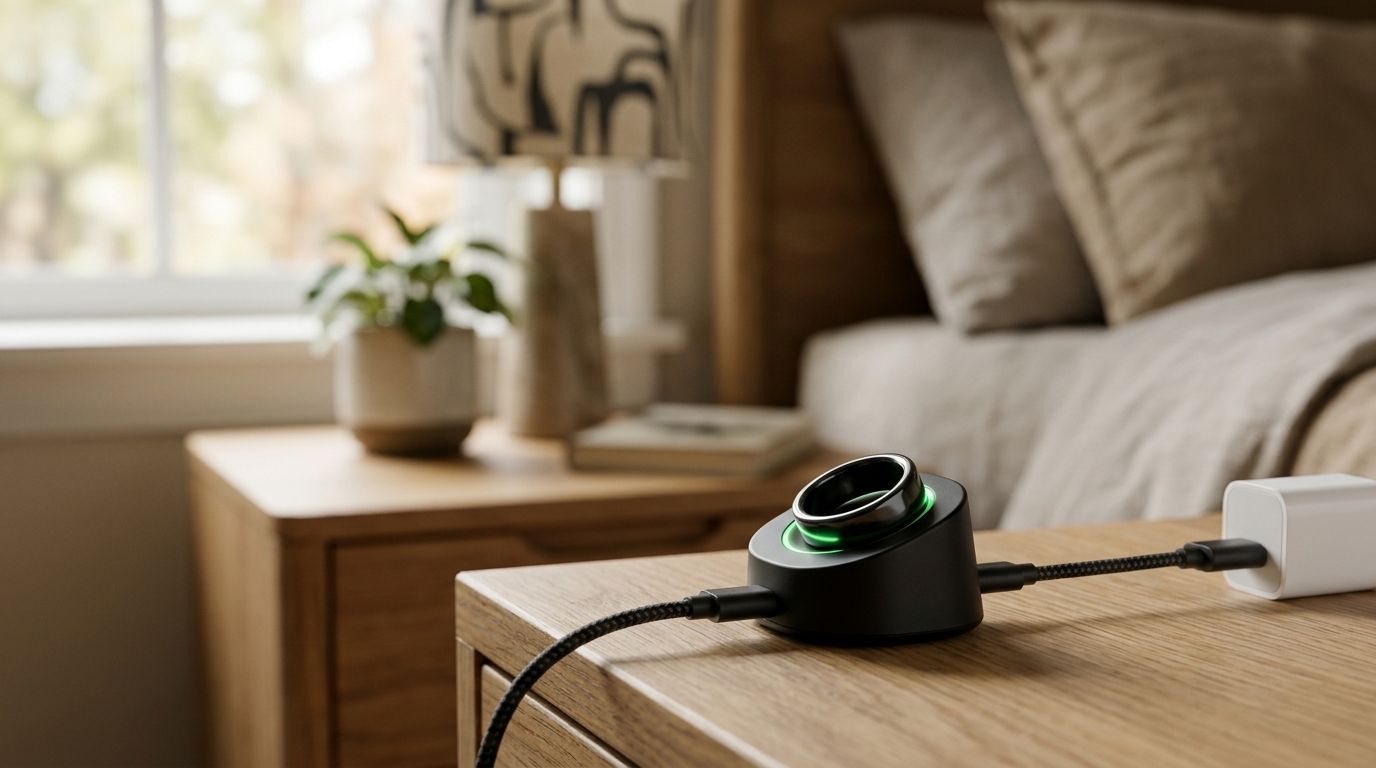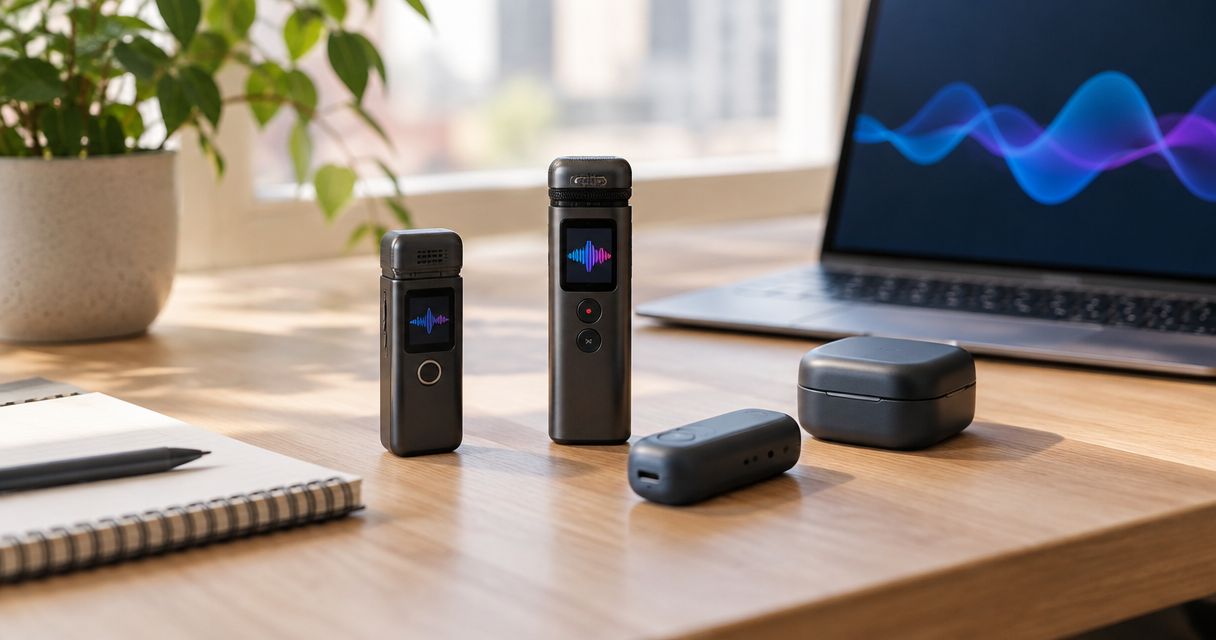
Best overall: Plaud NotePin for wearable voice capture. Best for screenless note-taking in a ring: R1 from Present Ring AI, a pre-launch device. Best for recording meetings without dedicated hardware: Otter.ai. The best AI voice recorders in 2026 solve different problems, so choose where you want to capture a thought before you compare features.
- Plaud NotePin is the best overall pick among AI voice recorders in 2026 if you want a wearable recorder.
- Present Ring AI's R1 is the screenless ring choice for spoken ideas, but it is pre-launch.
- Plaud Note fits people who prefer a separate handheld recorder; Otter.ai fits software-based meeting notes.
- Check consent requirements and review important transcripts before you share or rely on them.
Why this matters
A meeting, a passing idea, and a long conversation do not call for the same recording setup. In 2026, the useful distinction is not whether a product uses AI. It is whether you will have it with you, whether it suits the setting, and whether you can turn its transcript into a note you will use.
A wearable recorder keeps capture close. A handheld recorder is a separate object you choose to bring. Meeting software works where the conversation already happens on a device. None removes your responsibility to get appropriate consent or check what the transcript says.
The 2026 ranking below is a fit-based decision guide, not a claim that one microphone or transcription system outperforms another. Recording conditions, speakers, and the importance of the words all affect how carefully you need to review the result.
What makes the best AI voice recorder?
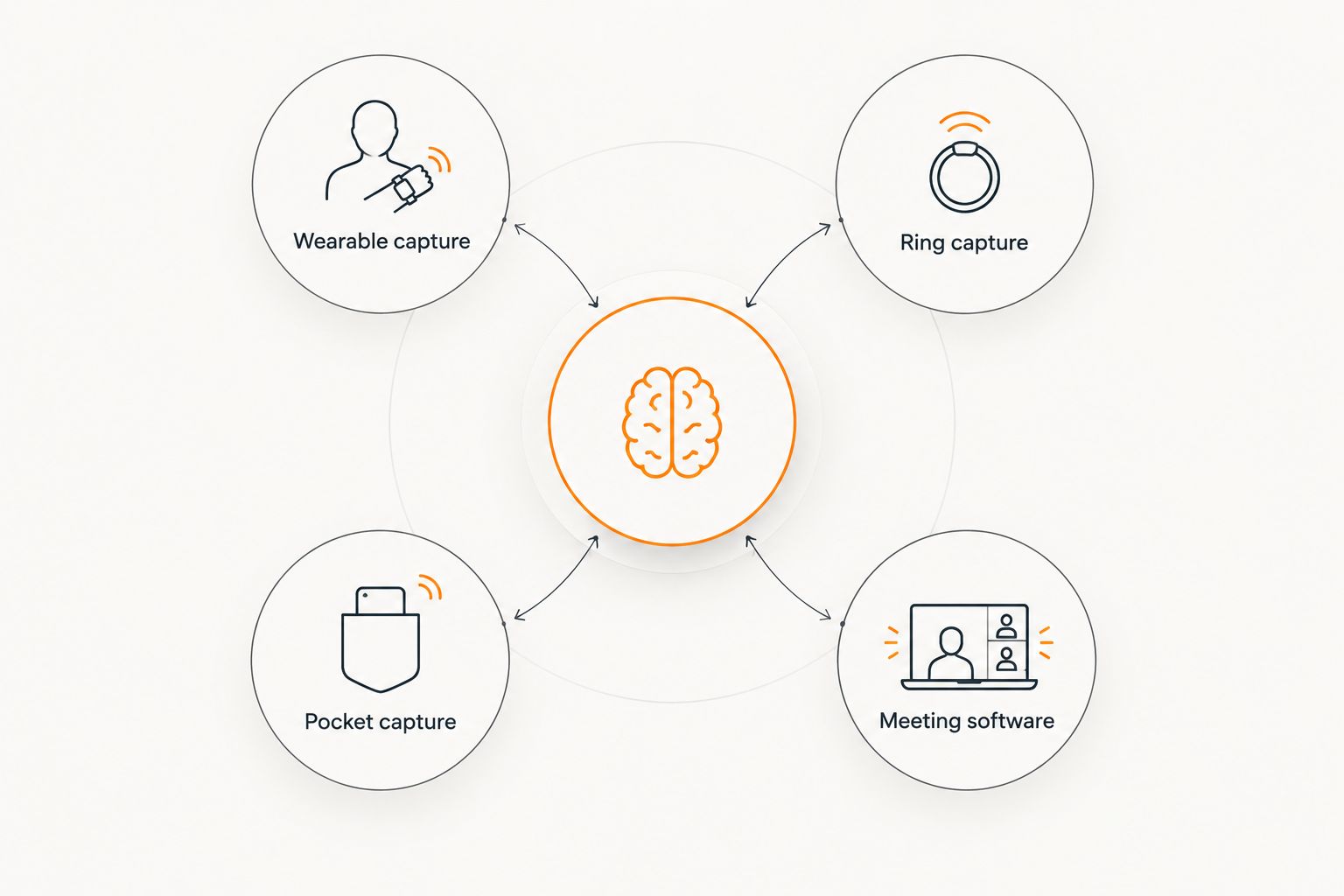
Use these criteria before reading the ranking. The right format matters more than a long feature list.
- Wearable capture: Choose something you can keep on you when an idea arrives away from your desk. A wearable still requires you to decide when recording is appropriate.
- Ring capture: Choose this form if a screenless device and minimal interruption are central to the experience you want. Check the actual recording workflow before relying on it.
- Pocket capture: Choose a separate device when you want a deliberate act of recording rather than another wearable.
- Meeting software: Choose an app when the conversations you need are primarily meetings handled on your existing devices. Software is not a substitute for a physical recorder in every setting.
- Transcript review: Look for a way to find, correct, and use the words afterward. Treat names, decisions, and commitments as details to verify, not details to accept automatically.
- Privacy fit: Ask where recordings and transcripts go, who can access them, and how you remove them. Confirm the terms for each product rather than assuming the same answer applies to every recorder.
These criteria separate the capture decision from the note-taking decision. If you never start a recording, transcription quality cannot help you. If you never review a transcript, a captured conversation is not yet a useful note.
Best AI voice recorders in 2026 at a glance
| Pick | Best for | Standout feature | Key limitation |
|---|---|---|---|
| Plaud NotePin | Wearable voice capture | Dedicated wearable recorder with transcription | A wearable is still another device to manage |
| R1 from Present Ring AI | Screenless idea capture in a ring | Ring with a built-in microphone, described as transcribing spoken ideas and conversations | Pre-launch; evaluate the finished experience before relying on it |
| Plaud Note | Deliberate, separate-device recording | Portable recorder with AI-assisted transcription | Less suited to someone who wants to wear the recorder |
| Otter.ai | Meeting notes on an existing device | Software-based recording and transcription | Not a dedicated physical recorder |
Default pick: Plaud NotePin if you want a wearable recorder without making a pre-launch product your primary note-taking method. Pick R1 for its specific ring format, Plaud Note for deliberate portable recording, or Otter.ai when meetings are the job. This 2026 table compares use cases, not independently measured accuracy.
1. Plaud NotePin: best AI voice recorder for wearable capture
Plaud NotePin is a dedicated wearable recorder for capturing speech and turning it into notes through transcription. It makes sense when you want a physical device close at hand but do not specifically want a ring. Plaud NotePin is the default 2026 pick for someone whose first requirement is wearable capture.
That recommendation rests on format, not a promised result in every room. Before making it part of your routine, check how you start and stop a recording, how you retrieve the transcript, and how clearly you can review it. A device you wear is useful only if its controls fit the moments you intend to capture.
Plaud NotePin pros:
- Wearable form factor keeps the recorder separate from your phone's screen.
- Dedicated recording purpose makes the choice clear when you want to capture speech.
- Transcription gives you text to review rather than leaving you with audio alone.
Plaud NotePin cons:
- You have another device to wear, maintain, and remember.
- A transcript still needs checking before it becomes a record of decisions.
- Its form does not answer a preference for a ring.
Best for: Someone who wants a wearable voice recorder for spoken notes and does not need that wearable to be a ring.
Verdict: Buy if wearable capture is the deciding criterion. Check the current recording, transcript, and account terms before you commit to a workflow.
2. R1: best AI voice recorder for screenless ring capture
Present Ring AI describes R1 as a pre-launch, screenless smart ring with a built-in microphone that transcribes spoken ideas and conversations for note-taking. Its appeal is specific: you want to speak a thought without moving to a screen. Present Ring AI's R1 is best for someone who puts a quiet, screenless ring format ahead of choosing a device they can already evaluate in finished use.
That distinction matters in 2026. The product description establishes the intended form and purpose; it does not establish how a finished R1 performs across different rooms, voices, or conversations. Keep a working note-taking method until you have assessed whether the ring's actual capture and transcript process fits you.
R1 pros:
- Ring form addresses a specific preference for a minimal wearable.
- Screenless design keeps the recording idea separate from looking at a display.
- The stated purpose covers both spoken ideas and conversations for note-taking.
R1 cons:
- R1 is pre-launch, so its finished workflow needs evaluation.
- The supplied information does not establish transcription accuracy or how recordings are managed.
- A ring is not the right form if you prefer to decide visibly and deliberately when to use a separate recorder.
Best for: Someone seeking a screenless wearable for spoken ideas who can assess a pre-launch product on its finished experience.
Verdict: Wait before making R1 your only way to capture important notes. Explore the concept now; judge the finished workflow before depending on it.
3. Plaud Note: best AI voice recorder for deliberate capture
Plaud Note is a portable, dedicated recording device with AI-assisted transcription. Choose its format when you want recording to be an intentional step: take out a recorder, capture the conversation, then review the text. It is a different decision from wearing a microphone throughout your day.
This format suits planned conversations and spoken notes better than a desire for an unobtrusive ring. It does not make transcription self-checking. If a name, action, or commitment matters, compare the transcript with the recording before you pass the note to someone else.
Plaud Note pros:
- Separate-device format makes a deliberate recording routine possible.
- Dedicated capture does not require choosing a wearable form.
- Transcription helps turn a recording into text you can review.
Plaud Note cons:
- You must have the device with you when the moment arrives.
- It does not meet a preference for screenless ring capture.
- Important transcript details still require human review.
Best for: Someone who plans to record conversations or spoken notes and prefers a separate physical device.
Verdict: Buy if deliberate capture fits your habits better than wearing a recorder. In 2026, choosing the device you will actually bring matters more than choosing a form you admire but will leave behind.
4. Otter.ai: best AI voice recorder alternative for meetings
Otter.ai records and transcribes through software rather than a dedicated physical recorder. It belongs on this list because a reader searching for an AI voice recorder may need meeting notes, not new hardware. If most of your useful speech happens in meetings on existing devices, start with that distinction.
Otter.ai is not a ring or pocket recorder. Its strengths are tied to a software meeting workflow; its limitation is the same fact viewed from the other side. A thought that arrives while you are away from that workflow calls for a different capture habit.
Otter.ai pros:
- Software-based recording avoids adding a dedicated recorder to carry or wear.
- Transcription makes meeting speech available as text for review.
- Its meeting focus matches people who chiefly need a record of scheduled conversations.
Otter.ai cons:
- It is not dedicated recording hardware.
- It does not answer a preference for a screenless wearable.
- Meeting transcripts still need checking before you treat them as agreed decisions.
Best for: Someone whose note-taking problem is primarily meetings on devices they already use.
Verdict: Buy for a meeting-first workflow; skip it as a replacement for a physical, always-close recorder. The right comparison is between your actual capture settings, not between an app and a ring in the abstract.
How we ranked the picks
This 2026 ranking puts capture fit first: wearable, ring, separate recorder, or meeting software. It then considers whether transcription serves a clear note-taking purpose and names the limitation that can interrupt that purpose. It does not award a performance win for microphone quality, transcript accuracy, or battery life without comparable evidence.
That is why R1 does not take the overall position. Its screenless ring concept addresses a clear need, but it is pre-launch. Plaud NotePin takes the default wearable slot; Plaud Note and Otter.ai remain stronger matches for their distinct recording settings. Each recommendation is conditional on how you intend to use it.
Which AI voice recorder should you choose?
Choose Plaud NotePin if you want a wearable dedicated to voice capture and have not settled on a ring. It is the default answer to the best AI voice recorders 2026 question because it matches the broad wearable use case without depending on a pre-launch assessment.
Choose R1 from Present Ring AI if screenless ring capture is the point. Wait to judge its finished note-taking experience before you make it your sole record of important conversations. Choose Plaud Note if you prefer a separate recorder that you take out on purpose. Choose Otter.ai if your recordings are chiefly meetings and you do not need dedicated hardware.
Whichever you choose, run a simple trial with an ordinary note before trusting a high-stakes transcript: start recording, locate the text, check what it says, and put the useful part where you will find it. For a conversation, establish appropriate consent first. The best recorder is the one whose capture and review steps you will follow.
FAQ
What's the best AI voice recorder in 2026 for wearable notes?
Plaud NotePin is the default wearable pick in this guide. R1 from Present Ring AI is the more specific choice if you want a screenless ring and can evaluate a pre-launch product before relying on it.
Is R1 better than Plaud NotePin for voice notes?
R1 is the better format match if a screenless ring is your priority; Plaud NotePin is the default wearable pick. R1 is pre-launch, so this guide does not claim it records or transcribes more accurately.
Is Plaud Note better than a wearable voice recorder?
Plaud Note is better suited to deliberate, separate-device recording. Choose a wearable when having the recorder on you is more important than taking out a dedicated device.
Can Otter.ai replace a physical AI voice recorder?
Otter.ai can serve a meeting-first transcription workflow without dedicated hardware. It does not replace the experience of wearing or carrying a purpose-built recorder for speech away from that workflow.
Do AI voice recorders produce transcripts you can trust without review?
No. Review names, decisions, and commitments against the recording before treating a transcript as a dependable note. The importance of the conversation determines how carefully you check it.
Do I need permission to record a conversation?
Establish the consent required for the people and setting before recording. Rules vary by location and context, so a product's ability to record does not settle whether you should use it.
How much do AI voice recorders cost in 2026?
Check each provider's current terms for the device and its transcription service. Do not choose from a static price alone; confirm the recording and note-taking workflow you need.
One last thing
A transcript is not automatically a note. In 2026, your most useful test is whether you can find a spoken thought and act on it later. For R1 in particular, keep that test open until the finished, pre-launch device can be assessed on the full path from speech to usable text.