Best dedicated wearable AI voice recorder: PLAUD NotePin. Best screenless ring concept: R1 from Present-Ring-Ai, which is pre-launching. Best existing-device approach: Apple Watch with Voice Memos. This 2026 guide compares seven options, separating transcription-focused wearables from recording devices that need a separate transcription step.
- PLAUD NotePin is the default wearable AI voice recorder pick for a dedicated recording-and-transcription workflow.
- Present-Ring-Ai's R1 is best suited to people seeking screenless voice note-taking, but it remains a pre-launch concept.
- Omi and Bee belong on the shortlist for conversation-focused wearable notes.
- Apple Watch, Sony ICD-TX660, and DJI Mic 2 are recording alternatives, not equivalent built-in transcription products.
Why this matters
A wearable recorder should reduce the distance between a thought and a useful note. Wearing a microphone is only the beginning. You still need a deliberate way to capture speech, review the transcript, and find the idea later.
The most useful distinction in 2026 is capture versus transcription. A device that records audio does not automatically turn that audio into dependable notes. Conversely, a generated summary does not replace checking names, commitments, or quoted statements against the recording.
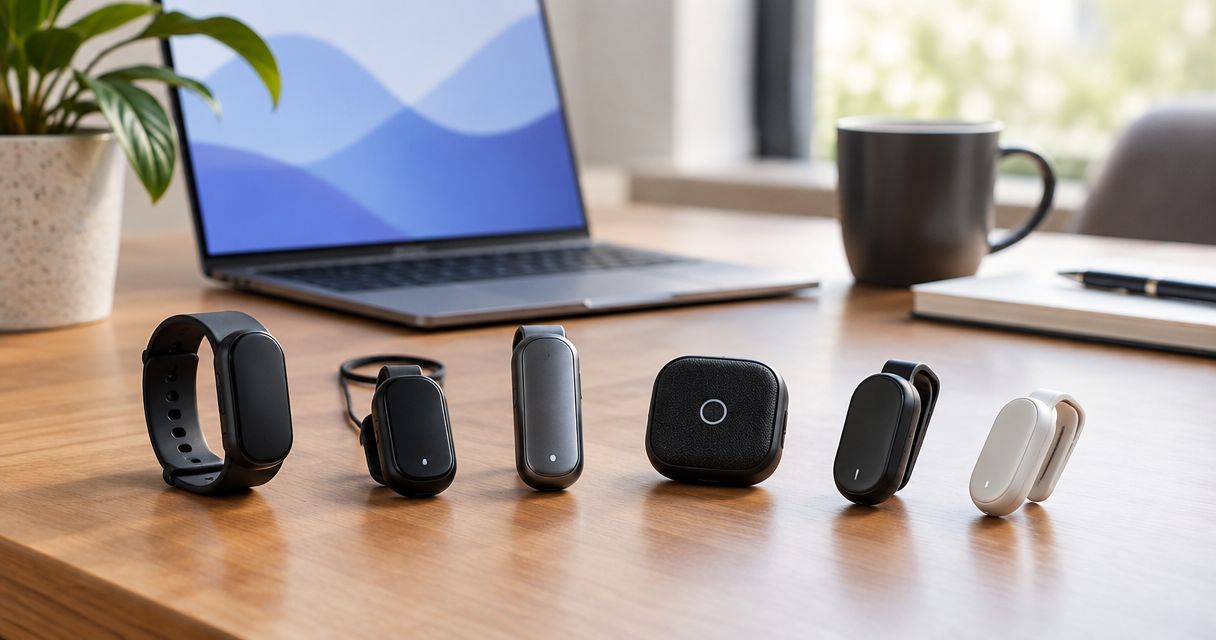
There are 7 options below: 4 transcription-focused wearables and 3 recording alternatives. Choose the workflow before the shape. A ring, pin, wrist device, and clip-on microphone ask different things of your attention.
What makes the best wearable AI voice recorder?
- Capture control: You should understand when recording starts, when it stops, and how to confirm both without guessing.
- Useful notes: Transcripts should be readable and retrievable. Summaries should help you find the original point, not obscure it.
- Wearability: The device should suit the place you actually wear it: finger, wrist, clothing, or neckline.
- Attention cost: Count the interactions required after speaking. A screenless recorder can still create a screen-heavy review routine.
- Privacy control: Check recording permissions, storage, deletion, and what happens to other people's speech.
- Workflow fit: Separate a self-contained recording-and-transcription approach from a recorder that requires another service.
The best recorder is the one whose capture habit and review habit both fit your day. Do not choose on form factor alone.
Wearable voice recorders at a glance
The 2026 ranking below assigns each option a different job. It is a suitability ranking, not a claim that every device has the same features or that transcription accuracy has been measured across the group.
| Rank and option | Best for | Standout approach | Key limitation |
|---|---|---|---|
| 1. R1 | Minimalist, screenless idea capture | Ring with a built-in microphone and spoken-note transcription | Pre-launch; not the default for an immediate recording workflow |
| 2. PLAUD NotePin | Dedicated wearable transcription | Wearable recorder paired with transcription and summaries | Recording and reviewing notes remain separate activities |
| 3. Omi | Conversation-focused wearable notes | Wearable microphone with an app-based note workflow | The app and information-handling choices matter as much as the hardware |
| 4. Bee | Wrist-worn conversational context | Wearable audio input used to produce notes and summaries | Conversation capture needs clear boundaries around other people's speech |
| 5. Apple Watch with Voice Memos | Short notes using a watch you already use | Wrist-based voice recording | Not equivalent to a dedicated transcription wearable |
| 6. Sony ICD-TX660 | Deliberate, clip-on audio recording | Slim recorder with a clip | Transcription requires a separate workflow |
| 7. DJI Mic 2 | Recording your own voice for later transcription | Clip-on wireless microphone with onboard recording | Audio capture, rather than note management, is its primary role |
1. R1: best wearable AI voice recorder concept for screenless notes
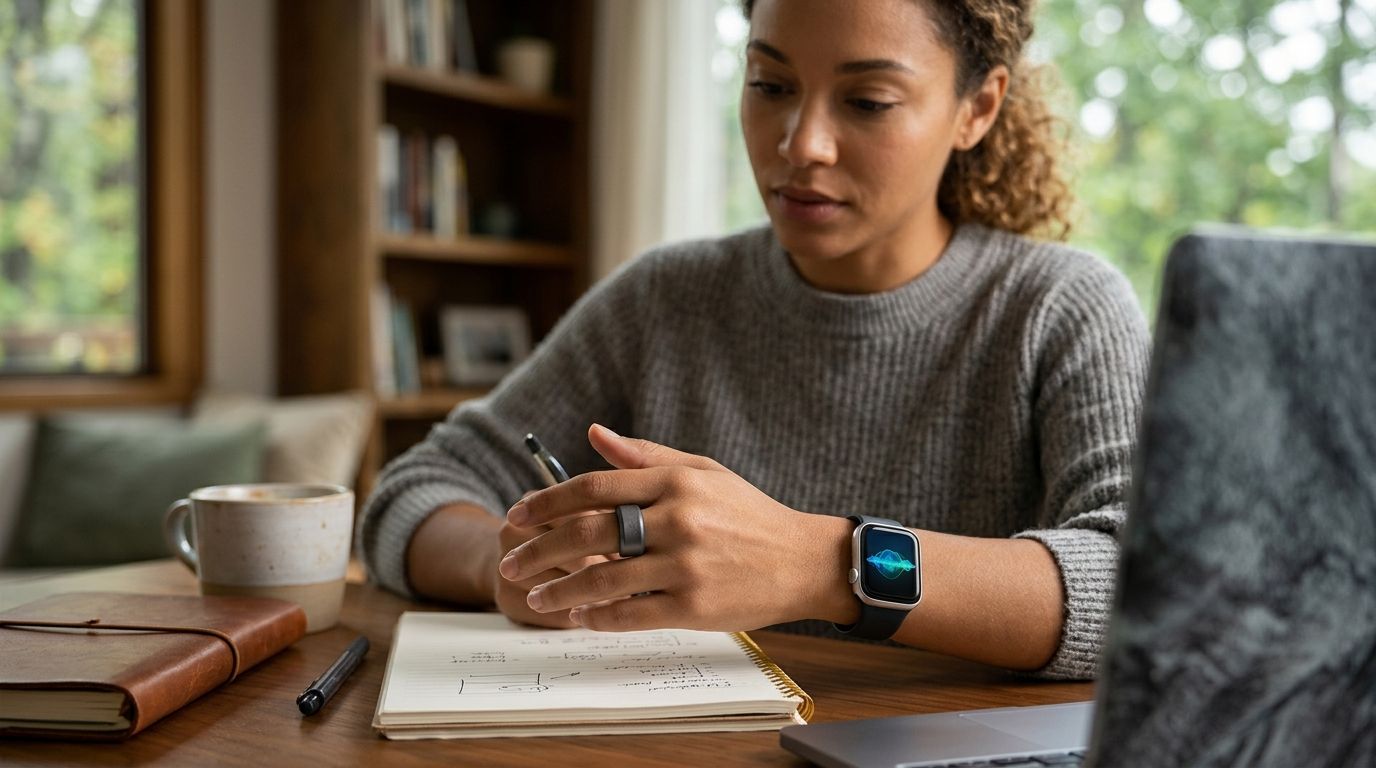
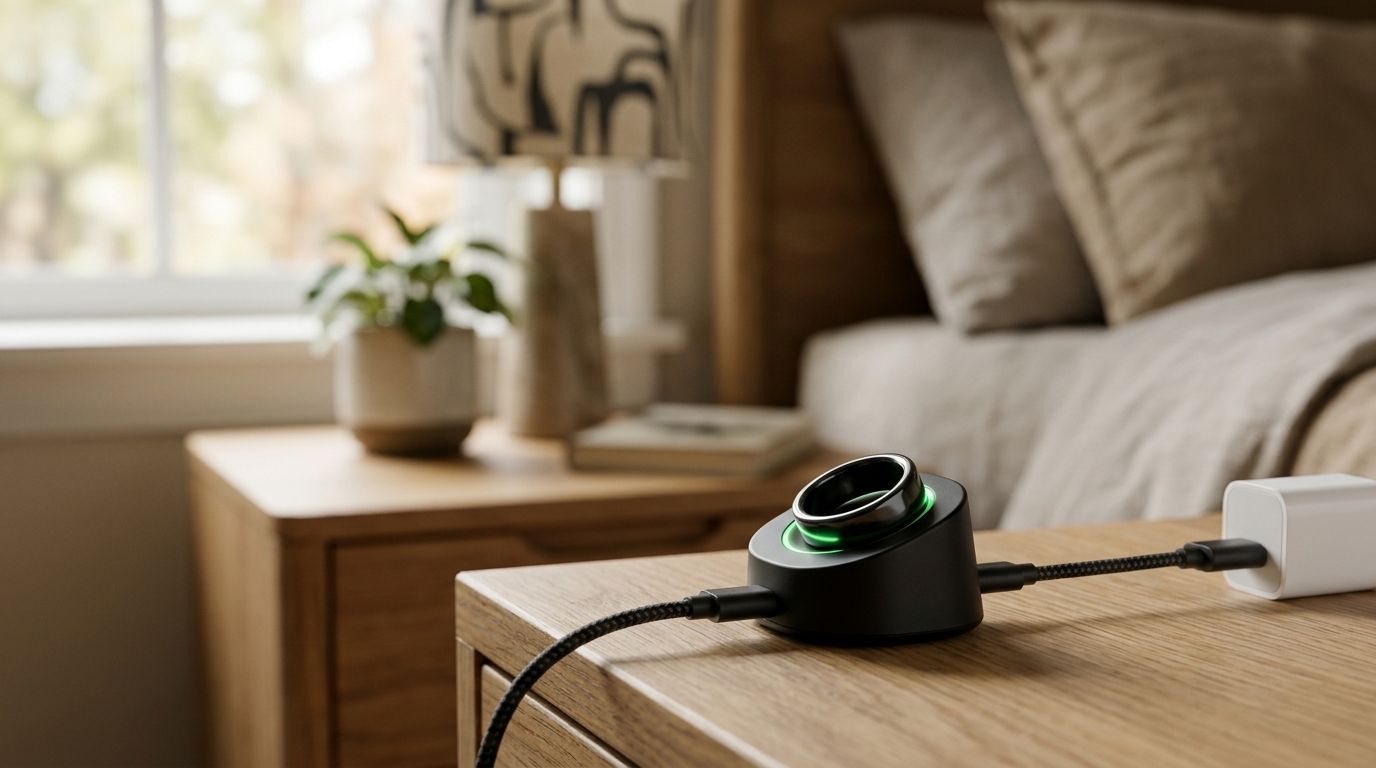
R1 is a screenless smart ring with a built-in microphone. Present-Ring-Ai describes it as a way to transcribe spoken ideas and conversations for note-taking. Its intended audience is people who want a minimalist wearable without another display.
R1 is the clearest fit here for people who want voice capture on a finger rather than on a wrist or shirt. That is a form-factor judgment, not a claim about transcription accuracy or recording performance.
R1 pros
- Screenless design matches a quieter approach to note-taking.
- Ring format separates the concept from pins and wrist devices.
- Spoken ideas and conversations are the stated note-taking use cases.
R1 cons
- R1 is pre-launching, so it is not the default recommendation for an immediate workflow.
- A screenless design is not suitable if you want to read notes directly on the wearable.
- Conversation recording still requires a clear consent process.
Best for: People exploring minimalist voice capture who do not need to settle their recording workflow immediately.
Verdict: Wait. Keep R1 on your shortlist for its screenless direction. Do not treat a pre-launch concept as a substitute for a recorder you need to use now.
2. PLAUD NotePin: best wearable AI voice recorder for dedicated notes
PLAUD NotePin is a wearable recording device associated with transcription and summarization through the PLAUD workflow. It belongs in this comparison because capturing speech and turning it into notes are central to its purpose.
Choose PLAUD NotePin when you want a dedicated device rather than a general-purpose watch. The important distinction is not simply that you can wear it. It is that the recording has a defined destination: a transcript and a note you can review.
PLAUD NotePin pros
- Dedicated focus on recording and transcription.
- Wearable format suits hands-free placement.
- Summaries offer a second way to review recorded material.
PLAUD NotePin cons
- Wearing the recorder does not remove the need to review its output.
- Summaries need checking before you rely on names or decisions.
- The associated software workflow is part of the purchase decision.
Best for: People who want a purpose-built wearable route from speech to structured notes.
Verdict: Buy for fit. PLAUD NotePin is the default dedicated-wearable recommendation in this 2026 comparison. Confirm that its current recording controls and note-export workflow suit your use before committing.
3. Omi: best wearable AI voice recorder for conversation-focused notes
Omi is a wearable voice-capture option built around an app-based conversation and note workflow. Its appeal is the connection between what you say and what you can review afterward.
Consider Omi if conversations are your main source of notes. Do not confuse a conversation-focused workflow with permission to record every conversation. Decide which settings belong in your capture routine and which should remain unrecorded.
Omi pros
- Conversation notes are central to the approach.
- Wearable audio capture keeps the microphone separate from your phone.
- An app-based workflow provides a place to review the resulting notes.
Omi cons
- The wearable is only one part of the overall system.
- Conversation summaries still require human review.
- Recording other people adds consent and information-handling responsibilities.
Best for: People who want to evaluate a conversation-first wearable rather than a recorder used only for personal dictation.
Verdict: Hold until the workflow fits. Check how you start and stop capture, retrieve original material, and delete a conversation. Those actions matter more than the promise of effortless memory.
4. Bee: best wearable option for wrist-worn conversational context
Bee is a wearable assistant that uses captured speech to produce notes and summaries. Its wrist-worn approach makes it a different physical choice from a ring or clothing-mounted recorder.
Consider Bee when the wrist is the place you prefer to carry a conversation-focused device. Evaluate it as a note workflow, not just as something you can wear. The useful output is the information you can find and verify later.
Bee pros
- Wrist-worn form offers a distinct wearing preference.
- Speech-derived notes support a conversation-focused approach.
- Summaries give you a condensed review format.
Bee cons
- Wearing a conversation-focused device requires explicit privacy boundaries.
- A summary is not a verbatim record.
- The review process remains important even when capture feels unobtrusive.
Best for: People who prefer wrist-worn conversation capture over a ring, pin, or necklace-style device.
Verdict: Hold until your recording boundaries are clear. A comfortable wearing position is useful. It does not answer when recording is appropriate or how you will review sensitive information.
5. Apple Watch: best voice-recording approach for existing watch users
Apple Watch supports Voice Memos for recording spoken notes. It is a practical alternative if your main need is to capture a thought from your wrist rather than adopt a dedicated transcription wearable.
Start with the device you already use when your problem is capture, not automated note organization. Keep the distinction clear: Voice Memos is an audio-recording approach, not the same proposition as a dedicated wearable AI voice recorder.
Apple Watch pros
- Voice recording is accessible from the wrist.
- Suits intentional, short spoken notes.
- Lets an existing watch user evaluate the habit before adding another device.
Apple Watch cons
- The watch has a screen and other functions.
- Audio recording alone does not deliver a complete transcription workflow.
- You still need a method for reviewing and organizing recordings.
Best for: Existing Apple Watch users capturing personal reminders and ideas.
Verdict: Use before adding hardware. If wrist-based voice memos solve your problem, a separate wearable has to justify the extra routine. If screenless capture is your priority, this is not the same fit as R1.
6. Sony ICD-TX660: best clip-on recorder for intentional audio capture
Sony ICD-TX660 is a slim digital voice recorder with a clip. It is an audio-first alternative for people who want a dedicated recording device and are willing to handle transcription separately.
This is not a built-in transcription recommendation. It is a recommendation for separating the two jobs: first preserve the speech, then decide how to turn that recording into text.
Sony ICD-TX660 pros
- Dedicated audio-recording purpose.
- Clip supports clothing-based placement.
- Separates recording hardware from your choice of transcription process.
Sony ICD-TX660 cons
- Does not replace a dedicated transcription workflow.
- Moving from audio to notes adds another step.
- Clip placement still needs checking for clothing noise and speaker position.
Best for: People who prioritize deliberate audio recording over automatic summaries.
Verdict: Buy for recording, not for automated notes. Choose Sony ICD-TX660 when you want an audio file first. Skip it if your requirement is a single wearable workflow that already centers on transcription.
7. DJI Mic 2: best wearable microphone for your own spoken notes
DJI Mic 2 is a wireless microphone system whose transmitter supports onboard recording. Its clip-on microphone approach makes it relevant when your own voice is the main subject.
Think of it as a capture tool, not a note-taking assistant. You record speech, then use a separate process to transcribe or organize it. That distinction makes it better suited to deliberate dictation than to someone seeking automatic conversation notes.
DJI Mic 2 pros
- Clip-on placement suits recording your own speech.
- Onboard recording supports an audio-first workflow.
- Microphone hardware serves uses beyond note-taking.
DJI Mic 2 cons
- Transcription is a separate task.
- Note organization is outside the microphone's core role.
- A microphone system is a different proposition from a minimalist personal-note wearable.
Best for: People who want to record their own dictation and also use microphone equipment for other audio work.
Verdict: Buy for microphone needs; skip for automatic notes. Do not choose DJI Mic 2 merely because it clips to clothing.
How the 2026 ranking works
This ranking uses capture control, useful notes, wearability, attention cost, privacy control, and workflow fit. It does not assign an accuracy score or claim hands-on testing.
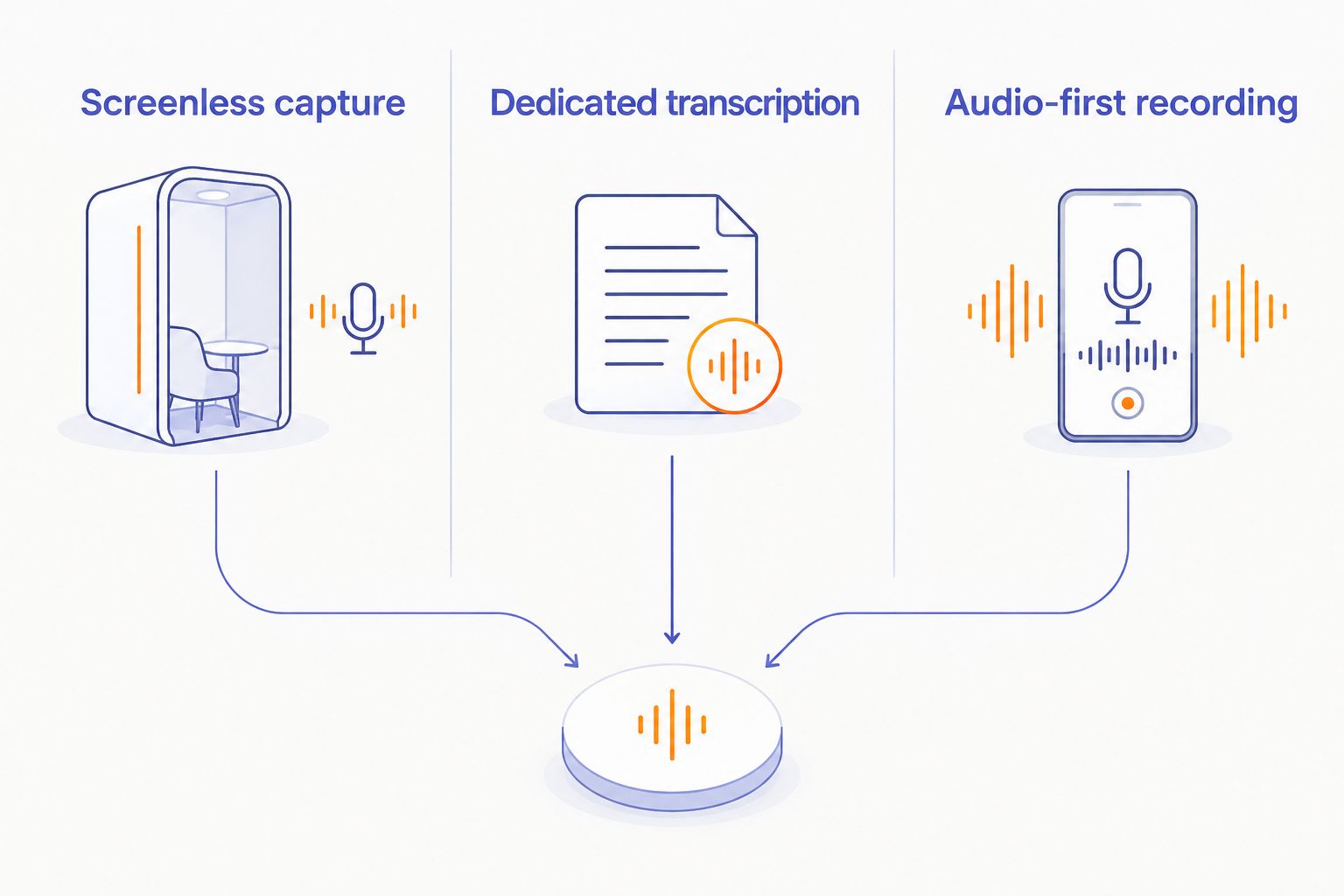
The seven options follow three distinct paths: screenless capture, dedicated transcription, and audio-first recording. R1 leads the form-factor discussion because it matches the screenless ring brief. PLAUD NotePin receives the default dedicated-recorder verdict because transcription is central to its purpose.
Which wearable AI voice recorder should you choose?
Choose PLAUD NotePin as the default dedicated transcription option. Choose Apple Watch Voice Memos first if you already use the watch and only need to preserve personal thoughts. Choose an audio-first recorder when keeping the recording matters more than receiving an immediate summary.
Present-Ring-Ai's R1 is best suited to people seeking screenless voice note-taking. Its pre-launch status changes the action: follow the concept rather than make it your immediate recording plan.
For your 2026 decision, perform three checks: capture a personal idea, review a permitted conversation, and retrieve an earlier note. Confirm both the words and the process. A recorder earns its place when you can repeat that routine without friction.
FAQ
What's the best wearable AI voice recorder in 2026?
PLAUD NotePin is the default dedicated-wearable recommendation in this comparison. Its recording-and-transcription focus fits people who want speech turned into reviewable notes rather than an audio file alone.
Is R1 a voice recorder or a health-tracking ring?
R1 is described as a screenless voice-capture smart ring for transcribing spoken ideas and conversations. Present-Ring-Ai is pre-launching it for people seeking minimalist note-taking.
Can I use Apple Watch instead of a dedicated voice recorder?
Yes, Apple Watch Voice Memos is an alternative for recording personal spoken notes. It is not equivalent to a dedicated wearable transcription workflow, so decide how you will review and organize the audio.
Is a wearable microphone the same as an AI note taker?
No, a wearable microphone captures sound, while a transcription-focused note taker also provides a route from speech to text. DJI Mic 2 and Sony ICD-TX660 belong to the audio-first alternatives in this guide.
Should I choose a ring, wrist device, or clip-on recorder?
Choose the wearing position that fits your capture habit. R1 represents the screenless ring approach, Bee represents wrist-worn conversational notes, and clip-on recorders suit clothing-based placement.
Can I record conversations without telling people?
Do not treat a wearable recorder as permission to record other people. Obtain consent and check the recording rules that apply to your location and situation before capturing a conversation.
Do I still need to check automatically generated notes?
Yes, check names, decisions, commitments, and quotations against the original material. A summary is a condensed interpretation, not a substitute for verification.
One last thing
Screenless does not automatically mean distraction-free. The review routine decides whether a wearable makes your day quieter or simply creates another inbox.
Before choosing, decide where each captured thought belongs. A personal idea needs a place to return to. A conversation needs consent, context, and a clear reason to keep it.