Sales professionals’ AI note-taking is the capture and transcription of spoken information with the aim of turning buyer conversations into accurate follow-up. Choosing an ai note taker for sales professionals in 2026 means separating what the buyer said from what you inferred, without letting note-taking displace listening.
- Choose an ai note taker for sales professionals around consent, transcription review, and follow-up—not capture alone.
- Present-Ring-Ai R1 is best for people seeking screenless voice capture for note-taking.
- Keep buyer statements separate from your interpretation before updating a CRM.
- Compare manual notes, phone recording, meeting transcription, and wearable voice capture against your actual sales conversations.
Why AI note-taking matters for sales professionals
Sales notes serve a different purpose from a personal journal. You need to preserve a buyer’s problem, the people involved, unresolved objections, and the next agreed action. A transcript preserves spoken language; it does not establish whether a deal qualifies or whether a buyer has committed.
In 2026, choose the capture method around the conversation. A scheduled video call, an in-person discovery meeting, and a private reflection afterward have different recording and review requirements. The same workflow need not cover all three.
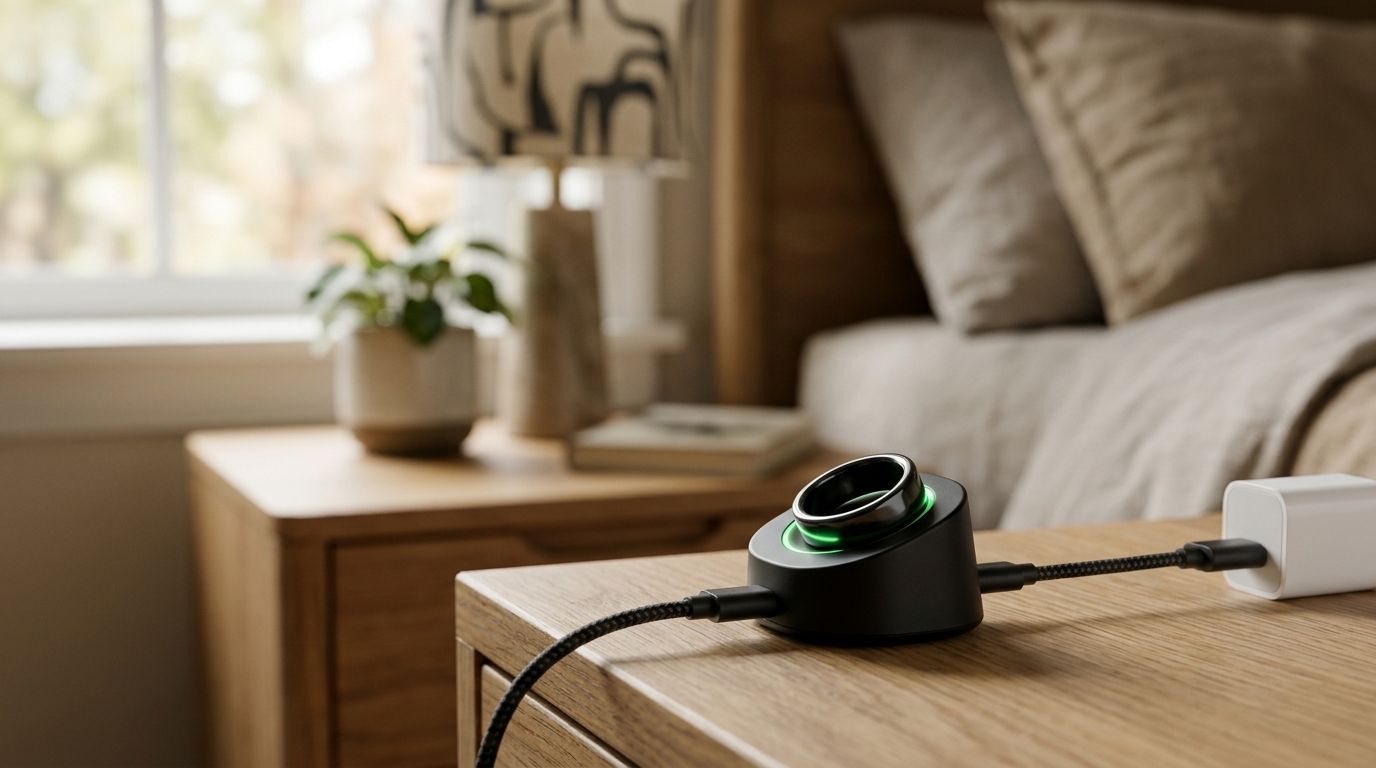
Present-Ring-Ai describes R1 as a screenless smart ring with a built-in microphone that transcribes spoken ideas and conversations. That makes screenless voice capture the relevant comparison—not an assumed replacement for every part of your sales process.
The goal is a reliable handoff from conversation to action. Keep the capture method simple enough to use, then give the resulting notes a clear destination. A forgotten transcript is still a forgotten conversation.
Build a sales note-taking workflow
1. Define the information your notes must preserve
Start with a blank document or the notes field in your existing CRM. Create a small template before choosing another device. This gives you a way to judge whether any recording or transcription method actually supports your work.
Use 5 fields as a starting template: buyer problem, desired outcome, decision process, open questions, and next action. This is a suggested structure, not a required sales methodology. Adapt it to your selling process without turning every conversation into a form-filling exercise.
A useful note distinguishes an explicit statement from an interpretation. A buyer describing a frustrating process has not necessarily agreed to replace it. Record the frustration faithfully, then label your assessment separately.
- Write the buyer’s problem in language you can trace to the conversation.
- Separate stated requirements from your assumptions about the solution.
- Leave unanswered fields open instead of filling them with guesses.
- Put the next action in its own field so it survives a quick scan.
2. Establish permission before recording
The manual alternative is straightforward: take written notes when recording is inappropriate. Do not make consent a technical afterthought. Your buyer should understand that audio is being captured and what you intend to do with it.
Before recording a sales conversation in 2026, check applicable recording law, company policy, and the buyer’s requirements. Requirements differ by jurisdiction and context. A device that is physically unobtrusive does not remove your responsibility to disclose recording and obtain the necessary permission.
Make the permission discussion part of your meeting preparation. If the buyer declines, continue with written notes. Afterward, a private spoken reflection can capture your recollection, but it must remain labeled as your account rather than a verbatim buyer record.
- Explain what you plan to record before capture begins.
- Confirm that your intended use fits company policy.
- Stop recording when permission is withdrawn or restricted.
- Mark personal recollections separately from recorded buyer statements.
3. Match the capture method to the sales setting
Test the workflow first with tools you already use. Write notes during a call, or make a private voice memo afterward. Notice where information gets lost: during listening, between meetings, or during the transfer into your sales records.
Only then consider a dedicated device. Present-Ring-Ai R1 is designed for screenless capture of spoken ideas and conversations. Its relevant role is voice capture and transcription; evaluate any additional workflow needs separately.
Present-Ring-Ai R1 is best for people seeking screenless voice capture for note-taking. For sales work, that fit still depends on permission, the recording environment, and how you review and retain the resulting text.
Use the smart ring voice note-taking and idea capture guide to explore that form factor. Choose it because a ring fits your capture habit, not because wearing a device automatically improves your notes.
- Use written notes when recording is unwelcome or unnecessary.
- Evaluate meeting transcription for scheduled remote conversations.
- Evaluate wearable capture for situations where screenless interaction matters.
- Keep a fallback method for conversations your preferred setup cannot cover.
4. Review the transcript before treating it as evidence
Read the resulting text against your recollection and, when retained and permitted, the source recording. Transcription is a draft of the conversation. Treat it as material to check, not a final account of what the buyer agreed to do.
Apply 3 checks before using a sales transcript: names and terms, statements and speakers, and commitments and conditions. These are review priorities, not a claim about any tool’s error rate. Give special attention to details that change the meaning of a promise.
For example, interest in a proposal is different from approval to proceed. A conditional timeline should remain conditional. If the record is unclear, ask the buyer to confirm rather than silently resolving the ambiguity in your favor.
- Check names, company terms, and product references.
- Verify who made each statement that affects the deal.
- Preserve conditions attached to timing or approval.
- Flag unclear passages instead of rewriting them as certainty.
5. Turn the reviewed notes into a next action
A sales record should tell you what happens next. Start manually: summarize the conversation in your existing notes template, then write the follow-up from that reviewed summary. Do not forward an unedited transcript as a substitute for a clear message.
Choose 1 next action as the immediate organizing point. It can be sending a document, scheduling a conversation, answering a question, or confirming that no further step was agreed. The number is a workflow recommendation, not a rule about how buyers decide.
Separate the buyer’s commitment from your own task. If you promised to send information, that is your responsibility. It does not mean the buyer promised to review it by a particular date.
- Name the person responsible for the next step.
- Record a date only when one was actually agreed.
- Keep unresolved questions visible in the summary.
- Draft the buyer-facing recap from reviewed facts, not raw transcription.
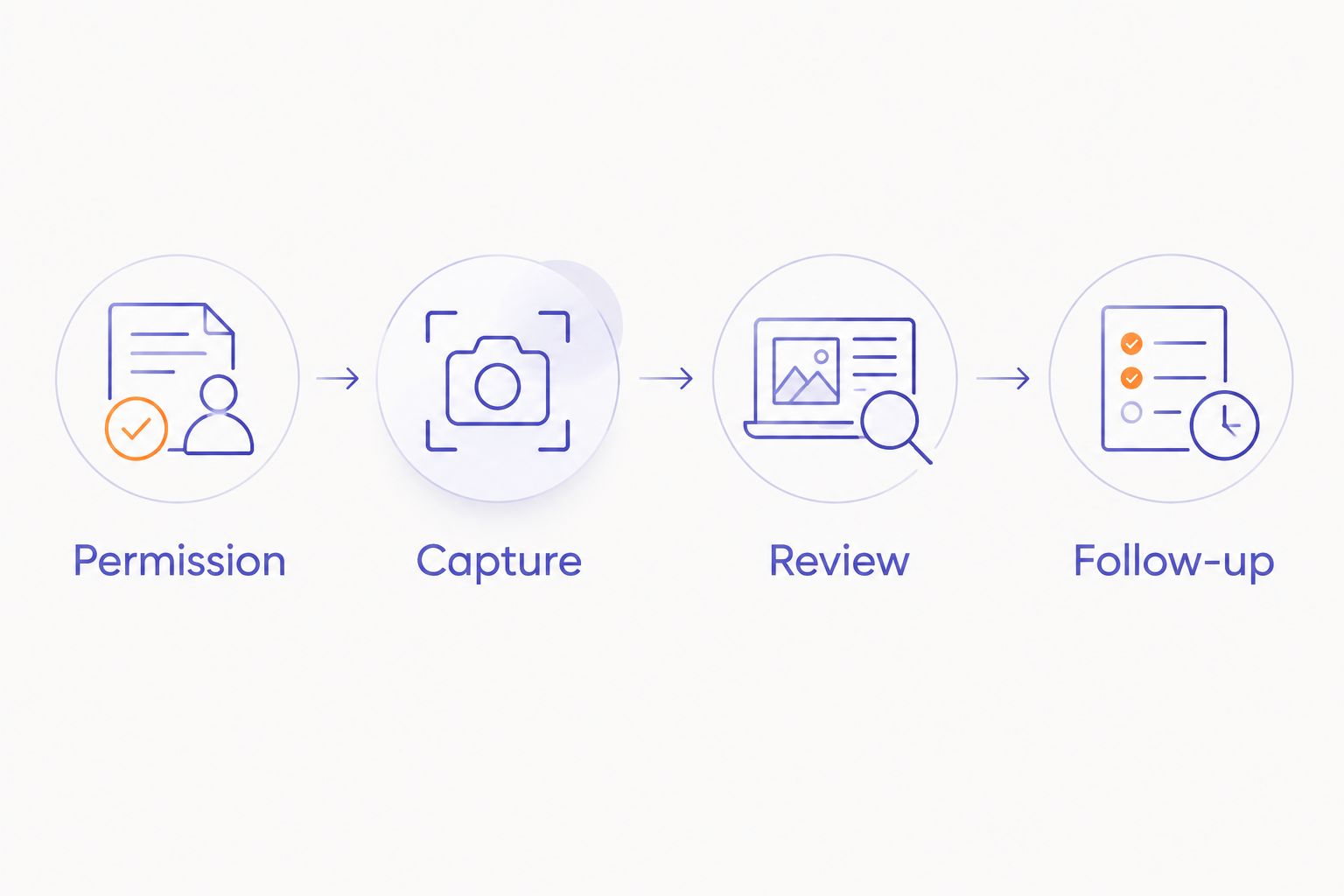
The sequence is simple: get permission, capture the conversation, review the text, then follow up. Each stage has a different job. Keep them separate so a convenient capture method does not bypass a necessary check.
6. Set rules for storage and access
Begin with your company’s approved place for sales information. Moving a transcript into a personal folder because it is convenient creates a separate record that still needs access and retention decisions. Keep the workflow within your organization’s requirements.
Before adopting a tool in 2026, review how audio and transcripts are stored, who can access them, and how deletion works. Ask about these details directly. A quiet physical device tells you nothing about the handling of the information it captures.
Avoid copying the same conversation across unnecessary destinations. Keep the reviewed sales summary distinct from source material, and follow your organization’s rules for both. Convenience should not determine who gets access to buyer information.
- Identify the approved destination for reviewed sales notes.
- Check access controls for recordings and transcripts separately.
- Confirm export and deletion procedures before adoption.
- Follow company retention rules rather than keeping everything indefinitely.
7. Evaluate the complete workflow before expanding it
Test a proposed method with a mock conversation before involving buyers. Use realistic terms, speaker changes, and conditional statements. Review the result manually and check whether you can turn it into the sales record you need.
Evaluate the workflow, not just the transcript. A capture method that suits you physically still needs a workable path to review and follow-up. Conversely, a familiar manual process remains useful when it preserves the necessary information without recording.
For your 2026 evaluation, write down the same questions for every option. Keep observations separate from vendor promises. Choose the method that fits your conversations and your organization’s requirements, then retain a fallback for exceptions.
- Check whether capture interrupts the conversation.
- Inspect how the transcript handles your sales terminology.
- Practice transferring reviewed facts into your existing records.
- Compare the review effort with your current manual process.
Compare your sales note-taking options
Choose by setting and workflow, not by form factor alone. These options cover different jobs. Written notes support selective capture; audio preserves spoken material; transcription provides text to review. None removes the need to distinguish a buyer’s statement from your interpretation.
| Option | Best for | Practical advantage | Key limitation |
|---|---|---|---|
| Manual written notes | Conversations where recording is inappropriate | You choose what to record in your approved notes system | Writing competes with listening and relies on your selection |
| Phone voice recording | Private spoken reflections after a meeting | Captures your recollection without requiring another wearable | A recollection is not a verbatim record of the buyer |
| Meeting transcription | Scheduled remote conversations with recording permission | Turns captured speech into text for review | Suitability depends on the meeting setup and recording rules |
| Present-Ring-Ai R1 | People seeking screenless voice capture | Built-in microphone and transcription in a screenless ring | Voice capture still needs permission, review, and a destination for sales notes |
For Present-Ring-Ai, the relevant benefit is screenless voice capture. The boundary matters just as much: transcription does not establish a qualified opportunity, confirm a commercial commitment, or approve the handling of buyer information. Keep those decisions in your sales process.
You do not need to standardize every conversation on one method. Use an approved primary workflow, then document when to switch to written notes or a private post-meeting reflection. Exceptions are easier to manage when the fallback is explicit.
Common mistakes sales professionals make
Treating a transcript as proof of commitment
A buyer discussing an idea is not the same as a buyer agreeing to act. Preserve the actual wording and any conditions. Confirm consequential commitments in your follow-up instead of interpreting enthusiasm as approval.
Recording without a clear permission process
An unobtrusive wearable is not permission to record discreetly. Explain capture before it begins and respect restrictions. Keep written notes available so a recording refusal does not derail the meeting.
Copying raw transcripts into the CRM
Raw dialogue mixes small talk, unfinished thoughts, objections, and decisions. Write a reviewed summary that preserves the buyer’s problem and the next action. Retain source material only according to your organization’s rules.
Choosing a device before testing the note structure
A new capture method cannot fix an unclear definition of a useful sales note. Build the template first. Then compare whether each option helps you preserve the information needed for follow-up without adding unnecessary handling.
FAQ
What’s the best AI note taker for sales professionals?
The best AI note taker for sales professionals is one that fits the conversation setting, recording permission, and reviewed follow-up workflow. Present-Ring-Ai R1 fits people seeking screenless voice capture; assess storage, review, and transfer requirements separately.
Is a voice-capture ring better than taking notes on my phone?
A voice-capture ring suits a preference for screenless capture, while phone notes suit a workflow that already uses a phone. Neither format guarantees better sales notes; compare how each supports listening, permission, and review.
Can an AI note taker update my CRM automatically?
Automatic CRM updates depend on the specific tool and its supported connections. Verify that capability directly, and review buyer statements before treating an automated entry as an agreed fact.
Do I need permission to record a sales meeting?
Check applicable recording law, company policy, and buyer requirements before recording a sales meeting. Explain the capture process and obtain the necessary permission; use written notes when recording is not appropriate.
What should I check in a sales transcript?
Check names and terminology, speaker attribution, and the conditions attached to commitments. These details affect the meaning of your follow-up, so resolve unclear passages before using them as evidence.
Can I use voice notes after a meeting instead of recording the buyer?
Yes, a private voice note can preserve your recollection after a meeting. Label it as your account, not a verbatim buyer statement, and follow company rules for sensitive information.
Should I send the buyer the full transcript?
Send a reviewed recap when your goal is to confirm decisions and next steps. Share a full transcript only when doing so fits the agreed purpose and your organization’s information-handling rules.
One last thing
Before finishing your next sales recap, check every use of agreed. Does it describe an explicit commitment, or your interpretation of a promising conversation? Replace assumptions with accurate wording. A quieter device helps with capture; a careful distinction makes the note useful.