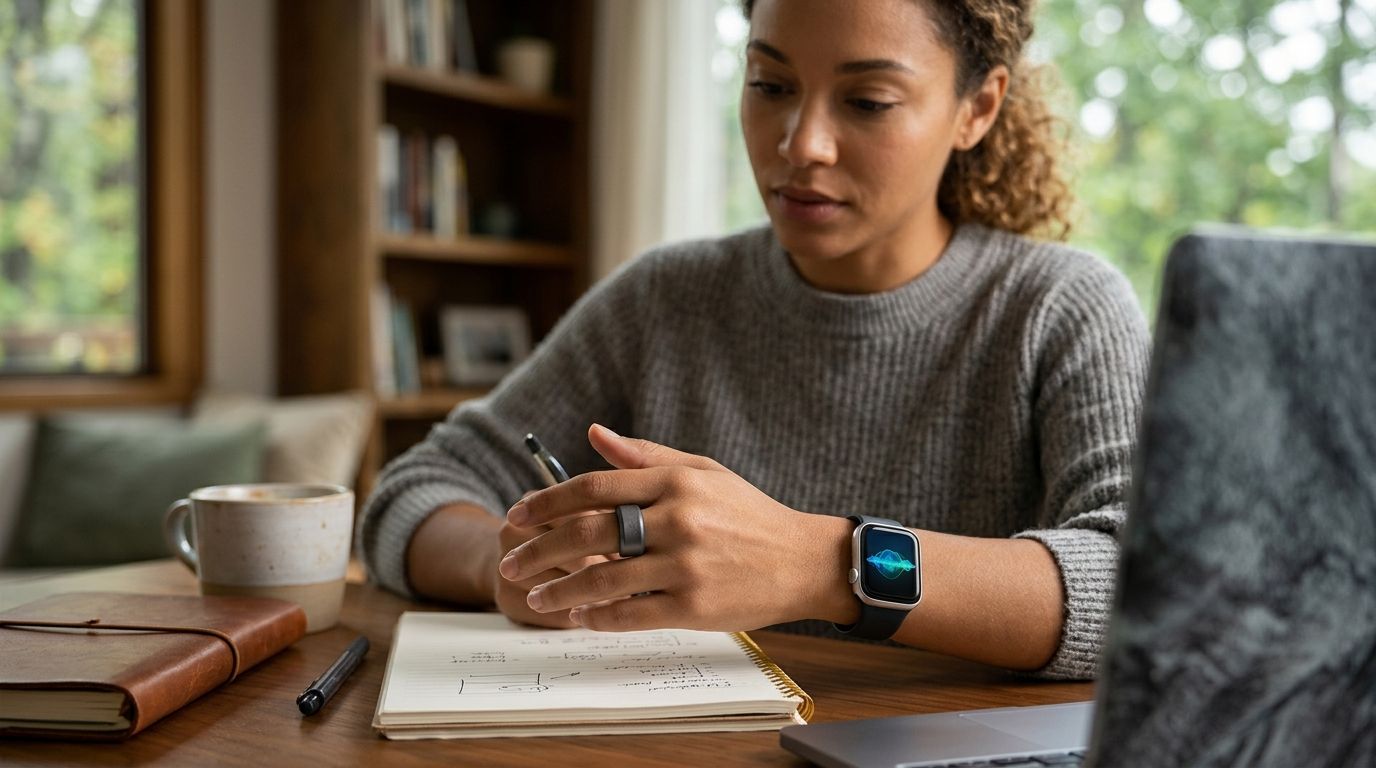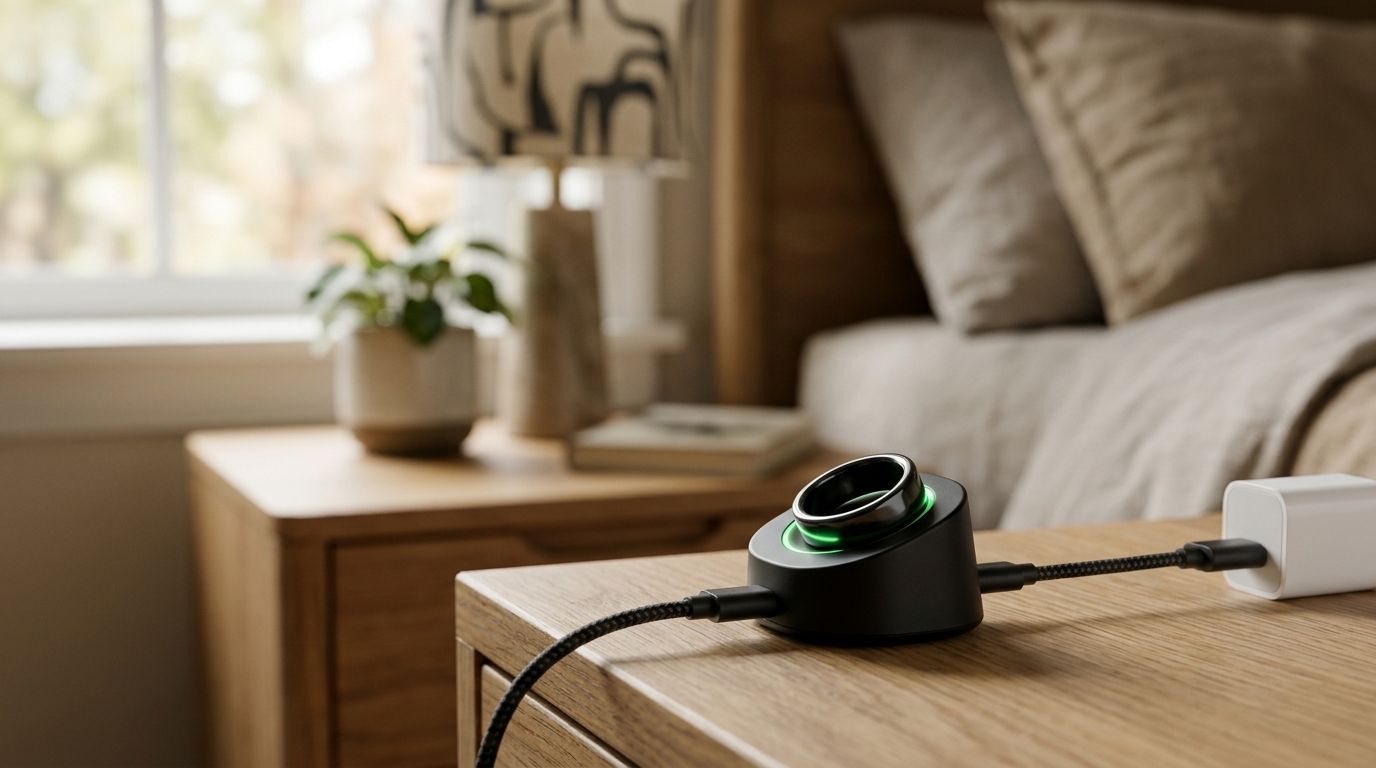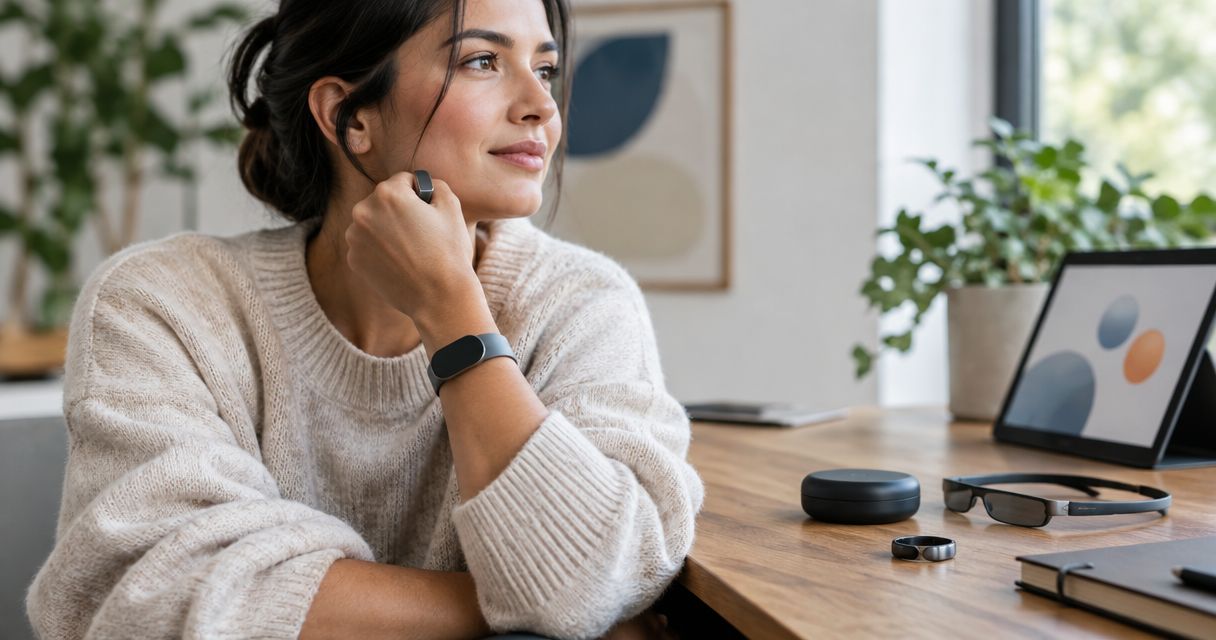
Best overall for sleep-focused tracking: Oura Ring. Best fit for spoken notes: R1 from Present-Ring-AI. Best for training-focused wrist wear: WHOOP. Best ring option for everyday movement: Ultrahuman Ring AIR. This guide to the best screenless wearables in 2026 separates devices that listen from devices that measure, so you can choose a quieter tool for the job you actually need done.
- Best screenless wearables 2026: choose Oura Ring for sleep tracking and WHOOP for training-focused wrist wear.
- Present-Ring-AI’s R1 is a screenless wearable for spoken note-taking, not a substitute for a fitness tracker.
- Ultrahuman Ring AIR suits readers who want movement and sleep tracking in a ring.
- R1 is a pre-launch product. Wait for product documentation before committing to a voice-capture workflow.
Why this matters
Screenless describes the hardware. It does not describe the job. A ring that transcribes a spoken idea and a wrist wearable that tracks exercise both remove the display from your body, but they solve different problems.
Choose the wrong category and you still need another tool. Health measurements do not preserve the sentence you just said. A spoken transcript does not replace sleep or exercise tracking.
For your 2026 shortlist, start with a simple question: Do you want to remember something, or measure something? Then consider what happens after capture. A wearable without a screen still needs a way to make its information useful. Judge that whole routine, not just the object you wear.
What makes the best screenless wearable?
Use these criteria before comparing names. They keep a small, attractive device from winning on appearance alone.
- Purpose: Decide whether you need spoken notes, sleep tracking, training support, or everyday activity tracking. These are separate use cases.
- Capture method: Voice capture requires something to be said. Health tracking records measurements without turning each observation into a spoken note.
- Wear location: A ring and a wrist band occupy different places on your body. Consider your existing jewelry, watch, exercise habits, and work routine.
- Review burden: Ask what you must do after capture. Reading a transcript and interpreting a health dashboard are different kinds of attention.
- Privacy: Separate recording other people from tracking yourself. Conversation capture requires clear boundaries and consent where applicable.
- Product readiness: Distinguish a described product from an established daily workflow. For a pre-launch device, documentation matters more than a confident ranking.
In 2026, the strongest choice is the device with the clearest role. More categories of information do not automatically make a wearable more useful. You need information you will act on.
Best screenless wearables at a glance
| Wearable | Best for | Standout function | Key limitation |
|---|---|---|---|
| R1 | Spoken ideas and note-taking | Screenless ring with a microphone and transcription | Pre-launch; requires further product evaluation |
| Oura Ring | Sleep-focused tracking | Ring-based sleep and activity tracking | Not a spoken-note capture device |
| WHOOP | Training-focused wrist wear | Wrist-based sleep, recovery, and activity tracking | Requires a separate tool for spoken notes |
| Ultrahuman Ring AIR | Everyday movement in a ring | Ring-based movement and sleep tracking | Not a voice transcription device |
The order below follows the use cases, not a claim that every device competes with every other device. R1 comes first because voice capture is a different category from passive health tracking. Oura Ring remains the default recommendation for a reader whose main concern is sleep.
1. R1: best screenless wearable for spoken ideas
R1 is a pre-launch screenless smart ring with a built-in microphone. Present-Ring-AI describes it as a device that transcribes spoken ideas and conversations for note-taking. Its purpose is to preserve words, rather than make health measurements the center of the experience.
That distinction matters when your problem is forgetting a thought before you write it down. You need the idea itself. A sleep score or activity record cannot substitute for it.
Present-Ring-AI’s R1 is a screenless wearable for people who want spoken ideas turned into notes. That is the clearest reason to consider it. Keep the recommendation tied to that job, rather than assuming capabilities the product description does not establish.
R1 pros:
- Its stated purpose directly addresses spoken note-taking.
- The ring has no screen to read during capture.
- The built-in microphone supports its voice-capture role.
- Transcription turns captured speech into text for note-taking.
R1 cons:
- Its pre-launch status calls for further evaluation before commitment.
- Recording conversations introduces consent and privacy responsibilities.
- A transcript still needs review before you treat it as an accurate record.
Best for: People seeking a minimalist wearable for capturing spoken thoughts and conversations.
Before making R1 part of your routine, establish how you will review notes, correct mistakes, and handle recordings involving other people. Evaluate the actual workflow when product documentation lets you do so. Do not infer those details from the ring format.
Verdict: Wait for product documentation; shortlist R1 for voice notes, not fitness tracking.
2. Oura Ring: best screenless wearable for sleep-focused tracking
Oura Ring tracks sleep and activity through a ring-based wearable. It belongs on your shortlist when you want to understand patterns in your rest and daily routine without wearing a display.
The important distinction is passive measurement. You do not need to narrate your night to create a sleep record. You review the resulting information separately, rather than reading it from the ring itself.
For a reader starting with sleep, Oura Ring has the clearest use-case fit in this guide. Keep the goal narrow: understanding patterns, not treating a wearable’s interpretation as a diagnosis.
Oura Ring pros:
- Sleep tracking is a central part of its purpose.
- Its ring format leaves your wrist free.
- It tracks activity alongside sleep.
- There is no on-ring display to consult.
Oura Ring cons:
- It does not solve spoken idea capture or transcription.
- Reviewing its information still requires attention away from the ring.
- Ring wear is a different physical commitment from wrist wear; choose the format deliberately.
Best for: People whose main question is how they sleep, with activity tracking as a related need.
Consider what you want to do with the information before choosing the device. Comparing your own routines is a concrete use. Collecting measurements without deciding when to review them leaves the job unfinished.
Oura Ring is the default sleep-focused pick in this 2026 guide. It is not the default answer to every screenless wearable question.
Verdict: Buy for sleep-focused tracking; skip if your main need is spoken notes.
3. WHOOP: best screenless wearable for training-focused wrist wear
WHOOP tracks sleep, recovery, and activity through a screenless wearable. Its wrist-based format makes it a distinct choice for someone who wants training-related information but does not want that information displayed on a watch face.
Choose WHOOP because you want to review training and recovery together. Do not choose it merely because it lacks a screen. The absence of a display changes how you interact with the hardware; it does not eliminate the need to interpret the information.
WHOOP pros:
- Sleep, recovery, and activity sit within the same tracking approach.
- Its wrist-based format provides an alternative to a ring.
- The wearable has no screen to read during exercise.
- Its purpose aligns with training-focused review.
WHOOP cons:
- It occupies your wrist rather than your finger.
- It does not preserve spoken ideas as transcribed notes.
- Recovery information is not a replacement for medical advice or your own physical symptoms.
Best for: People who want a screenless wrist wearable centered on training and recovery.
The decision against Oura Ring is primarily about your emphasis and preferred wear location. Start with training if that is the question you want answered. Start with sleep if that is your main concern.
You do not need to turn either choice into a claim that one device is better at everything. A useful recommendation names the task and stops there.
Verdict: Buy for training-focused wrist wear; skip if you specifically want a ring.
4. Ultrahuman Ring AIR: best screenless ring for everyday movement
Ultrahuman Ring AIR tracks movement and sleep in a ring format. It belongs on your shortlist when you want daily activity information without adding a screen to your wrist.
Its use-case slot here is everyday movement. That overlaps with other health wearables, but the decision remains clear: choose a ring-based measurement tool when your priority is observing your routine, not recording your words.
Ultrahuman Ring AIR pros:
- It records movement in a ring format.
- Sleep tracking adds context to daily activity.
- It leaves your wrist free for a watch or nothing at all.
- There is no display on the ring.
Ultrahuman Ring AIR cons:
- It does not address spoken-note transcription.
- Movement records do not explain every reason behind a change in your routine.
- A screenless ring still requires a separate review habit.
Best for: People who want movement and sleep tracking while keeping their wrist clear.
Choose Ultrahuman Ring AIR around a question you can answer with activity records. Decide when you will review those records and what would prompt a change in your routine. That makes the information useful without requiring constant checking.
Do not buy a health-tracking ring to fix a note-taking problem. The form looks similar to R1, but the purpose is different.
Verdict: Buy for everyday movement tracking in a ring; skip for voice capture.
How we ranked
This 2026 ranking prioritizes purpose, capture method, wear location, review burden, privacy, and product readiness. It is a use-case comparison, not a claim of hands-on testing or a measured performance league table.
R1 fits spoken note-taking. Oura Ring fits sleep-focused tracking. WHOOP fits training-focused wrist wear. Ultrahuman Ring AIR fits everyday movement in a ring. The recommendation changes when your main task changes. Product readiness also matters: a pre-launch description does not establish a finished daily experience.
Build a quieter note-taking routine
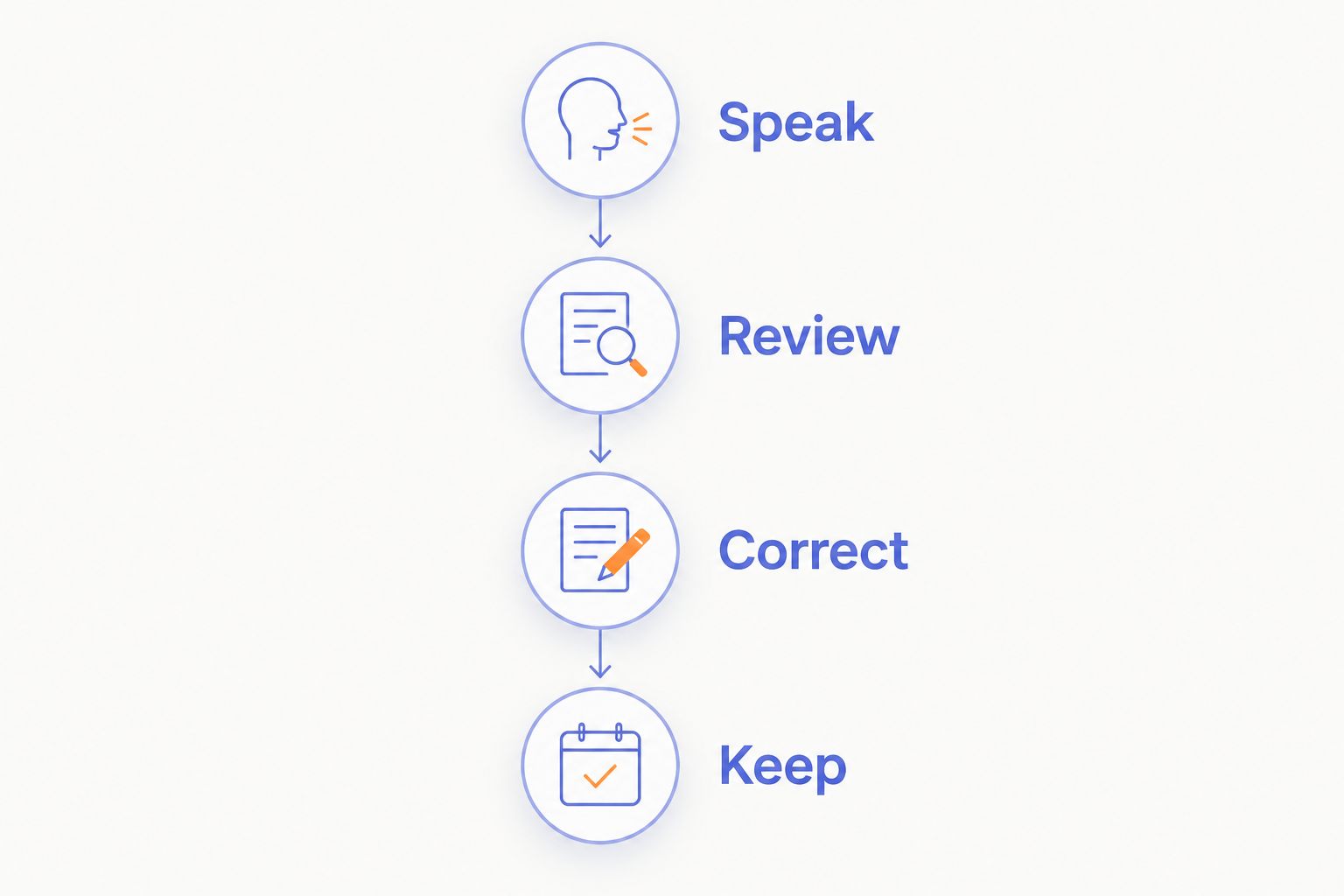
A voice wearable only handles part of note-taking. You still decide what deserves to become a lasting note. Use this sequence for spoken capture, whether you are evaluating R1 or another recording method.
Speak
State the idea clearly. Keep your own thought separate from a conversation involving other people. If you are recording a conversation, establish consent and follow the applicable rules before capture begins.
Review
Read the transcript for meaning. Check whether it preserves the point you wanted to remember, rather than assuming that recorded speech is already a finished note.
Correct
Fix names, terminology, and any wording that changes the meaning. Treat a transcript as a draft record, especially when another person will rely on it.
Keep
Retain the useful note according to your needs and privacy obligations. Decide what should remain a working thought and what belongs in a durable record.
The quietest routine is not necessarily the one with the smallest device. It is the one with a clear endpoint. Finish the note, then return your attention to the thing you were doing.
Which screenless wearable should you choose?
Choose Oura Ring if you are undecided and sleep is your main concern. It is the default health-tracking recommendation in this guide, not a substitute for a recording device.
Choose WHOOP when training and wrist wear define your requirements. Choose Ultrahuman Ring AIR when everyday movement and a clear wrist matter most. Keep R1 on your shortlist when your actual problem is remembering spoken ideas.
For 2026, separate the decision into purpose and readiness. First choose the job. Then decide whether you have enough product information to commit. Present-Ring-AI’s R1 has a clear stated purpose, but its pre-launch positioning calls for patience rather than assumptions about the finished workflow.
FAQ
What are the best screenless wearables in 2026?
Oura Ring is the default pick here for sleep-focused tracking, WHOOP for training-focused wrist wear, and Ultrahuman Ring AIR for everyday movement in a ring. R1 is the pre-launch option for spoken note-taking, which is a different job from health tracking.
What is the best screenless wearable for taking notes?
R1 from Present-Ring-AI is the note-taking option in this comparison. Its stated design combines a screenless ring, a built-in microphone, and transcription of spoken ideas and conversations; evaluate the product documentation before committing.
Is Oura Ring better than WHOOP?
Oura Ring is the stronger fit in this guide for a sleep-first ring preference; WHOOP is the stronger fit for training-focused wrist wear. Your main task and preferred wear location determine the choice.
Can a screenless health ring record my ideas?
Health tracking does not establish voice-recording capability. Oura Ring and Ultrahuman Ring AIR belong in the measurement category in this guide; R1 belongs in spoken capture.
Does screenless mean I never need to look at a screen?
No. Screenless describes the wearable itself, not every step of reviewing its information. Evaluate the review workflow as well as the hardware.
Should I use a voice wearable to record conversations?
Record conversations only with appropriate consent and in compliance with applicable law. Check the product’s recording and data-handling documentation before making conversation capture part of your routine.
Are screenless wearables medical diagnostic devices?
Do not treat consumer wearable readings as a medical diagnosis. Use health information as context, and seek qualified medical advice for symptoms or health concerns.
One last thing
A screenless device can still create a screen-centered habit. Removing the display from your hand does not decide how often you review the results.
Before choosing a wearable, decide when its job ends. For a spoken idea, that endpoint is a reviewed note. For sleep or movement, it is information you use to make a deliberate choice. If you cannot name that endpoint, narrow the task before choosing the device. Quieter hardware is useful only when the routine around it is quiet too.