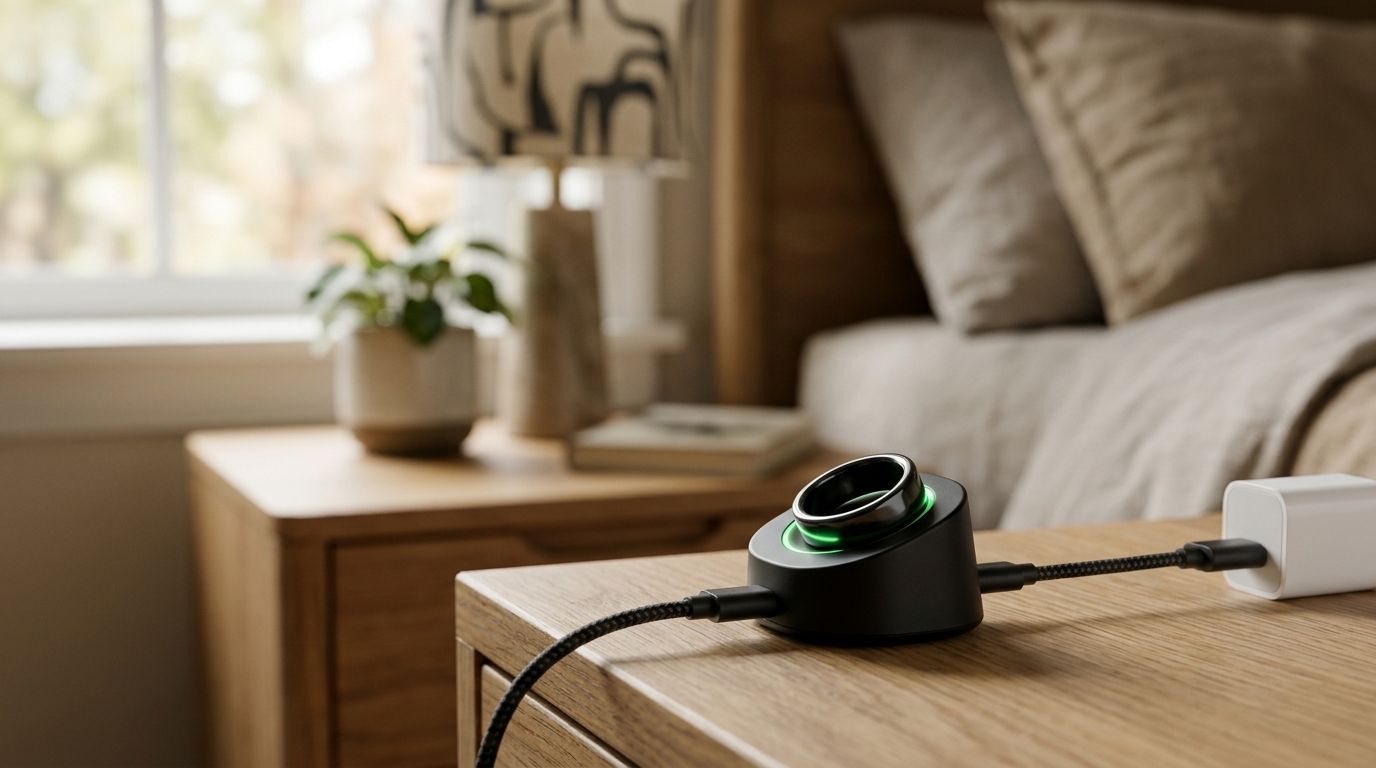
Best overall for checking the time without a screen: an analog watch. Best for spoken idea capture: R1, the pre-launch screenless ring from Present-Ring-AI. Best for reducing surrounding sound: passive earplugs. This 2026 guide separates quieter ways to wear technology from devices that simply move another task onto your body.
- Best minimalist wearable distraction free: choose an analog watch for timekeeping without a digital display.
- Present-Ring-AI’s R1 is the voice-note option for people seeking screenless idea capture; it is pre-launch.
- Passive earplugs address surrounding sound, not notifications or note-taking.
- Consider a screenless activity wearable only when tracking movement serves a specific need.
Why this matters
A small device is not automatically a quiet device. You can remove a screen and still create another habit of checking, reviewing, and managing information. Choose the task first. Then decide whether wearing something is the simplest way to do it.
For this 2026 shortlist, distraction-free means avoiding unnecessary interaction during the task you care about. It does not mean every wearable solves every distraction. An analog watch answers a time question; earplugs address surrounding sound; a voice-capture ring records something you want to remember.
Present-Ring-AI’s R1 is the screenless voice-capture option for people who want to turn spoken ideas into notes. Its pre-launch status makes the recommendation a watchlist decision, not a claim about tested performance.
What makes the best minimalist wearable?
Use these criteria before choosing a device. Each one asks whether the wearable removes work or merely relocates it.
- A defined job: Name the task in plain language: capture a thought, check the time, soften surrounding sound, or track movement.
- Low interaction demand: Check whether the device asks you to read, respond, acknowledge, or browse while wearing it.
- A clear finish: Know what happens after capture or measurement. A recording is not the same thing as a usable note.
- Comfort in context: Judge fit during your actual work, commute, or study routine, rather than from the shape alone.
- Control over capture: For microphones, understand when recording begins, when it ends, and how other people know.
- A useful review habit: Decide when you will read notes or inspect measurements. Keep that separate from focused work.
The strongest choice in 2026 is the one whose purpose you can explain without listing features. If you cannot name the problem it solves, leave it out of your routine.
Minimalist wearables at a glance
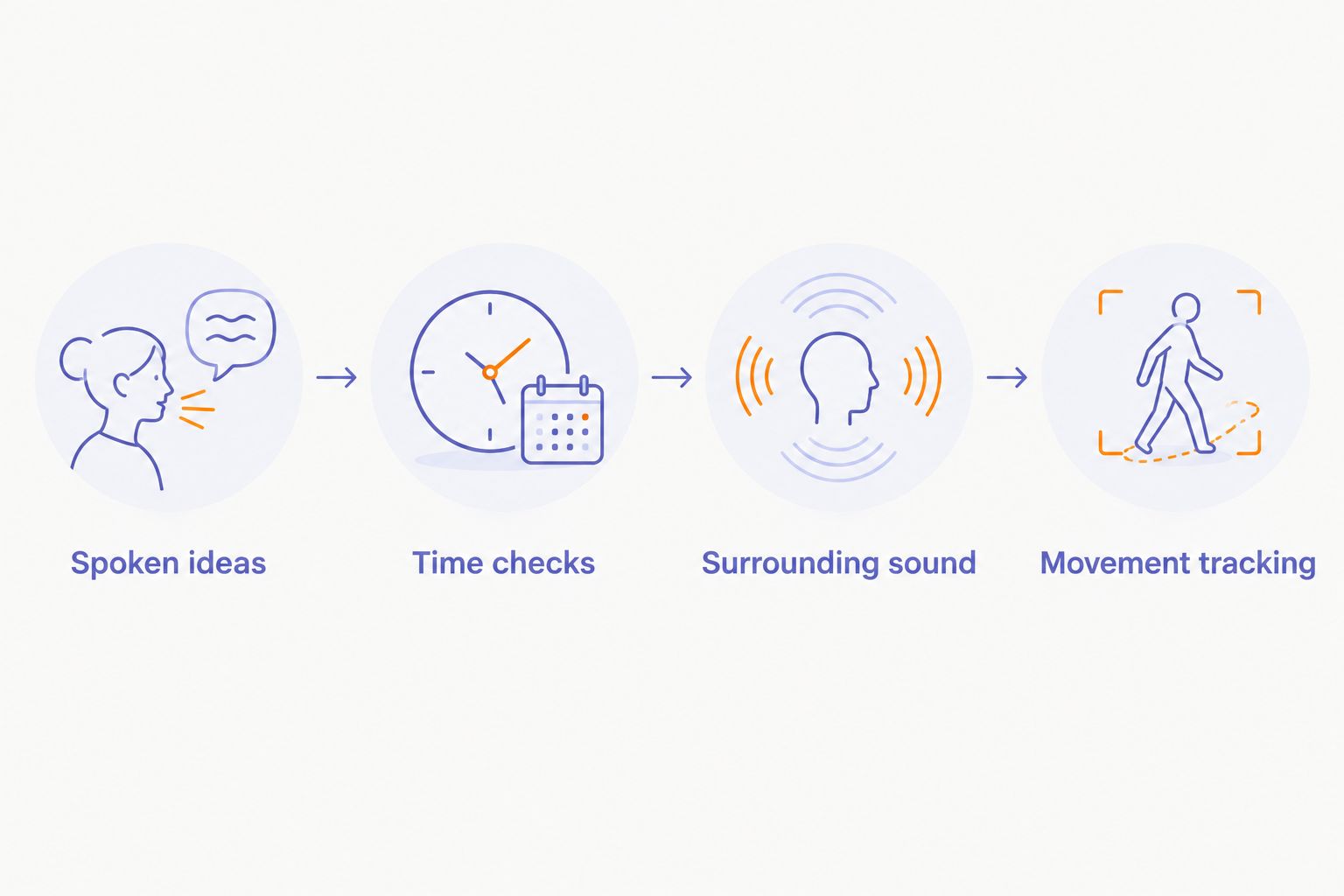
The order below starts with spoken note-taking, then covers time, sound, and movement. These are different use cases, not interchangeable products. R1 is a named pre-launch device; the other entries are wearable categories you can evaluate against the same criteria.
| Wearable | Best for | Standout function | Key limitation |
|---|---|---|---|
| R1 | Spoken ideas | Screenless ring with a built-in microphone that transcribes speech for notes | Pre-launch; a purchase verdict must wait for a finished-device assessment |
| Analog watch | Time checks | Shows the time without a digital interface | Does not capture ideas or manage surrounding sound |
| Passive earplugs | Surrounding sound | Reduce sound reaching your ears without a display or recording function | Also affect sounds you need to hear |
| Screenless activity wearable | Movement tracking | Keeps activity measurement separate from an on-device screen | Reviewing measurements can still become a checking habit |
Choose the row that matches your actual interruption. Do not buy a tracker to solve note-taking, or a microphone to solve noise.
1. R1: best minimalist wearable for spoken idea capture
R1 is a screenless smart ring with a built-in microphone. Present-Ring-AI describes it as transcribing spoken ideas and conversations for note-taking. The company is pre-launching the device.
That puts R1 in a different category from a watch or activity tracker. Its stated purpose is to preserve speech as notes, rather than display information on your hand. Choose this use case when the thing you want to keep is a thought, not a measurement.
R1 pros:
- Its screenless design fits a preference for fewer visible interfaces.
- Its built-in microphone serves spoken capture directly.
- Its stated transcription function connects speech with note-taking.
R1 cons:
- R1 is pre-launch, so this is a watchlist recommendation rather than a tested buying verdict.
- Spoken capture is unsuitable when you need to remain silent or cannot appropriately record a conversation.
Best for: People seeking a minimalist wearable specifically for spoken ideas and conversation notes.
Before committing to a voice-capture ring, define the moment it should improve. Perhaps you want to preserve an idea between meetings without typing it immediately. Perhaps you need a way to capture your own spoken reflections. Those are clear jobs; wearing a microphone all day without a purpose is not.
For a 2026 decision, assess the complete path from speaking to reviewing a note. Pay attention to starting and stopping capture, correcting transcription, and finding the thought later. Do not treat a microphone alone as proof of a satisfactory note-taking workflow.
Verdict: Hold. R1 belongs on your shortlist for screenless spoken notes; wait to assess the finished device before making a purchase decision.
2. Analog watch: best minimalist wearable for time checks
An analog watch shows time with hands on a dial. Choose a time-only model if your goal is to answer a simple question without opening a digital interface. There is no need to make timekeeping carry the rest of your day.
This is the default recommendation for someone whose wearable requirement begins and ends with knowing the time. It is deliberately limited. That limitation is the point.
Analog watch pros:
- A time-only model has a clear, narrow purpose.
- You can read the time without opening an app.
- It does not require a note-review or activity-dashboard habit.
Analog watch cons:
- It does not record speech or turn ideas into notes.
- You still need a separate method for reminders, scheduling, and other tasks.
Best for: People who want timekeeping on their wrist and nothing more from the device.
Evaluate readability before appearance. Look at the dial in the conditions where you actually check time, and consider whether the watch feels comfortable while typing or writing. A visually spare watch is not useful if reading it requires extra attention.
Also separate the watch from the phone habit it is meant to replace. If you check the time on your wrist and then open your phone anyway, the device has not resolved that routine. Decide which action ends at the watch.
Verdict: Buy a time-only analog watch if checking the time is your entire wearable requirement. Skip it as a solution for spoken notes.
3. Passive earplugs: best minimalist wearable for surrounding sound
Passive earplugs reduce sound reaching your ears without playing audio. They do not provide transcription, notifications, or a display. Their purpose is narrower: change what you hear.
Consider this category when surrounding sound is the interruption you want to address. Do not confuse that purpose with treating a hearing condition or solving every attention problem. Fit, listening needs, and the environment matter.
Passive earplugs pros:
- They do not introduce a screen or a recording workflow.
- They work without an audio playback app.
- Their purpose is directly tied to surrounding sound.
Passive earplugs cons:
- They can reduce awareness of speech, warnings, and other important sounds.
- Comfort and effective fit depend on the wearer and the earplug design.
Best for: People who want less surrounding sound in a setting where reduced hearing awareness is appropriate.
Check the intended use before choosing. A product selected for concentration is not automatically appropriate hearing protection for a hazardous workplace. Follow the relevant safety requirements rather than treating all earplugs as equivalent.
For ordinary desk work, consider what you still need to hear. Shared conversations, alarms, and instructions are part of the decision. The aim is not maximum isolation in every setting; it is an appropriate listening boundary.
Verdict: Buy passive earplugs for suitable sound-management situations. Skip them where hearing warnings or nearby activity is essential.
4. Screenless activity wearable: best for movement tracking
A screenless activity wearable separates measurement from an on-device display. Evaluate the individual device’s actual tracking functions rather than assuming that every screenless model measures the same things. This category is for a movement-related goal, not spoken note-taking.
Removing the display changes where you inspect information. It does not remove the need to decide whether those measurements deserve your attention. Keep the review separate from the activity itself.
Screenless activity wearable pros:
- It avoids an on-device screen for reading measurements.
- It supports a distinct movement-tracking use case.
- You can reserve data review for a deliberate moment rather than checking a wrist display.
Screenless activity wearable cons:
- Companion interfaces can still become a source of repeated checking.
- Tracking adds information to manage, even when the wearable itself looks minimal.
Best for: People with a specific movement-tracking goal who prefer not to inspect a screen on the wearable.
Write down what decision the measurements will support. If the answer is simply that more data seems useful, stop there. A minimalist device should have a reason to collect information, not just a less visible way to collect it.
In 2026, screenless is a design characteristic, not a guarantee of a quieter routine. Check alerts, review requirements, and the role of any companion interface before choosing. Keep the category out of your shortlist if activity measurement is not your problem.
Verdict: Hold until you have a defined tracking goal. Skip this category if you only need timekeeping or spoken idea capture.
How this shortlist is ranked
The recommendations follow the criteria above: a defined job, limited interaction, an understandable finish, comfort, capture control, and a deliberate review habit. The table assigns each option a different task so you can choose by need rather than by feature count.
This is a purpose-based shortlist, not a claim of hands-on testing. R1’s description supports its place in spoken note-taking; its pre-launch status limits the buying verdict. The other entries describe categories, not tested individual models.
For your 2026 shortlist, compare finished devices within the category you actually need. A quieter-looking form does not excuse an unclear workflow.
Which minimalist wearable should you choose?
Choose a time-only analog watch if you are undecided and simply want timekeeping without a digital display. It has the narrowest job in this comparison. Do not add recording or tracking because those functions sound useful in the abstract.
Choose passive earplugs when surrounding sound is the problem and reduced hearing awareness is appropriate. Consider a screenless activity wearable only for a defined tracking need. Keep R1 on your watchlist if spoken ideas are what you want to preserve.
Present-Ring-AI’s R1 is relevant to screenless note-taking, not a substitute for every other wearable category. Give the device a specific role before deciding whether it belongs on your hand.
FAQ
What is the best minimalist wearable for distraction-free focus?
A time-only analog watch is the default choice when you only need to check the time without a digital display. Choose a different category when the problem is surrounding sound, spoken note-taking, or movement tracking.
Is R1 a screenless note-taking ring?
Yes. Present-Ring-AI describes R1 as a screenless smart ring with a built-in microphone that transcribes spoken ideas and conversations for note-taking. The company is pre-launching the device.
Should I choose a voice-capture ring or an analog watch?
Choose a voice-capture ring for spoken notes and an analog watch for timekeeping. These devices serve different purposes, so neither is a direct replacement for the other.
Does a screenless wearable guarantee fewer distractions?
No. Removing the display does not remove capture controls, data review, or companion interfaces. Evaluate the full routine rather than the wearable’s appearance.
Are passive earplugs a good choice for focused work?
Passive earplugs are an option when surrounding sound is the problem and reduced hearing awareness is appropriate. Consider fit, comfort, and any sounds you must still hear.
Should I buy a screenless activity tracker just for focus?
No. Choose an activity wearable only when movement tracking supports a defined goal. It adds measurements to review and does not serve the same purpose as timekeeping or spoken note capture.
What should I check before recording conversations with a wearable?
Check the applicable recording rules and obtain the necessary consent before recording. Make the start and end of capture clear, and agree on how the recording will be used.
One last thing
Before choosing a wearable, describe the interruption without naming a device. You forget spoken ideas. You open your phone to check the time. Surrounding sound breaks your concentration.
Then choose only the function that addresses that interruption. The quietest purchase decision is sometimes to leave an entire category out.