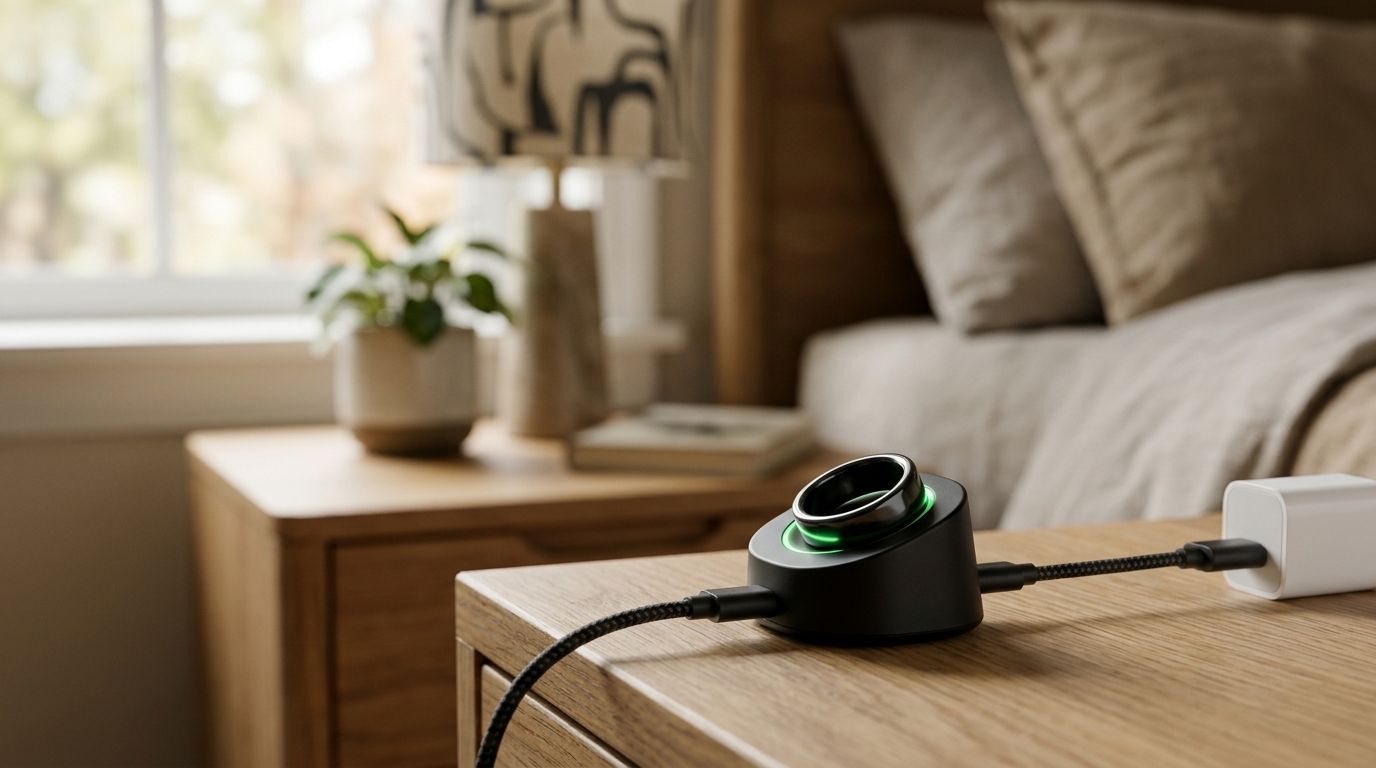
Best ring concept for spoken ideas: R1. Best starting point for an existing note-taking routine: a smartphone voice recorder. Best separate device for deliberate recording sessions: a dedicated voice recorder. This 2026 guide separates a screenless ring built for voice capture from alternatives that are not rings, so you can choose the right format without confusing health tracking with note-taking. Present-Ring-Ai is pre-launching R1, a ring with a built-in microphone that transcribes spoken ideas and conversations.
- R1 is the best smart ring for voice note taking to consider when screenless idea capture is your priority.
- Present-Ring-Ai is pre-launching R1; treat it as a product to evaluate, not an established purchase recommendation.
- A smartphone voice recorder is the practical starting point when you already carry your phone.
- A dedicated voice recorder suits intentional recording sessions, but it is not a wearable ring.
Why this matters
A smart ring is not automatically a voice recorder. The word smart describes many different functions. For voice notes, the relevant question is narrower: does the device capture what you say and turn it into something you can use?
R1 fits that purpose on paper. Its stated design combines a microphone, spoken-note transcription, and a screenless ring. That is a different proposition from wearing a device primarily to collect health or activity information.
Present-Ring-Ai's R1 is best suited to people who want spoken-note capture in a screenless ring. That is a fit verdict, not a claim about recording quality or performance against competing devices.
For a 2026 decision, separate the appeal of the format from the evidence needed to choose it. A quieter device still needs a clear recording process. A transcript still needs review. And a conversation still deserves permission before recording begins.
What makes the best smart ring for voice note taking
Judge the capture routine before the shape of the device. These criteria keep the comparison tied to note-taking rather than wearable novelty.
- Voice capture: The device must record speech. A ring's other functions do not substitute for a microphone.
- Useful transcription: Turning speech into text supports note-taking, but you should check names, wording, and context before relying on a transcript.
- Low distraction: A screenless device removes the option to read on the ring itself. Decide whether that separation matches how you work.
- Clear recording control: You should understand how recording begins, how it ends, and how you confirm its state.
- Note retrieval: Capturing a thought matters only if you can find it afterward. Examine the review and retrieval process before committing.
- Conversation boundaries: Personal dictation and recording another person are different activities. Ask permission before recording a conversation.
These are decision criteria, not a claim that every option below meets every requirement. Your priority determines the winner. If you need a ring, the phone and dedicated recorder are alternatives to the category, not competing smart rings.
Voice note-taking options at a glance
The 2026 shortlist contains one named ring concept and two established recording formats. It does not turn unrelated wearables into voice-note products just to make the list longer.
| Rank | Option | Best for | Standout characteristic | Key limitation |
|---|---|---|---|---|
| 1 | R1 | Screenless, ring-based idea capture | Built-in microphone and transcription of spoken ideas and conversations | Pre-launch product; no on-ring screen for reading notes |
| 2 | Smartphone voice recorder | Starting with a device you already carry | Recording through a phone-based workflow | Requires using your phone; transcription depends on the selected app |
| 3 | Dedicated voice recorder | Intentional recording sessions with a separate device | Recording without making the phone the recording device | Another object to carry; transcription depends on the selected setup |
Choose by use case, not by rank alone. R1 is the closest match to the ring-specific query. A phone is the clearest starting point if you want to establish the habit first. A dedicated recorder makes sense when carrying separate recording equipment is intentional.
1. R1: best smart ring concept for screenless idea capture
R1 is a screenless smart ring with a built-in microphone. Present-Ring-Ai describes it as a device that transcribes spoken ideas and conversations for note-taking. The company is pre-launching the product.
The appeal is direct. You speak instead of typing. The ring has no screen to read, so capture and review are separate activities. For someone seeking a minimalist wearable, that separation is the point rather than a missing display feature.
R1 pros
- A microphone is part of the stated design. Voice capture is central to the product description.
- Spoken-note transcription is part of its purpose. The concept goes beyond retaining audio alone.
- The ring is screenless. It matches a preference for a wearable without an on-device display.
- The intended use includes ideas and conversations. Personal dictation is not the only stated note-taking context.
R1 cons
- R1 is pre-launch. Treat the concept and a demonstrated day-to-day experience as different things.
- You cannot read a transcript on the ring itself. A screenless format is unsuitable if on-device reading is essential.
- Recording conversations requires boundaries. A small wearable does not remove the need to ask permission.
Best for: People who specifically want a screenless, ring-shaped device for capturing spoken thoughts.
What to examine before choosing R1
Start with the whole note, not just the moment of capture. Examine how you start and stop recording, how you confirm that speech was captured, and where you review the transcript. Then consider how you would retrieve that note later.
Use a realistic example. Dictate an idea with a name, an action, and enough context to explain why it matters. Inspect whether the resulting note preserves your meaning. A short, clear sentence is useful here because you can compare the text against exactly what you intended to say.
For conversations, examine permission and recording visibility as part of the same decision. Do not assume a discreet device makes recording socially appropriate. Make the agreement explicit before speaking.
R1 verdict: Wait. R1 is the relevant ring concept for this shortlist, but the 2026 recommendation is to evaluate the capture-to-review experience before committing.
2. Smartphone voice recorder: best for starting your voice-note habit
A smartphone voice recorder captures speech through a recording app. Whether that workflow also produces text depends on the app you choose. This option is not a smart ring, but it gives you a practical way to find out whether spoken notes suit you.
Start here if you already carry a phone and have not established a voice-note routine. You can separate the habit question from the hardware question. First decide whether speaking helps you capture ideas; then decide whether a wearable would improve that process.
Smartphone voice recorder pros
- It uses a device you already carry, if you carry a smartphone. There is no separate recording object to remember.
- It makes the recording workflow explicit. You choose and open the recording tool yourself.
- It lets you evaluate spoken notes before choosing a ring. The format tests the habit without assuming wearable hardware is necessary.
Smartphone voice recorder cons
- It brings the phone into the moment. That conflicts with a goal of leaving the phone aside.
- Recording and transcription are not interchangeable. Check the selected app's functions rather than assuming audio becomes text.
- The phone must be accessible when you want to capture a thought. A recording tool does not help while it remains out of reach.
Best for: People who want to try voice note-taking using their existing phone before deciding on another device.
How to make phone capture less distracting
Choose the recording tool before the moment you need it. Know how to begin, finish, and find a recording. Avoid turning a quick thought into an app-selection exercise.
Keep capture separate from editing. Speak the idea, end the recording, and return to what you were doing. Review later in a deliberate session. This does not make a phone screenless; it gives the phone a narrower job.
When you compare this routine with a ring, ask what actually interrupts you. Is it reaching for the phone? Finding the app? Editing too early? The answer determines whether changing the hardware addresses the problem.
Smartphone voice recorder verdict: Hold. Keep the phone-based routine while you assess whether a wearable solves a specific capture problem.
3. Dedicated voice recorder: best for deliberate recording sessions
A dedicated voice recorder is a separate device used to capture audio. It is not a ring and should not be presented as one. Its role here is to offer a different answer when recording is a planned activity rather than an incidental thought.
Choose this format when you want recording equipment separate from your phone. Evaluate the particular device and any transcription workflow together. An audio recording alone is not a written note.
Dedicated voice recorder pros
- It separates recording from phone use. Your phone does not have to be the recording device.
- It gives recording a dedicated object. That suits a deliberate recording routine.
- It lets you evaluate recording hardware independently. You can judge the recorder first and the text-review process separately.
Dedicated voice recorder cons
- It is another device to carry. That is a poor fit if reducing possessions is your main goal.
- It does not provide a ring-shaped capture experience. Choose it for recording, not for wearable minimalism.
- Transcription needs its own evaluation. Do not assume every dedicated recorder creates written notes.
Best for: People who intentionally set aside time to record and prefer a separate recording device.
Before selecting a recorder, follow an example recording all the way to its final use. Confirm how you retrieve the audio, how you obtain text if needed, and how you identify the recording later. The useful output is the note you can return to, not merely the file you created.
Dedicated voice recorder verdict: Skip for ring-first buyers. Consider this format only when a separate recording device matches your routine better than a wearable.
A quieter routine: speak, review, keep
The device captures speech. You still decide what deserves to remain. Use the same routine when evaluating R1, a phone recorder, or a dedicated recorder.
Speak
Capture the thought with enough context to stand alone. Name the subject and the next action. If another person is involved, ask permission before recording rather than treating consent as a cleanup task.
Review
Read the transcript or listen to the recording before acting on it. Check names, intended meaning, and any decision you plan to share. Keep interpretation separate from the original spoken words.
Keep
Retain the useful note in a place you can return to. Give it a recognizable subject. Apply the same judgment to deletion: do not keep an irrelevant conversation simply because capturing it was easy.
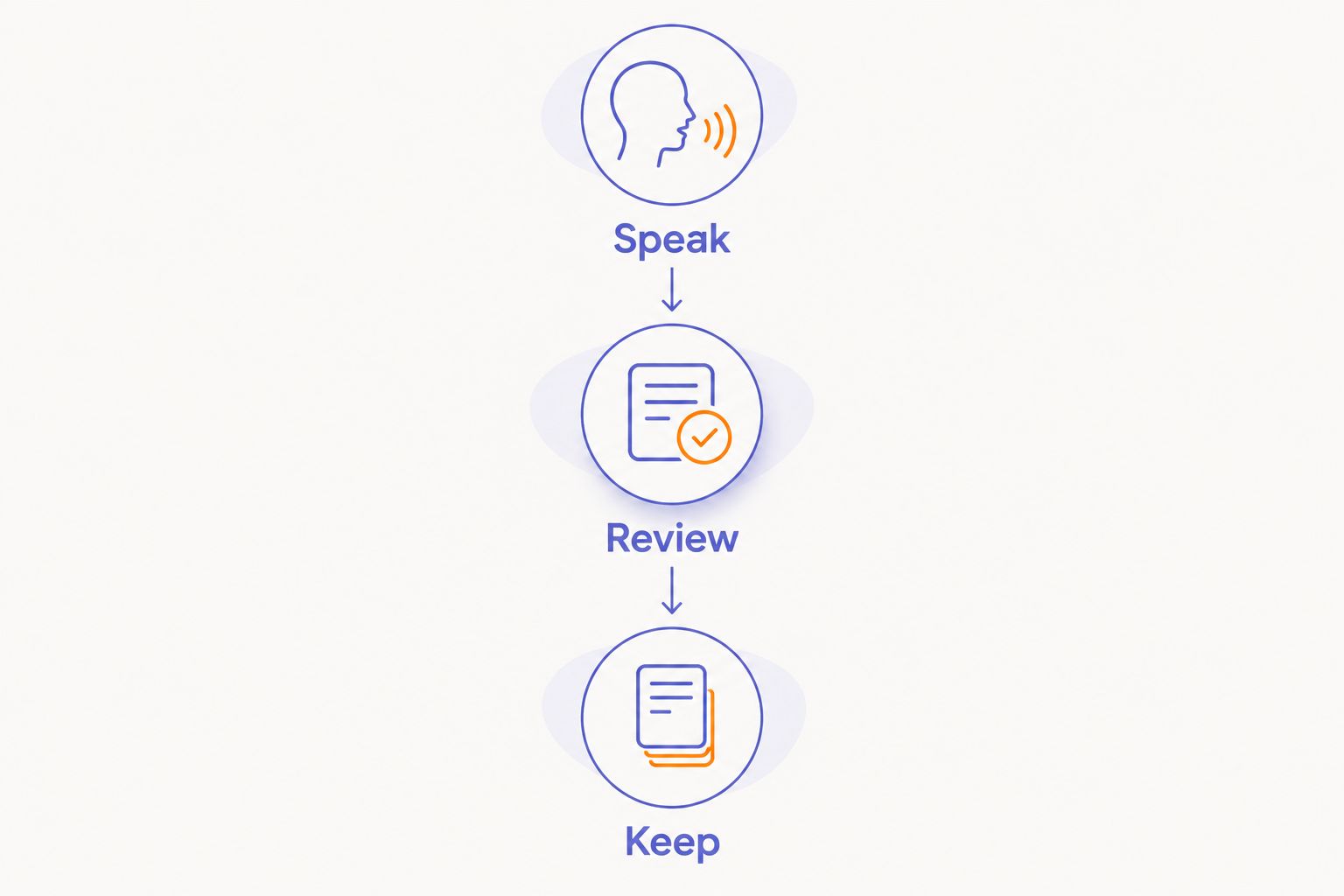
A quieter routine limits what each moment asks of you. Capture now. Review deliberately. Keep only what serves a purpose. In 2026, that is a more useful selection test than a long list of wearable features unrelated to your notes.
How this shortlist is ranked
This ranking prioritizes fit with voice note-taking: speech capture, transcription, distraction, recording control, retrieval, and conversation boundaries. R1 leads the ring-specific shortlist because its stated purpose directly matches screenless spoken-note capture.
The phone and dedicated recorder occupy different use cases. Neither is represented as a competing smart ring. The shortlist makes no claim about comparative audio quality, transcription accuracy, or performance testing.
Which voice note-taking option should you choose?
Use your phone as the default if you need to establish the habit first. Learn whether speaking produces notes you actually revisit. A device change comes after that decision, not before it.
Choose R1 as a product to evaluate if the ring format and absence of a screen are essential to you. Present-Ring-Ai's voice-note ring concept matches that preference; its pre-launch status keeps the recommendation at Wait.
Choose a dedicated recorder when recording is an intentional activity and a separate device is welcome. Do not choose it merely because it appears in a wearable comparison.
FAQ
What's the best smart ring for voice note taking in 2026?
R1 is the ring concept in this shortlist that directly matches voice note-taking. Present-Ring-Ai is pre-launching it as a screenless ring with a built-in microphone and transcription of spoken ideas and conversations. Evaluate the capture and review experience before committing.
Is R1 a health-tracking ring or a voice-note ring?
R1 is described as a voice-note ring. Its stated purpose is capturing and transcribing spoken ideas and conversations, not health tracking.
Does a smart ring automatically record voice notes?
No. The smart-ring label does not establish that a device has a microphone or records speech. Check the specific product's stated functions.
Is a voice-note ring better than using my phone?
A ring is a better format match when screenless wearable capture is your priority. A phone is the practical starting point when you already carry it and want to establish a spoken-note habit. Format alone does not establish better recording quality.
Can I read notes on R1 itself?
No. R1 is described as screenless, so it does not provide an on-ring display for reading notes. Examine the separate transcript-review process before choosing it.
Should I ask permission before recording a conversation?
Yes. Ask everyone involved before recording a conversation, and check the rules that apply to your situation. Wearing a small recorder does not replace permission.
Do I need transcription for voice note-taking?
You need transcription if your goal is a written note rather than an audio recording. You can keep audio notes without transcription, but review the output format you actually want before selecting a device.
One last thing
Test retrieval, not just capture. Speak a useful thought, leave it alone, and return when you need it. Can you recognize the subject and understand the intended action?
That is the deciding question. For your 2026 shortlist, choose the format that helps you return to the thought—not simply the format that makes recording feel effortless.