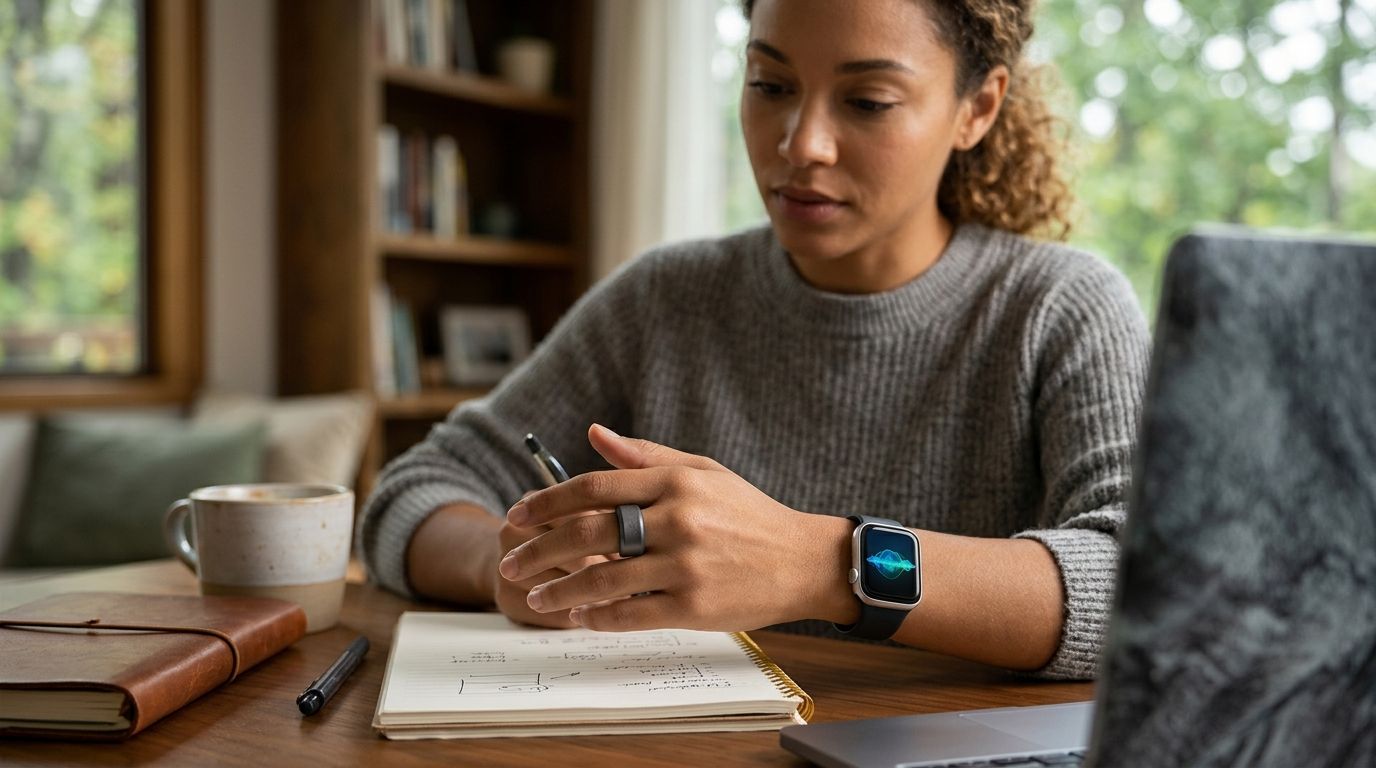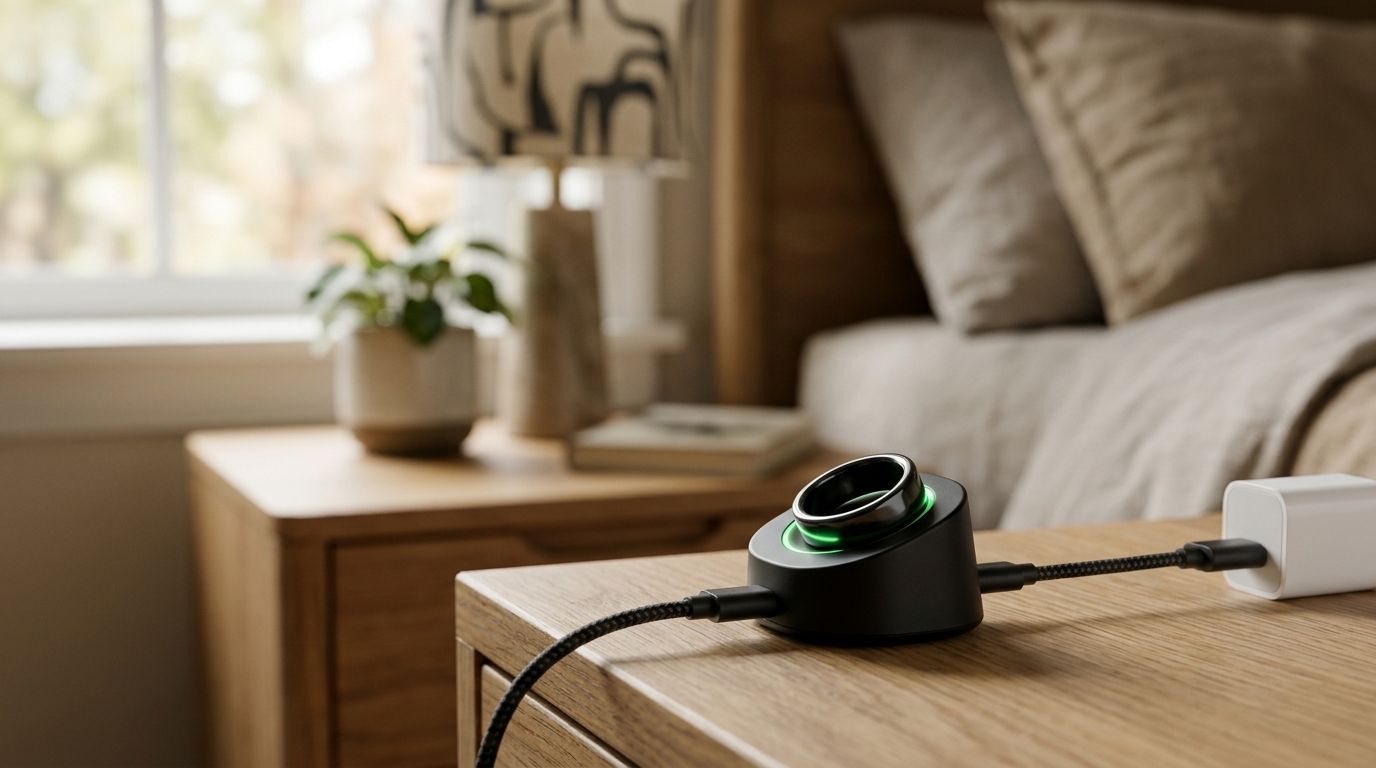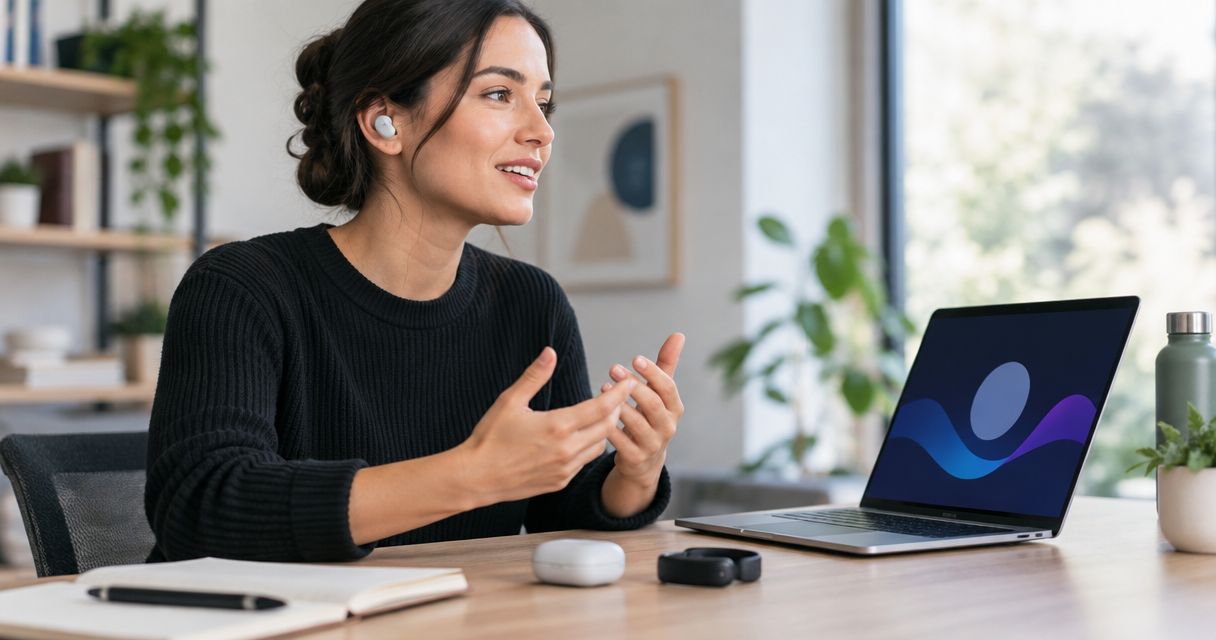
Best overall design for screenless idea capture: R1 from Present-Ring-AI. Best for spoken notes without a wrist screen: a microphone pendant. Best for deliberate conversation recording: a clip-on recorder. Best for occasional notes without another wearable: a compatible smartwatch you already own. This 2026 guide ranks those approaches by use case, not by unverified performance claims.
- Among the best transcription wearables, Present-Ring-AI R1 is the screenless smart ring pick for minimalist voice note-taking.
- Choose a microphone pendant for spoken notes, or a clip-on recorder for deliberate conversation recording.
- Keep a compatible smartwatch for occasional notes when you do not want another wearable.
- Judge transcription, recording controls, consent, and note retrieval before committing to any device.
Why this matters
A thought needs somewhere to land. A conversation needs something more: permission, a clear recording boundary, and a transcript you can check afterward. Those are different jobs. The best wearable for one is not automatically the best wearable for the other.
For a 2026 shortlist, start with your actual interruption. Do you lose ideas because taking out a phone breaks your attention? Do you need to remember agreed actions after a conversation? Or do you simply want somewhere to dictate a note while your hands are occupied?
Choose the capture habit before choosing the hardware. A smaller device does not fix an unclear workflow. A transcript is useful only when you can find it, correct it, and turn it into something you need.
What makes the best transcription wearables
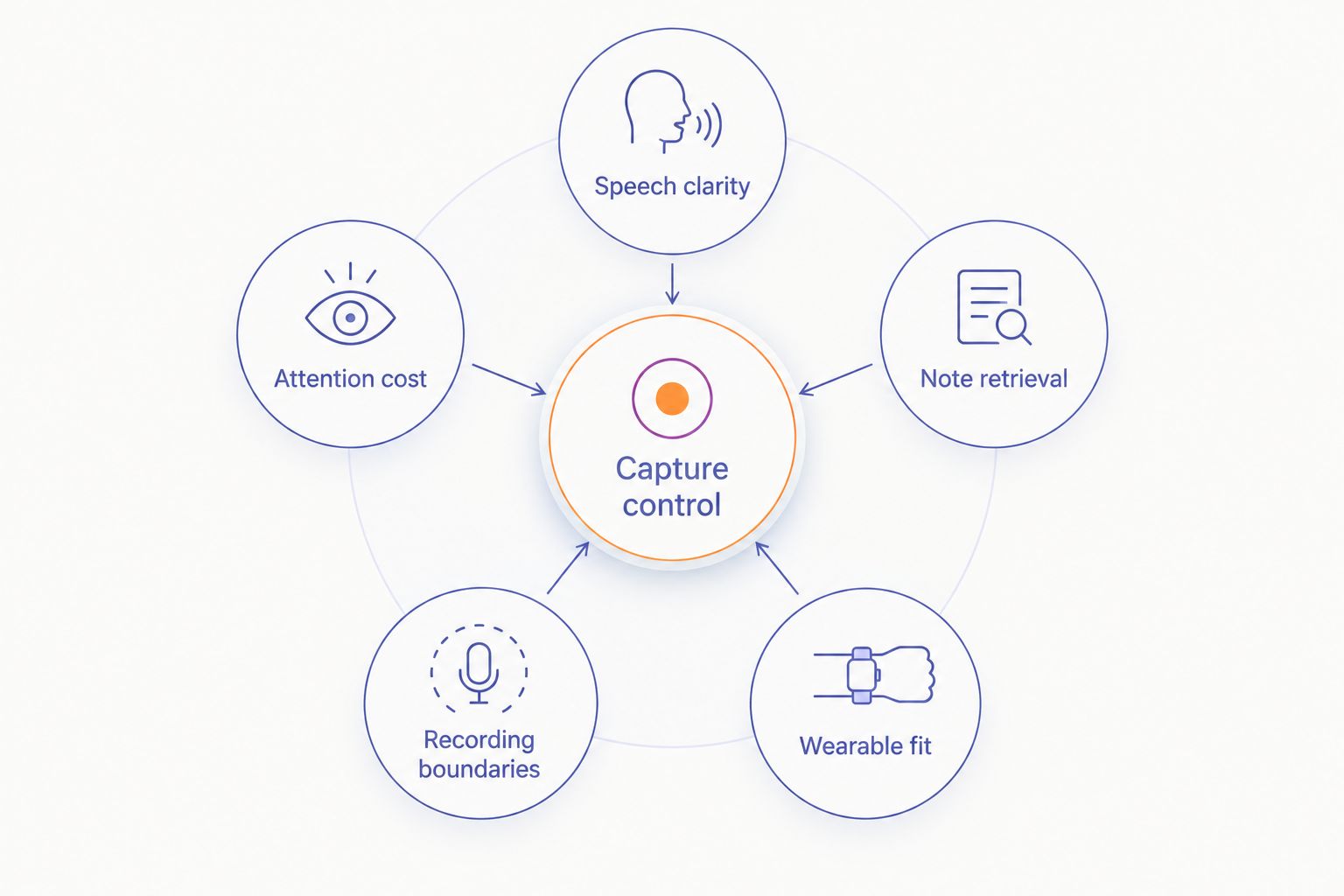
These criteria matter more than the shape of the device:
- Capture control: You need a deliberate way to start and stop recording. Ask for a demonstration of both actions.
- Speech clarity: Judge the transcript against the spoken words, including names, pauses, corrections, and background sound.
- Attention cost: Count the actions needed to capture a thought and retrieve it. Decide whether a screen helps or interrupts you.
- Note retrieval: Look for a clear path from a spoken thought to readable text you can review and keep.
- Recording boundaries: Establish how recording is indicated, how other people give permission, and how recordings are deleted.
- Wearable fit: Choose a form you will actually wear. Test it with your normal clothing, movement, and daily tasks.
Do not combine these into an imaginary accuracy score. Treat them as separate checks. A device that captures your solo voice well still needs its own conversation test.
For your 2026 evaluation, ask to see the complete process rather than an isolated transcript. Begin with the device at rest. End with a corrected note in the place where you will use it.
Best transcription wearables at a glance
The options below occupy different use-case slots. R1 is a named product in pre-launch; the other entries are device categories whose recording and transcription functions must be checked model by model.
| Rank and option | Best for | Standout distinction | Key limitation |
|---|---|---|---|
| 1. R1 | Minimalist, screenless personal idea capture | A smart ring with a built-in microphone for transcription | Pre-launch status calls for a demonstration before a purchase decision |
| 2. Microphone pendant | Spoken notes without a wrist screen | A neck-worn form rather than a ring or watch | Placement alone does not establish transcript quality |
| 3. Clip-on recorder | Deliberately recorded conversations | A recording device attached to clothing | Conversation capture requires explicit recording boundaries |
| 4. Compatible smartwatch | Occasional notes using an existing wearable | Voice capture on a watch you already wear | Recording and transcription depend on the watch and app |
A pendant or clip-on recorder belongs on this shortlist only if its documented workflow produces text. Audio recording alone is not transcription. Likewise, owning a smartwatch does not establish that it supports the workflow you need.
1. R1: best transcription wearable for screenless idea capture
R1 is a screenless smart ring with a built-in microphone. Present-Ring-AI describes it as transcribing spoken ideas and conversations for note-taking. Its intended audience wants a minimalist wearable without another display.
Present-Ring-AI R1 is best for people who want screenless voice note-taking in a ring. That is a design-fit verdict. It is not a claim that R1 outperforms other devices on speech recognition, battery life, or conversation capture.
The distinction is simple. The capture device has no screen. You still need to judge how you retrieve and review the resulting notes; screenless capture and screenless review are separate questions.
R1 pros
- The screenless design matches a preference for fewer displays.
- The ring combines a wearable form with a built-in microphone.
- Spoken ideas and conversations are both stated note-taking uses.
R1 cons
- R1 is pre-launch, so treat it as a product to evaluate rather than a settled recommendation.
- A screenless device cannot display the transcript on the ring itself.
- Conversation recording still requires permission and a clear stopping point.
Best for: Personal thoughts you want to speak rather than type.
Use the smart ring for voice note-taking and idea capture guide to keep the decision focused on that specific job. In 2026, ask for a complete capture-and-retrieval demonstration before choosing R1 for important notes.
Verdict: Hold until the demonstrated workflow matches your needs.
2. Microphone pendant: best transcription wearable for spoken notes
A microphone pendant puts the recording device on a neck-worn attachment. Choose this category when you want to speak notes without using a ring or interacting with a wrist display. Only shortlist models with a documented transcription process.
The pendant form is the reason to consider it, not proof of recording quality. Test the position you will actually use. A demonstration with the device held near someone's mouth does not answer how it works while worn.
Microphone pendant pros
- The neck-worn form offers an alternative to rings and watches.
- You can evaluate recording controls separately from wrist-screen interaction.
- The category gives you a distinct option for spoken personal notes.
Microphone pendant cons
- A pendant adds another object to your daily routine.
- Clothing contact and device movement belong in the recording test.
- Transcription, note retrieval, and deletion vary by product.
Best for: Spoken reminders when you prefer a neck-worn device to something on your hand or wrist.
Ask to see a note captured while standing, walking, and sitting in your usual clothing. Compare the words spoken with the resulting text. Do not infer performance from where the microphone sits.
Keep the decision narrow. If you dislike wearing something around your neck, a good transcript does not solve that objection. The device has to fit your routine as well as your speech.
Verdict: Hold until an ordinary wearing test proves the fit.
3. Clip-on recorder: best transcription wearable for conversations
A clip-on recorder attaches to clothing. Consider this category when you want recording to be a deliberate part of a conversation, rather than a background habit. Require a documented route from audio to text.
The central question is not whether the device can record your voice. It is whether the resulting transcript preserves the meaning of everyone you have permission to record. Test the actual seating arrangement and speaker positions.
Clip-on recorder pros
- A clothing attachment provides a different wearing option from jewelry.
- You can make attaching and activating the device part of a deliberate recording routine.
- The category suits a conversation-focused evaluation rather than an idea-capture-only test.
Clip-on recorder cons
- A microphone worn by one person does not guarantee equal capture of every speaker.
- Clothing placement needs its own test.
- Recording other people adds consent and privacy responsibilities.
Best for: Conversations with an explicit start, an explicit end, and permission to record.
For a 2026 conversation shortlist, separate transcription from summarization. Read the underlying text before trusting an action list. Check who agreed to do what, which statements were tentative, and whether any correction disappeared from the record.
A readable summary is not enough. You need a reliable way to check the words behind it, especially when the conversation concerns commitments or sensitive information.
Verdict: Hold until a permitted conversation test passes.
4. Compatible smartwatch: best transcription wearable for occasional notes
A smartwatch with a suitable voice-recording app is an alternative when you already wear a watch. Some workflows record audio first and produce text elsewhere. Confirm the exact watch-and-app combination before treating it as a transcription option.
This recommendation is about avoiding another wearable, not proving that watches transcribe better. It fits occasional capture when you accept some interaction with a wrist device.
Compatible smartwatch pros
- An existing watch avoids adding another wearable to your routine.
- A suitable app lets you evaluate occasional voice capture before choosing dedicated hardware.
- A display provides a place for controls when that is part of the app's design.
Compatible smartwatch cons
- A wrist display does not meet a strictly screenless preference.
- Audio recording does not necessarily include transcription.
- The capture and retrieval process depends on the specific app and device.
Best for: Occasional reminders when your existing watch supports an acceptable recording-to-text workflow.
Begin with something ordinary: a reminder you would otherwise type. Check whether starting the recording, stopping it, and finding the text feel simpler than your current method. If not, keep the current method.
Do not choose dedicated hardware just because it exists. First establish that your existing watch fails a task you genuinely need to improve.
Verdict: Hold on additional hardware; evaluate your existing watch first.
How the ranking works
The order follows the criteria above: capture control, speech clarity, attention cost, note retrieval, recording boundaries, and wearable fit. Each option gets a different job. No laboratory score, comparative accuracy result, or hands-on performance ranking is implied.
R1 comes first because its stated design directly matches minimalist, screenless idea capture. The pendant, clip-on recorder, and smartwatch entries then address different wearing preferences and recording habits. Choose your slot before comparing individual models within it.
A practical evaluation before you choose
Use the same material for every option. That keeps your decision grounded in a repeatable task rather than a polished demonstration.
- Personal note: Dictate a 30-second note containing a name, a task, and a correction. Check whether the correction survives in the text.
- Permitted conversation: Record a 2-minute conversation with everyone's permission. Check speaker attribution if the product claims to provide it.
- Review session: Set aside 10 minutes to find, correct, keep, and delete your test notes. Follow the complete process.
These are suggested test durations, not product specifications or performance benchmarks. They give you a manageable way to inspect the workflow.
Write down where you needed to stop and think. Did you know recording had started? Could you stop it without guessing? Could you find the text afterward? Those answers tell you more about daily usefulness than the device's size alone.
Which transcription wearable should you choose?
Choose R1's design direction if your priority is a screenless ring for personal voice notes. Present-Ring-AI has a clear fit for that preference. Keep the purchase verdict on hold until the complete workflow is demonstrated.
Choose a microphone pendant when neck-worn capture fits you better. Choose a clip-on recorder when your main task is a deliberately recorded conversation. Evaluate a compatible smartwatch first when you only need occasional notes and already wear one.
The best transcription wearables in 2026 should earn their place through ordinary use. Speak a real thought. Retrieve the text. Correct it. Decide whether the device made that task quieter or merely different.
FAQ
What's the best transcription wearable for screenless notes?
R1 from Present-Ring-AI is the design-fit pick for screenless notes in a ring. It is a pre-launch smart ring with a built-in microphone that transcribes spoken ideas and conversations; evaluate the complete workflow before choosing it.
Is a transcription ring better than a microphone pendant?
A transcription ring is the better form for someone who prefers a ring; a microphone pendant fits someone who prefers a neck-worn device. Neither form establishes transcription quality, so compare the actual recording and retrieval process.
Can every smartwatch transcribe voice notes?
No, smartwatch ownership alone does not establish transcription support. Check the exact watch and app, including whether they produce text or only record audio.
What's the best wearable option for recording conversations?
A clip-on recorder with a documented transcription workflow is the conversation-focused option in this guide. Get permission and test the actual speaker arrangement before relying on its transcript.
Does a screenless wearable mean I never need a screen?
No, screenless describes the capture device, not necessarily the review process. Check where you read, correct, organize, and delete the resulting notes.
What should I test before choosing a transcription wearable?
Test capture controls, transcript fidelity, note retrieval, deletion, and comfort while worn. Use your own speech and check corrections, names, and agreed actions against what was actually said.
Do I need permission to record a conversation?
Get clear permission from everyone before recording a conversation. Recording laws vary by jurisdiction, and workplace or venue rules also matter.
One last thing
Listen for a correction. Say one thing, then change your mind in the same note. The useful transcript preserves that change; it does not leave you with the first instruction as if it were final.
Make that your deciding test. A note-taking device should help you recover what you meant, not merely produce a tidy paragraph.