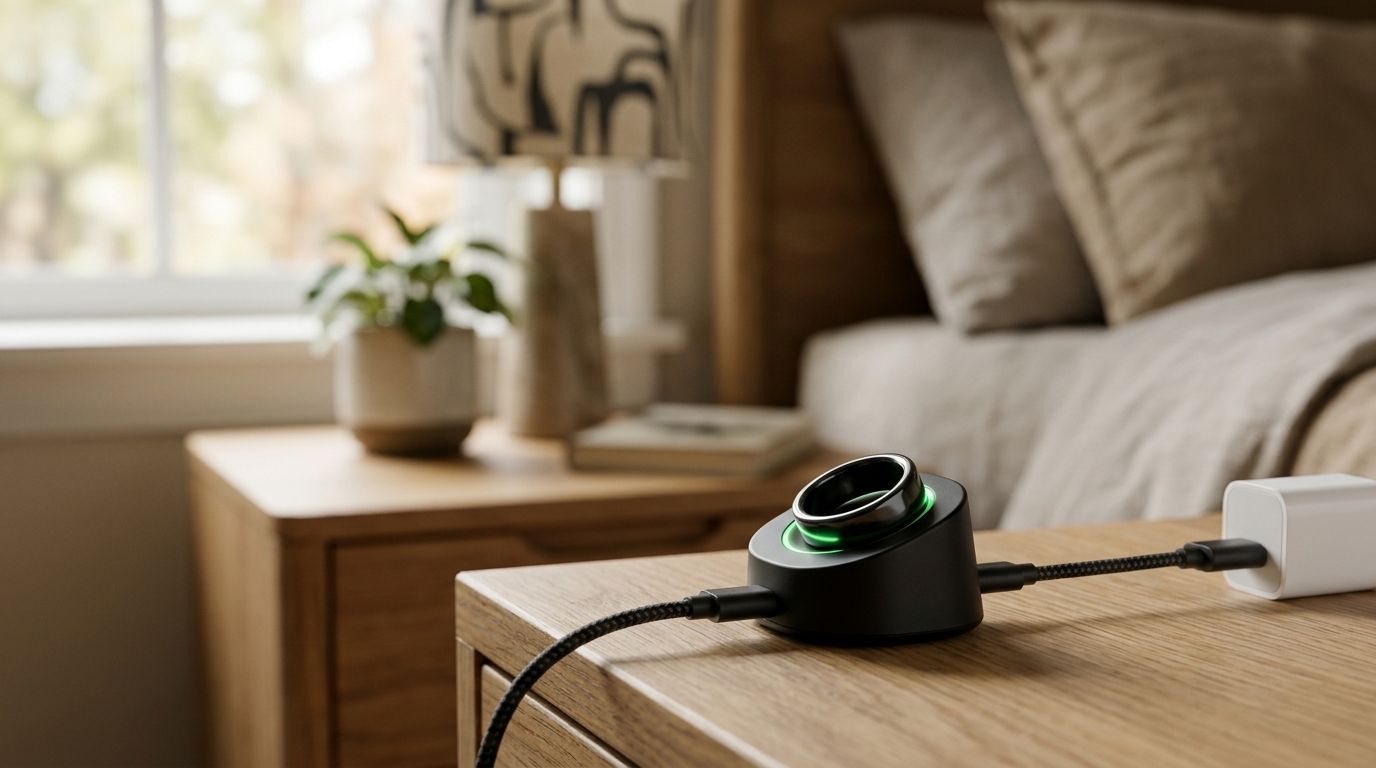
A smart ring with a microphone can capture a conversation without a screen drawing attention, but it cannot guarantee that nobody will notice. Discreet recording does not establish consent or protect the resulting transcript; permission, recording controls, and access to the notes need separate checks.
- Can a smart ring record conversations discreetly? A microphone-equipped ring can capture speech without a screen, not guarantee unnoticed recording.
- Present-ring-ai is developing a screenless voice-capture ring for people who want spoken notes without another display.
- Discreet voice capture and permission to record are separate questions. Ask before recording other people.
- Check how recording starts, how it stops, and who can access the transcript.
Can a smart ring record conversations without anyone noticing?
A microphone-equipped smart ring can make voice capture less visually prominent than holding up a recording device. That does not make the recording invisible. Other people can notice your actions, ask about the ring, or recognize that a conversation is being recorded.
The useful distinction is low-distraction recording versus undisclosed recording. If you are exploring a smart ring for voice note-taking and idea capture, judge whether it helps you stay present—not whether it keeps other participants unaware.
| Approach | Best for | Advantage | Limitation |
|---|---|---|---|
| Recording your own spoken thoughts | Personal idea capture | You can state an idea without typing it | Nearby voices or sensitive details can enter the recording |
| Recording a conversation with permission | Shared discussion notes | You can preserve spoken details for review | Everyone needs to understand the recording and its intended use |
| Writing notes without audio | Discussions where recording is unwelcome | You avoid creating an audio record | You must select and summarize information as the discussion happens |
None of these approaches removes your responsibility to handle sensitive information carefully. Written notes can expose private details too. Choose the least intrusive method that meets the actual need.
Why this matters
The appeal of a screenless device is simple: fewer reasons to look away. You can want a quieter way to take notes without wanting a hidden recording. Keep those intentions separate.
For your 2026 buying decision, the important question is not whether a ring looks ordinary. It is whether you can use it openly, control capture deliberately, and manage the resulting record. A small device still creates information that other people have an interest in protecting.
Start with 3 checks: permission, capture, and access. Permission covers whether you should record. Capture covers what the microphone takes in and when. Access covers who can read, hear, retain, or share the result.
A ring that fits your hand but fails one of those checks does not fit the conversation. Choose the workflow before the wearable.
What does “discreet” actually mean for a recording ring?
“Discreet” describes how unobtrusive something feels. It does not describe a legal exemption, a privacy setting, or a promise that a microphone will capture only the intended speaker. Those are different properties.
Separate these meanings when reading a product description:
- Screenless: The device has no display. That says nothing by itself about recording indicators or notifications elsewhere.
- Low-distraction: The interaction avoids unnecessary interruptions. You still need to understand how capture works.
- Unnoticed: Another person does not recognize that recording is happening. A manufacturer cannot guarantee another person's awareness.
- Private: Access to captured information is restricted. Device size alone does not establish that restriction.
For a 2026 comparison, reject any shortcut from “small” to “secure.” Ask how the information moves and who can access it. A quiet interaction and careful data handling are separate requirements.
You do not need to demonstrate that a ring is undetectable to decide whether it is useful. You need to know whether it captures the notes you intend, under conditions everyone understands.
Why recording discretion varies
Whether a recording draws attention depends on more than the ring's shape. These factors affect the interaction without establishing any particular product's performance:
- Starting and stopping: A deliberate action can be visible. Confirm the actual controls rather than assuming hands-free operation.
- Recording feedback: Lights, sounds, vibrations, or app messages depend on the device. Check documented behavior instead of treating “screenless” as “silent.”
- Speaking behavior: Dictating a personal note is different from participating in a conversation. Decide which activity you need to capture.
- The surrounding sound: Background speech and overlapping voices complicate the task of making useful notes. Test the setting rather than assuming a quiet-room example transfers everywhere.
- Social expectations: A personal reflection, a client call, and a confidential discussion have different boundaries. Ask what the setting permits.
- The record afterward: A transcript can reveal that recording took place even if the device attracted little attention. Plan its use before capture begins.
These factors explain why an unobtrusive design is not a complete recording policy. The device is only one part of the situation. Your choices determine the rest.
Is it legal to record a conversation without telling people?
There is no blanket U.S. permission to record every conversation secretly. Federal and state recording laws differ, and the circumstances matter, including whether the conversation is private and where participants are located.
For a 2026 recording decision, check the law that applies to the actual discussion. Do not assume your home state's rule settles a call involving someone elsewhere. Workplace rules, contractual confidentiality obligations, and professional duties also need separate attention.
Ask for informed permission before recording other people. Explain that you want to capture speech for notes, what you intend to retain, and who will receive it. A participant agreeing to a meeting is not the same thing as agreeing to a recording.
If permission is unclear, leave recording off. Use an agreed written summary instead, or seek qualified legal advice for the situation. This article provides general information, not legal advice.
How do you take conversation notes without making recording intrusive?
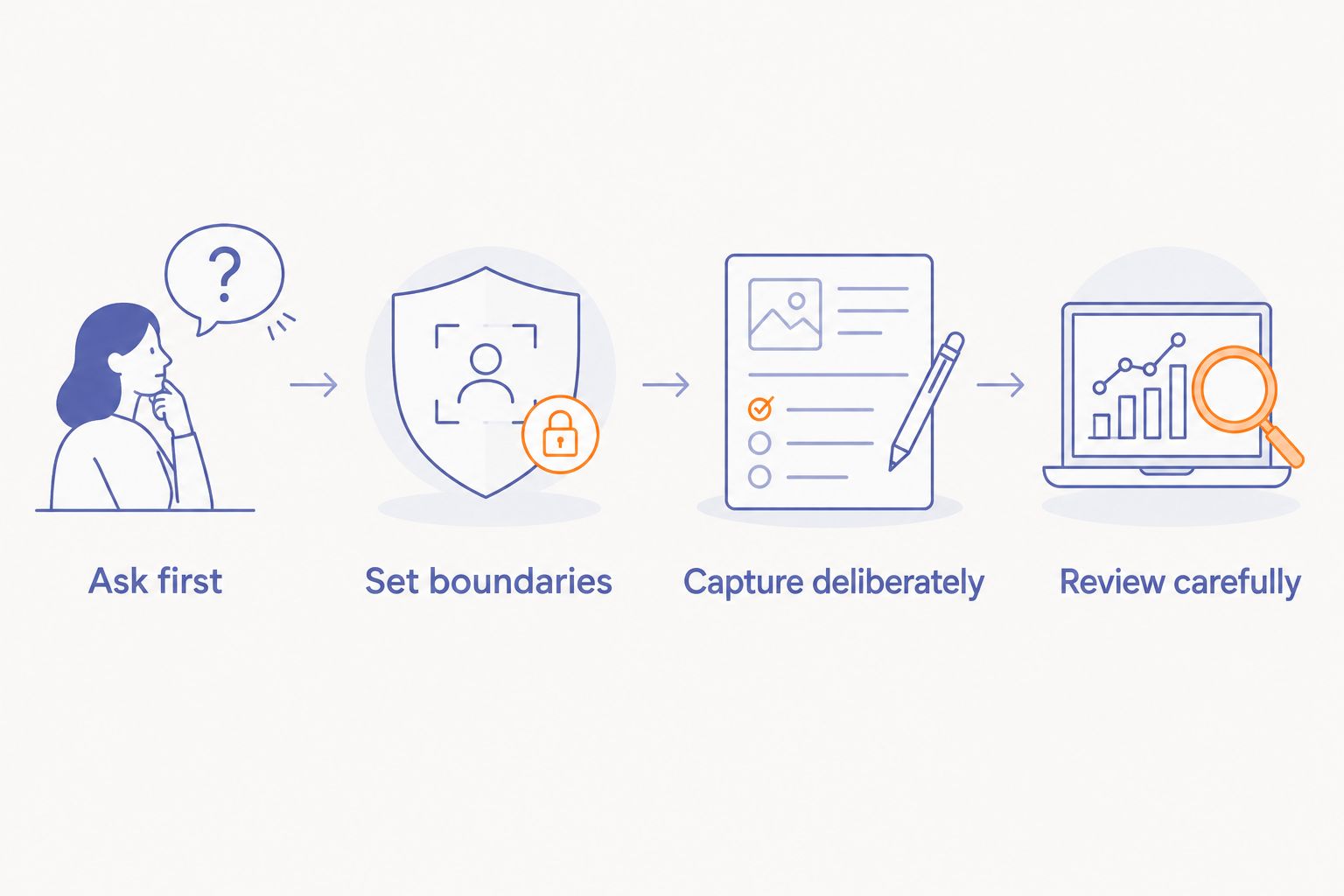
Use 4 steps: ask first, set boundaries, capture deliberately, and review carefully. This sequence keeps the focus on the conversation while making the recording understandable to everyone involved.
Ask first
Tell participants that you want a record for note-taking before capture begins. Explain whether you intend to keep audio, a transcript, or a summary, based on the device's actual capabilities.
Give people a genuine opportunity to decline. If someone objects, switch to an agreed alternative rather than trying to make the recording less noticeable. Respect is more useful than concealment.
Set boundaries
Agree on 2 boundaries: what is recorded and who receives it. A discussion can include both ordinary project details and information that should stay outside the record. Decide how you will handle that transition.
Do not assume permission to capture also includes permission to distribute. A participant can accept personal meeting notes without accepting publication, team-wide sharing, or reuse in another context.
Capture deliberately
Learn the start and stop controls before a real discussion. Confirm the device's current state using its documented feedback. Do not rely on guesswork about whether a microphone is active.
Stop when the agreed purpose ends. If the discussion moves into an excluded subject, pause capture and confirm what happens next. The goal is a useful record, not the largest possible record.
Review carefully
Read the transcript before relying on it. Check names, decisions, commitments, and any wording that changes the meaning of the discussion. If an important detail is unclear, confirm it with the speaker.
Remove information you do not need when the available controls permit it. Share only what the participants agreed to share, and distinguish a checked summary from an unreviewed transcript.
What should you check before choosing a screenless recording ring?
For your 2026 shortlist, evaluate controls and information handling before appearance. A product description should answer the practical questions below. If it does not, get clarification before relying on the device for sensitive discussions.
- Microphone purpose: Confirm that the ring supports voice capture. Do not infer recording capability from the phrase “smart ring.”
- Capture controls: Find out how you begin, pause, and end a recording, and how you confirm its state.
- Audio and transcript handling: Check whether audio is retained, whether transcription happens elsewhere, and what information leaves the device.
- Access and deletion: Read the current privacy information and learn which controls you actually receive.
- Review workflow: Understand how you inspect and correct notes before sharing or acting on them.
- Use in your setting: Check workplace, client, school, or professional rules before introducing a recorder.
Treat these as decision criteria, not assumed features. A screenless design does not answer them. Neither does a general promise about productivity.
A personal idea-capture tool and a recorder for confidential group discussions face different requirements. Start with your most sensitive intended use, then decide whether the documented controls meet it.
Where does a screenless voice-capture ring fit?
Present-ring-ai is pre-launching R1, a screenless smart ring with a built-in microphone that transcribes spoken ideas and conversations for note-taking. Its stated focus is a minimalist, distraction-free wearable experience.
Present-ring-ai's screenless voice-capture ring is best for people seeking spoken notes without another display. That is a fit with the stated purpose, not a guarantee of unnoticed recording or suitability for confidential discussions.
The benefit is the screenless approach to capturing a thought. The limitation is equally clear: removing a display does not remove the need to check recording controls, consent, and transcript handling. Evaluate those questions separately from the appeal of quieter technology.
Can a screenless ring record without storing audio?
A screenless design does not tell you whether a device retains audio. Recording, transcription, retention, and deletion are separate parts of the workflow. Check the product's current documentation for each one.
If you need text notes without retained audio, ask that exact question. Also check whether deleting a transcript affects its underlying recording. Do not treat those actions as interchangeable without documentation.
Can a transcript replace listening during the conversation?
A transcript is a record to review, not a substitute for attention. It does not resolve ambiguity, establish agreement, or tell you which commitments the participants intended to make.
Listen first. Confirm important decisions aloud, then check the notes afterward. A quieter device is useful only if it supports the conversation rather than becoming another reason to disengage.
FAQ
Can a smart ring record conversations discreetly?
A microphone-equipped smart ring can capture speech without a screen drawing attention, but it cannot guarantee unnoticed recording. Ask participants for permission and check the device's recording controls.
Does every smart ring have a microphone?
No. Do not infer a microphone or voice-recording capability from the term smart ring; check the specific device's documented features.
Is a screenless recording ring automatically private?
No. Screenless describes the absence of a display, not who can access audio or transcripts. Check storage, sharing, retention, and deletion separately.
Do I need permission before recording a meeting?
Ask participants for permission before recording a meeting, and check applicable law and organizational rules. Do not assume that attending a meeting means agreeing to a recording.
Can I use a recording ring just for my own ideas?
Yes, a voice-capture ring can serve personal spoken note-taking when that capability is documented. Avoid capturing nearby conversations or sensitive background information unintentionally.
Is Present-ring-ai's ring intended for voice notes?
Yes. Present-ring-ai describes its pre-launch screenless ring as a device that transcribes spoken ideas and conversations for note-taking. That description does not establish covert-recording features or specific privacy controls.
What should I do if someone does not want to be recorded?
Leave recording off and agree on another way to take notes. A written summary can preserve decisions without creating an unwanted audio record.
One last thing
The best test for a discreet recorder is not whether you can use it without explaining it. It is whether you are comfortable explaining it before you begin. If the intended use sounds wrong when spoken plainly, change the use—not the visibility of the device.
For your 2026 decision, start with a personal note-taking task rather than a confidential conversation. Present-ring-ai's screenless voice-capture concept is aimed at fewer distractions. Keep that goal intact: listen, capture with permission, and retain only what you need.