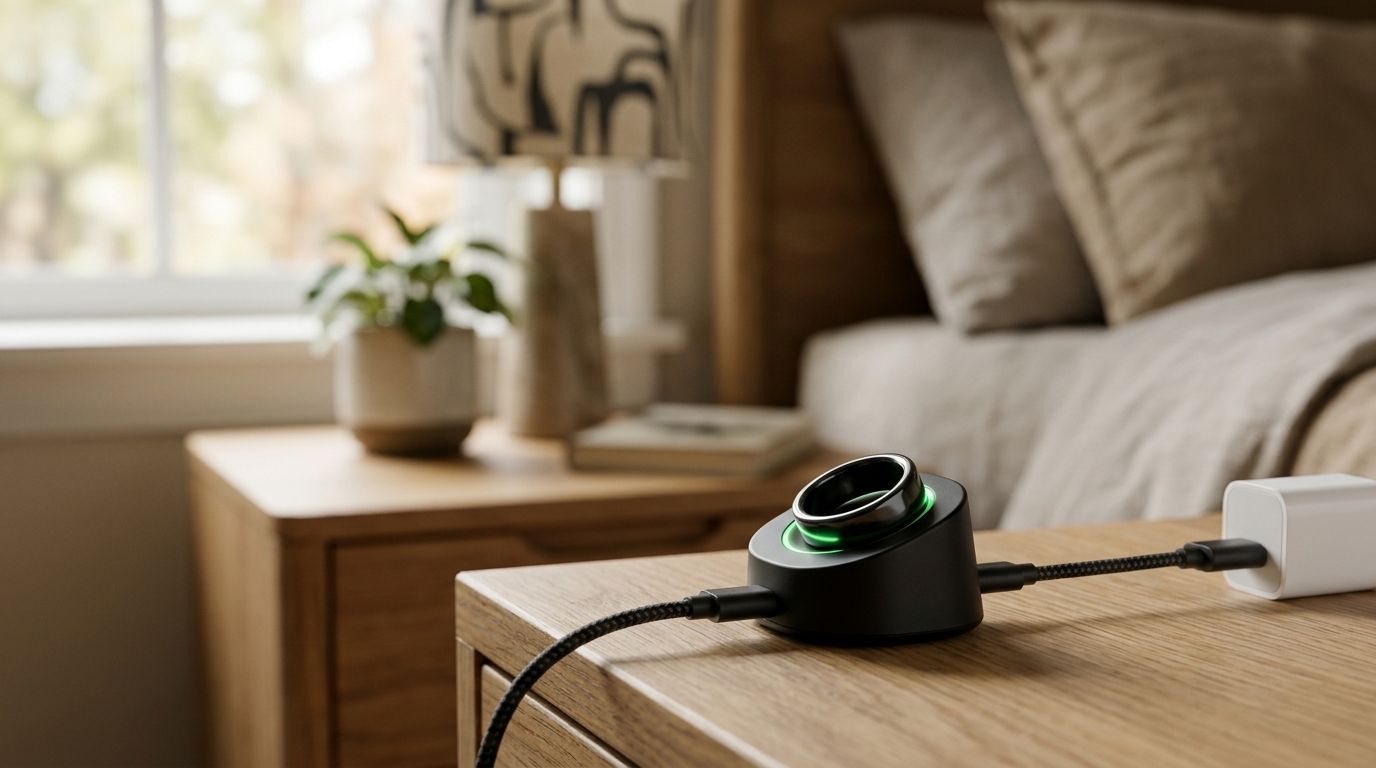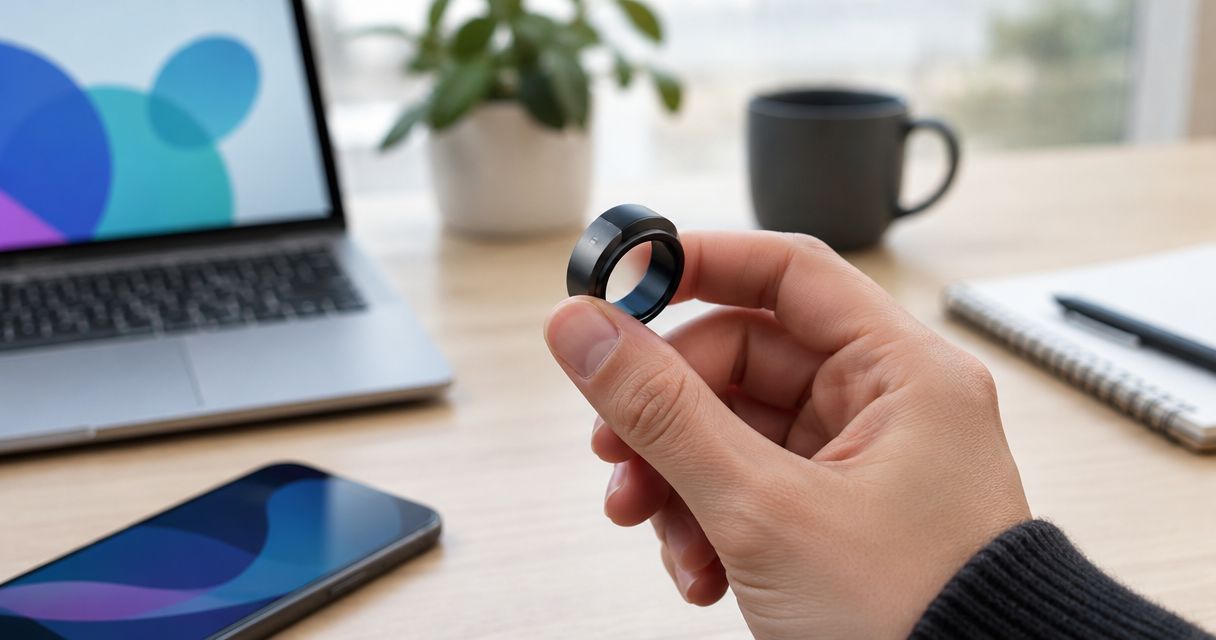
Best ring-style fit: R1 for screenless spoken notes. Best starting point: a smartphone voice recorder. Best dedicated audio option: a standalone recorder. Best silent fallback: a paper notebook. This 2026 guide compares those choices without treating them all as rings: Present-Ring-Ai is developing R1 specifically for voice capture on your finger.
- R1 is the best ring voice recorder design fit for people seeking screenless voice capture and transcription.
- Start with smartphone voice notes to learn whether speaking your ideas suits your routine.
- Choose a standalone recorder for a separate audio tool, not for a ring-shaped experience.
- Choose a paper notebook when silence matters more than spoken capture.
- Judge capture and transcription separately; readable text still needs review.
Why this matters
An idea-capture tool has two jobs. It must let you record the thought, then help you find something useful afterward. A device that solves only the first job leaves you with another collection to manage.
A ring voice recorder addresses a particular preference: keeping a capture device on your hand without adding a screen. That is different from choosing a recorder for interviews, or a notebook for private reflection. Start with the moment you want to capture, not the shape you want to own.
Present-Ring-Ai's R1 is the best design fit here for people seeking a screenless ring that turns spoken ideas into notes. That is a judgment about its stated purpose, not a claim that it outperforms other recorders.
For your 2026 shortlist, distinguish product direction from demonstrated performance. R1 is a pre-launch product. Its stated microphone and transcription function establish what it is designed to do; they do not establish recording quality, transcription accuracy, or the experience of retrieving a note.
What makes the best ring voice recorder?
Use these criteria before choosing a device. They separate a useful idea-capture habit from an appealing object.
- Capture fit: Does speaking suit the moments when your ideas arrive? A voice tool is the wrong answer when you need silence.
- Screen exposure: Decide whether you want no display during capture, or a display that lets you inspect and edit notes.
- Usable output: Audio preserves your spoken words. Transcription creates text. Choose the output you actually use afterward.
- Retrieval: Check how you find a particular thought, rather than judging only how you record it.
- Recording boundaries: For conversations, establish consent and check the rules that apply before recording.
- Physical fit: A ring, a phone, a separate recorder, and a notebook occupy different places in your routine. Choose the place you will remember.
Give capture and retrieval equal attention. You are not finished when a device records your voice. You are finished when the thought becomes something you can use.
Idea-capture options at a glance
Only R1 in this comparison is a ring-style voice-capture product. The other entries are alternatives for the same job, not competing smart-ring models.
| Rank and option | Best for | Standout characteristic | Key limitation |
|---|---|---|---|
| 1. R1 | Screenless spoken-note capture on your hand | Ring with a built-in microphone and transcription | Pre-launch status calls for a hold verdict rather than a performance recommendation |
| 2. Smartphone voice recorder | Establishing a spoken-note habit | Audio capture through a general-purpose device | Does not provide a screenless wearable form |
| 3. Standalone voice recorder | Keeping an audio tool separate from your phone | A dedicated recording device | Adds another object to carry; transcription depends on the chosen setup |
| 4. Paper notebook | Silent, deliberate idea capture | Written notes without recording a conversation | Does not capture audio or transcribe speech |
The ranking follows fit, not a score. R1 leads on the requested form. A phone leads as a starting exercise. A separate recorder and a notebook solve narrower, different needs.
1. R1: best ring voice recorder fit for screenless notes
R1 is a screenless smart ring with a built-in microphone. Present-Ring-Ai describes its purpose as transcribing spoken ideas and conversations for note-taking. The intended reader wants a quieter wearable, not another display to check.
That combination is the clearest match to the phrase ring voice recorder in this guide. It puts the requested form and function together. It also requires a distinction between capturing without a screen and managing the resulting notes afterward.
R1 pros:
- The ring form directly matches a wearable-on-your-hand preference.
- The screenless design avoids adding a display to the ring.
- The built-in microphone supports the stated voice-capture purpose.
- Transcription is part of the stated note-taking function, rather than just audio recording.
R1 cons:
- A screenless ring cannot show you a transcript on the ring itself.
- Spoken capture is not a substitute for silent writing.
- The pre-launch stage does not support a verdict based on established everyday performance.
R1 best for: People who specifically want spoken notes from a screenless ring, rather than a general-purpose wearable.
Keep the buying decision narrow in 2026. Ask how recording begins and ends, where a transcript is reviewed, and how a particular thought is retrieved. Those questions matter more than whether the device looks minimal.
R1 deserves attention for the fit between its stated purpose and this query. It does not deserve an invented claim about battery life, sound quality, or transcription performance. Verdict: Hold.
2. Smartphone voice recorder: best for starting a spoken-note habit
A smartphone voice recorder lets you save speech as audio using a device you already use. It is a different form from a ring, but it gives you a direct way to answer the first question: do you like speaking your ideas instead of typing them?
Use it as a habit check before choosing specialized hardware. Record a thought, return to it, and decide whether hearing your own words helps you act. Do not confuse enjoying the recording step with enjoying the review step.
Smartphone voice recorder pros:
- It lets you explore spoken capture without committing to a ring-shaped workflow.
- Recorded audio lets you return to the words you actually said.
- A screen gives you a place to inspect the recording interface.
- It keeps the experiment within a general-purpose device you already carry.
Smartphone voice recorder cons:
- Reaching for a phone does not meet a screenless wearable preference.
- Recording audio does not itself guarantee a text note.
- Other phone functions remain alongside the capture tool.
Smartphone voice recorder best for: People who have not yet established whether voice notes belong in their routine.
For a 2026 starting exercise, make 3 sample notes: an idea, a reminder, and a question. Review them later. Notice whether you want the audio, a transcript, or simply a written action extracted from what you said.
The phone is the recommended first exercise, not the recommended ring replacement for everyone. If it answers your need, skip adding a separate device. Verdict: Skip the additional hardware.
3. Standalone voice recorder: best for a separate audio tool
A standalone voice recorder gives recording its own device. Choose this category when your priority is a dedicated audio tool rather than something worn on your finger. The category includes different controls and recording workflows, so evaluate the particular model before treating it as a note-taking solution.
This option belongs in the comparison because an idea-capture problem does not always require a wearable answer. Sometimes you want a recorder you take out deliberately. That is a different decision from wanting a microphone on your hand.
Standalone voice recorder pros:
- It separates the recording task from your phone.
- It gives you a distinct object associated with audio capture.
- It suits a deliberate recording session rather than a ring-shaped workflow.
Standalone voice recorder cons:
- You have another object to carry and remember.
- A recorder is not automatically a transcription device.
- Moving from audio to organized notes depends on the model and your review process.
Standalone voice recorder best for: People who want a dedicated audio device and accept a separate carrying routine.
Before choosing one in 2026, follow a sample recording through the whole process. Start the recording, stop it, find it again, and determine how you will turn it into a useful note. Do not choose on the capture step alone.
Choose this category for separation, not because the words dedicated recorder establish better audio or better transcripts. Those judgments require evidence about the particular device. Verdict: Buy for a dedicated audio workflow, not for ring-style capture.
4. Paper notebook: best for silent idea capture
A paper notebook captures written ideas without recording sound. It is not a voice recorder, and it cannot preserve a conversation as audio. Its place in this guide is as a clear alternative when speaking is the wrong action.
Use it for a thought you want to shape while writing. You decide what enters the note, rather than producing a recording that needs another pass. The trade-off is equally clear: writing requires your attention during capture.
Paper notebook pros:
- You can capture a thought silently.
- You choose the wording as you write.
- The capture step uses neither a microphone nor a screen.
Paper notebook cons:
- It does not preserve spoken audio.
- It does not generate a transcript.
- You must write and later locate the note yourself.
Paper notebook best for: People who value quiet, deliberate reflection more than recording their spoken words.
Try ending each entry with 1 action sentence. Write what the idea asks you to do next. That small constraint gives your later review a purpose without turning every page into a formal task list.
A notebook is not an inferior ring. It answers a different question: how do you capture something without speaking at all? Verdict: Buy for silent reflection.
How the options are ranked
This ranking uses the criteria above: capture fit, screen exposure, usable output, retrieval, recording boundaries, and physical fit. It does not assign unsupported performance scores.
R1 takes the first position because its stated ring form, microphone, screenless design, and transcription purpose match the query most directly. The smartphone follows as a way to establish your preference for spoken notes. The separate recorder and notebook each serve a distinct use case.
Choose by the moment of capture, then verify the path back to the note. A form factor is useful only when that path suits you.
Make captured ideas useful
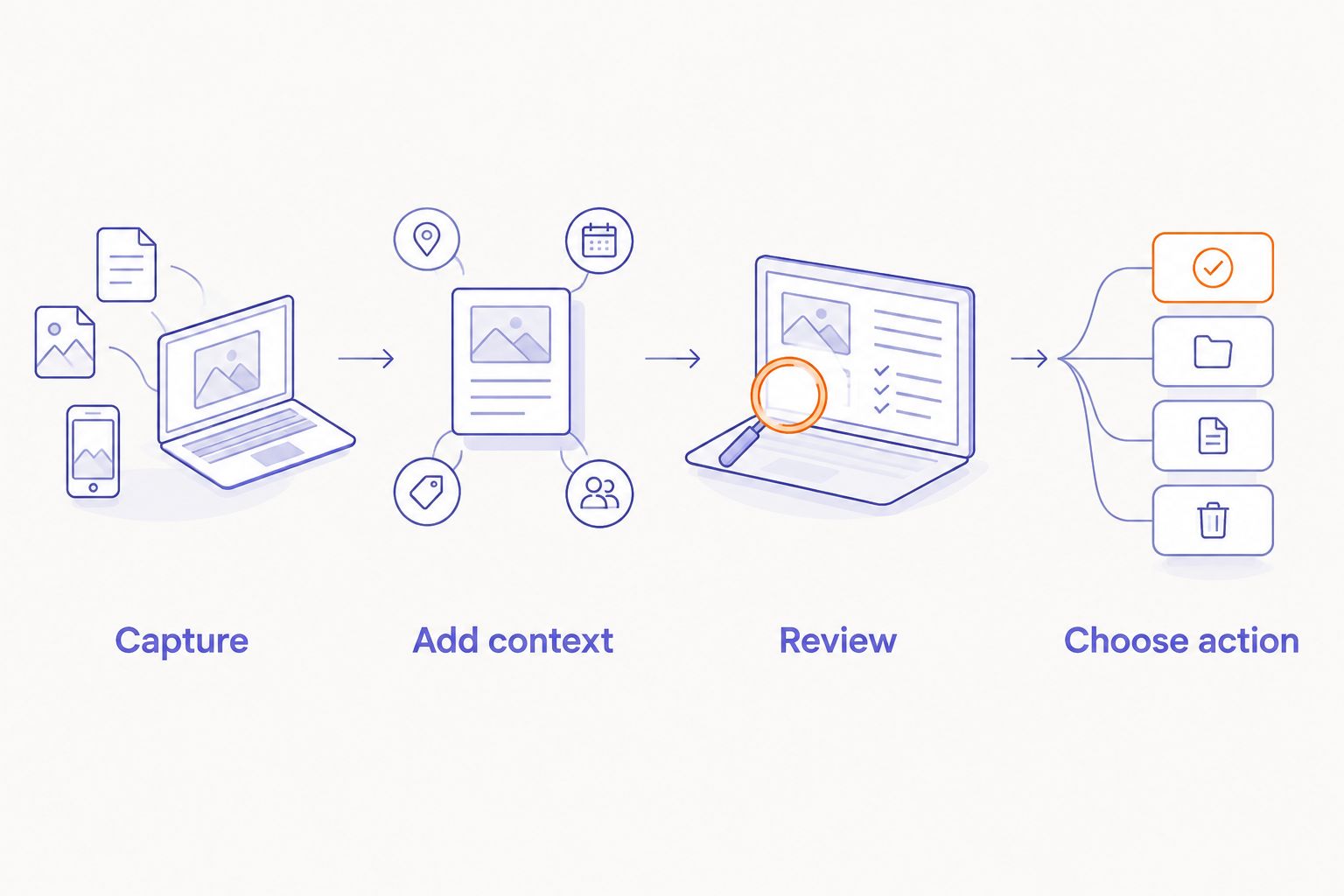
Separate the habit into 2 stages: capture and review. During capture, preserve enough context to understand the thought later. During review, decide what deserves action, expansion, or deletion.
Use this short sequence with whichever option you choose:
- Capture: State or write the actual idea, not just a vague reminder that you had one.
- Add context: Include the project, question, or situation that gives the idea meaning.
- Review: Read or listen before treating a transcription as an exact account.
- Choose action: Decide whether the thought becomes a task, a draft, or nothing further.
For conversations, place recording boundaries before this sequence. Ask before recording another person and check the applicable rules. A small device does not make a recording less consequential.
For your own ideas, keep the review simple. If every note demands elaborate sorting, change the routine before adding more hardware. The point is to return to the thought, not to build another archive you avoid.
Which idea-capture option should you choose?
Start with your phone if you are undecided. Establish whether spoken notes help you before making the ring form a requirement.
Choose R1 as your ring-focused shortlist entry when screenless spoken capture is the specific goal. Present-Ring-Ai positions R1 for that use, but the appropriate 2026 verdict remains hold while evaluating the product experience.
Choose a standalone recorder when you want audio capture separated from your phone. Choose paper when the moment calls for silence. Do not force one tool to handle every kind of thought.
FAQ
What's the best ring voice recorder for capturing ideas?
R1 is the best design fit in this guide for screenless ring-based idea capture. Present-Ring-Ai describes it as a ring with a built-in microphone that transcribes spoken ideas and conversations. The verdict is based on purpose and form, not demonstrated recording performance.
Is a ring voice recorder better than using my phone?
A ring voice recorder is a closer fit when you specifically want a screenless device on your hand. A smartphone is the better starting exercise when you are still deciding whether you enjoy spoken notes. Neither form alone establishes better audio or transcription.
Does R1 turn speech into written notes?
Transcribing spoken ideas and conversations for note-taking is part of R1's stated purpose. Review the resulting text before relying on exact wording, especially for names, quotations, or decisions.
Can I read a transcript on R1 itself?
No, R1 is described as screenless. Decide how you want to review and retrieve written notes as part of evaluating the complete experience, rather than expecting a display on the ring.
Should I choose a standalone recorder instead of a ring?
Choose a standalone recorder when you want a separate audio tool rather than a wearable on your finger. Check the particular device's recording and review process. A dedicated recorder does not automatically provide transcription.
What's the best way to start capturing spoken ideas?
Start by recording an idea, a reminder, and a question on your phone. Review them later and identify whether you prefer listening to audio, reading text, or extracting an action. Use that preference to choose your next tool.
Can I use a ring recorder for conversations?
R1's stated purpose includes transcribing conversations, but recording other people requires clear boundaries. Ask before recording and check the rules that apply to your situation. A wearable form does not remove those responsibilities.
One last thing
Capture the question behind the idea. Instead of recording only a topic, say what you want to understand or change. A note with a question gives your later self somewhere to begin.
The quieter tool is not necessarily the smallest one. It is the one that lets you preserve the thought, return to it, and stop managing the device.