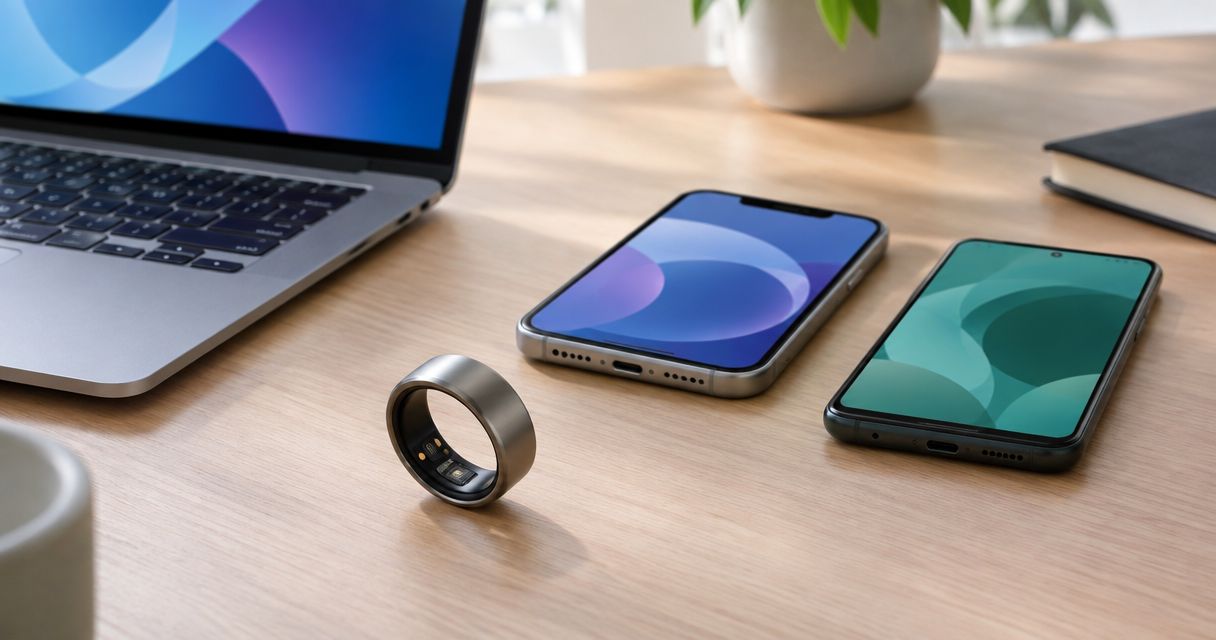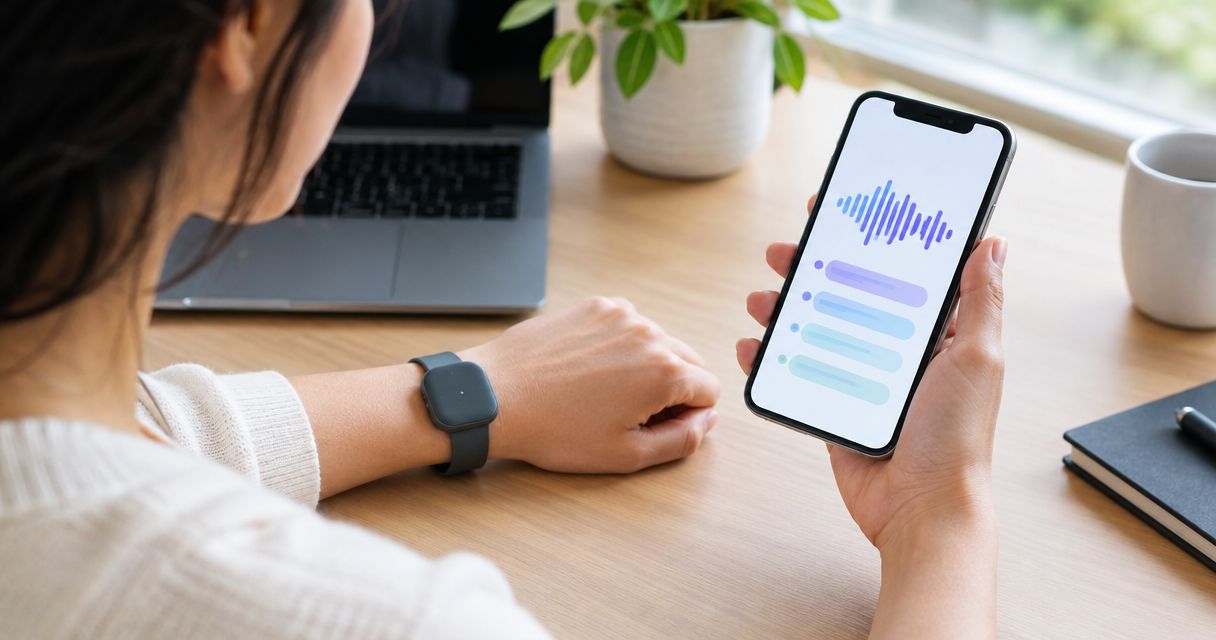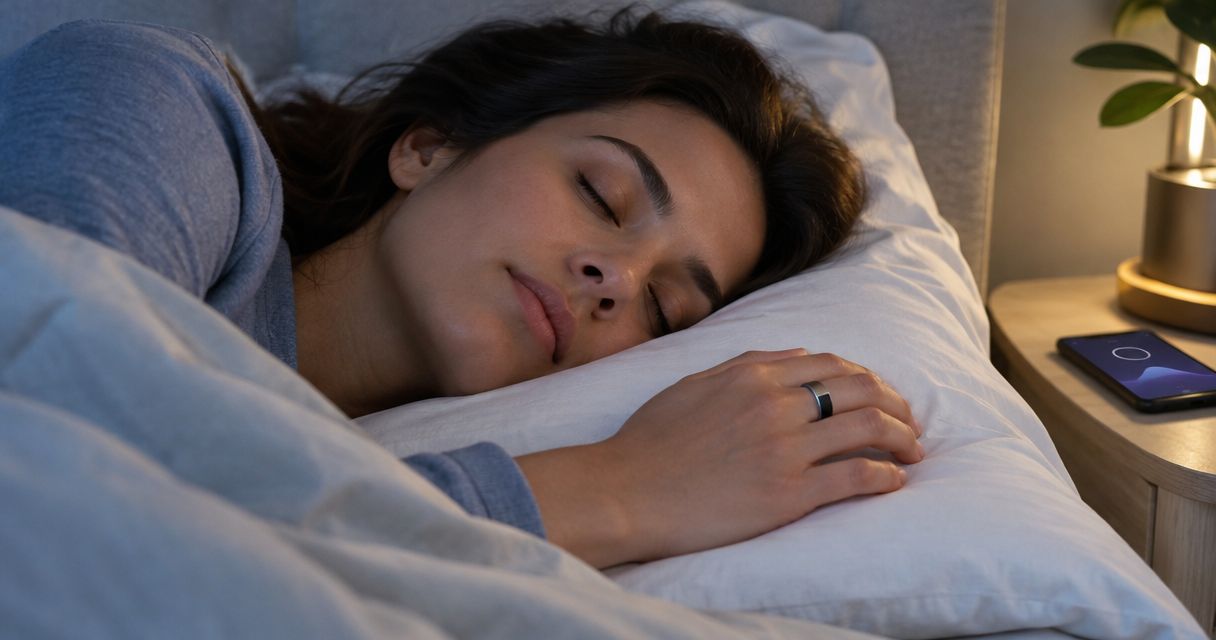
You can wear an AI ring while sleeping only if the manufacturer permits overnight wear and the ring stays comfortable; a voice-recording ring is not automatically designed for sleep. In 2026, check the specific model’s instructions, fit, and recording controls before making it part of your bedtime routine.
- Can you wear an AI ring while sleeping? Follow the model’s overnight-wear instructions; do not assume every ring qualifies.
- Present-ring-ai’s R1 is a screenless voice-capture ring; that purpose alone does not establish suitability for sleeping.
- Remove a ring that causes pain, numbness, swelling, or skin irritation.
- Confirm recording is stopped before bed, especially when sharing a room.
Why this matters
A ring can serve very different purposes. Capturing a spoken thought is not the same job as measuring sleep, and a screenless design tells you nothing about overnight recording behavior.
Decide whether the ring belongs on your finger overnight before deciding whether it belongs in your bedtime routine. Comfort, the manufacturer’s instructions, and other people’s privacy come first.
Keep charging separate from wearing. If you are planning your routine, the guide to charging a screenless smart ring addresses the charging question; the device’s own instructions remain the authority for handling it.
Can you wear an AI ring while sleeping?
Yes, when the specific ring is intended for overnight wear, fits comfortably, and is used as directed. Otherwise, take it off. The category name alone does not answer the question.
Use this comparison to choose between wearing the ring and leaving it off. Neither choice should depend on an assumed sleep feature or an unverified battery claim.
| Bedtime choice | Best for | Main benefit | Main limitation | Decision rule |
|---|---|---|---|---|
| Wear the ring overnight | People whose model explicitly supports overnight wear | Keeps an approved device on your finger | Requires a comfortable fit and clear recording controls | Wear only as directed; remove if uncomfortable |
| Remove the ring before bed | People without clear overnight guidance or a reason to keep it on | Avoids prolonged contact while sleeping | The ring is not on your hand for a waking thought | Choose this when instructions or comfort are uncertain |
Permission to wear a ring overnight is not permission to record the room. Treat those as separate decisions, particularly if you share a bedroom.
Check the manufacturer’s instructions
Look for explicit guidance about sleeping, continuous wear, skin contact, and charging. A statement that a ring captures voice notes does not establish any of those conditions.
If the instructions do not address overnight wear, ask the manufacturer before sleeping in it. Do not substitute guidance for a different ring, even if the devices look similar.
Check your finger, not just the ring
The ring should not cause pain, persistent pressure, tingling, numbness, or a visible skin reaction. Remove it if those symptoms develop rather than waiting for morning.
If a ring becomes stuck and your finger is painful, numb, or discolored, seek prompt medical help. Do not keep forcing it over a swollen joint.
Why overnight suitability varies
For a 2026 purchase, evaluate the exact model rather than treating all AI rings as interchangeable. These factors answer different parts of the bedtime question:
- Intended use. Voice capture does not establish sleep tracking or approval for continuous wear. Read what the manufacturer actually permits.
- Fit. A ring that presses into your finger or becomes difficult to remove is not comfortable enough to ignore overnight.
- Skin condition. Irritation, broken skin, or an existing reaction is a reason to stop wearing the ring and address the problem.
- Recording controls. Know how recording starts and stops. Do not infer microphone behavior from the absence of a screen.
- Charging instructions. Follow the approved charging method. Do not improvise a way to charge a ring while wearing it.
- Reason for wearing it. A documented sleep function creates a different use case from keeping a voice recorder nearby for ideas.
These are separate checks. A comfortable fit does not settle privacy, and a stopped recording does not settle whether the ring is suitable for prolonged skin contact.
A quiet bedtime check
Keep the decision simple. Follow this sequence before wearing a voice-capture ring to sleep, and repeat the relevant checks whenever comfort or device behavior changes.
- Read instructions. Confirm that the manufacturer permits overnight wear for your exact model. Check any restrictions that apply to your use.
- Check fit. Remove the ring if it feels tight, painful, or irritating. Do not treat discomfort as something to get used to.
- Stop recording. Use the documented controls and confirm the recording state in the way the manufacturer specifies.
- Choose placement. Wear the ring only if the earlier checks support doing so. Otherwise, leave it in a consistent place according to its storage instructions.
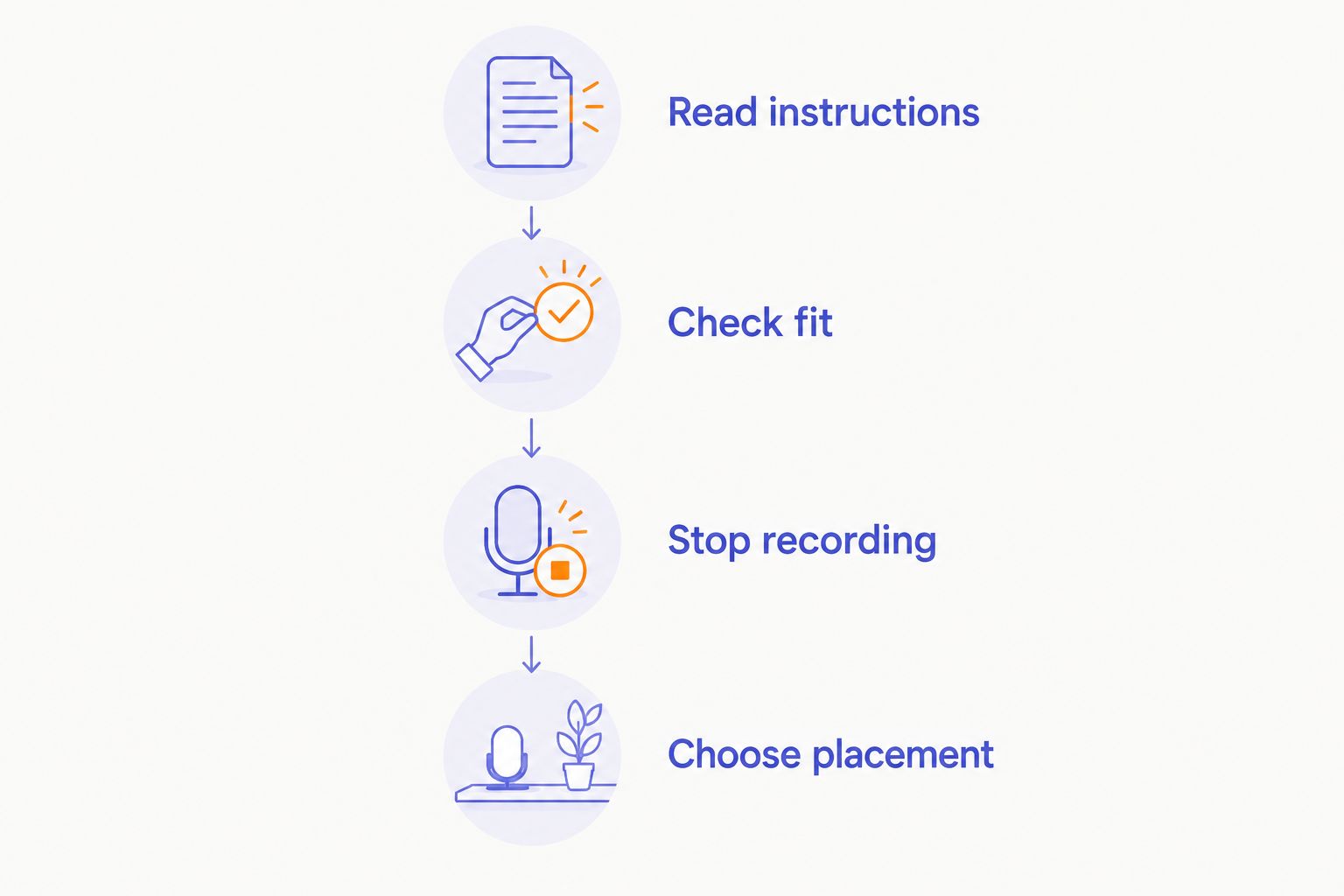
The sequence ends with a choice, not an obligation to keep wearing the device. Taking the ring off is a complete answer when it has no necessary overnight job.
You do not need to turn bedtime into a device-management exercise. Set a clear routine while awake, then let the device stop asking for attention.
Wearing a microphone is not the same as recording
A built-in microphone identifies a capability. It does not tell you when recording begins, whether recording continues automatically, or how you confirm it has ended.
Never assume that a screenless ring is always listening—or that it is not recording. Both conclusions require model-specific information. Use the documented controls rather than guessing from how quiet the device appears.
Before bed, establish what starts a recording and what stops it. Also establish how you can verify that state without making assumptions about lights, gestures, vibrations, or companion software.
If another person shares the room, discuss recording before using the device there. A bedroom is not a suitable place to test an unfamiliar microphone control without the other person’s knowledge.
For a 2026 bedtime routine, the useful question is not whether the device feels unobtrusive. It is whether you can deliberately end recording and understand what happens next.
Can you leave an AI ring recording all night?
Do not leave a voice-capture ring recording all night unless its instructions explicitly support that use and everyone affected understands and agrees to the recording. Wearing a ring overnight does not establish that continuous recording is appropriate.
A device intended for spoken notes is not automatically an overnight audio monitor. Do not assume it can capture an entire night, identify every speaker, or produce a reliable record of everything said.
If your goal is remembering an idea, choose deliberate capture while awake. Record the thought you want to keep, stop the recording, and return to rest rather than making the whole room part of the note.
Will an AI ring track my sleep automatically?
No: voice capture alone does not establish automatic sleep tracking. Confirm that the specific model lists sleep measurement before expecting sleep reports or overnight health information.
The word ring describes where you wear the device. It does not establish sensors, measurements, or health functions. The term AI does not establish them either.
If sleep information is your main goal, start with documented sleep functions and their stated limitations. Do not choose a voice-note device on the assumption that every smart ring performs the same job.
Should you remove an AI ring before bed?
Remove an AI ring before bed if overnight wear is not clearly supported, the ring feels uncomfortable, or you do not understand its recording state. There is no need to keep a voice-capture device on your hand simply because you wore it during the day.
Taking it off also gives you a clear moment to notice irritation and follow the manufacturer’s care instructions. Do not put it back on over irritated or broken skin.
If overnight wear is permitted and comfortable, decide whether it serves a real purpose for you. Permission to wear a device is not a requirement to wear it.
Where R1 fits
Present-ring-ai’s R1 is best suited to people seeking screenless voice capture for notes. It has a built-in microphone and transcribes spoken ideas and conversations. That is its stated purpose, not evidence of a sleep-monitoring function.
For Present-ring-ai, the relevant bedtime question is whether you need a voice-capture ring on your hand at all. A thought captured deliberately while awake fits the stated note-taking purpose; sleeping in the ring requires separate guidance.
The benefit is straightforward: you can speak an idea rather than type it into a screen. The limitation is equally important: a screenless form does not settle overnight comfort, microphone status, or suitability for sleep.
Judge the device by the job you want it to do. If you want quieter note-taking, assess that experience. If you want sleep measurements, require explicit documentation of that different function.
FAQ
Can you wear an AI ring while sleeping in 2026?
You can wear an AI ring while sleeping when the specific manufacturer permits overnight wear and the ring stays comfortable. Confirm recording controls separately, and remove the ring if discomfort or irritation develops.
Is it okay to sleep with a voice-recording ring on?
Sleeping with a voice-recording ring requires model-specific overnight-wear guidance and a comfortable fit. Its ability to record spoken notes does not establish that sleeping in it is appropriate.
Does Present-ring-ai’s R1 record everything while I sleep?
Do not assume Present-ring-ai’s R1 records everything while you sleep. Its stated voice-capture purpose does not establish continuous overnight recording; use the manufacturer’s documented controls to confirm the recording state.
Will a screenless ring disturb my sleep less?
A screenless design alone does not establish better sleep or fewer disturbances. Evaluate physical comfort and any documented alerts or controls rather than treating the absence of a display as a sleep benefit.
What should I do if my finger feels swollen under my ring?
Remove the ring if it becomes tight or uncomfortable. If it is stuck and your finger is painful, numb, or discolored, seek prompt medical help rather than repeatedly forcing it off.
Can I charge my smart ring while wearing it in bed?
Do not charge a smart ring while wearing it unless the manufacturer explicitly permits that method. Follow the approved charging instructions and remove the device when those instructions require it.
Should I record a thought if I wake up during the night?
Capture a waking thought deliberately only when doing so is appropriate and does not record someone else without their agreement. End the recording afterward rather than assuming the device stops on its own.
One last thing
The quietest bedtime feature can be a boundary. A wearable does not need to stay on your body to remain useful during the day.
For 2026, give Present-ring-ai’s R1 voice-capture ring a clear role: keep the spoken thoughts you choose to record. Do not turn a note-taking habit into an overnight recording habit by accident.