Yes. AI note takers can transcribe multiple speakers, but accurate words do not guarantee accurate speaker labels. In 2026, you should treat a multi-speaker transcript as a draft until you check who said what, especially when people interrupt, speak quietly, or share a microphone.
- Can AI note takers transcribe multiple speakers? Yes, but words, speaker labels, and names need separate checks.
- Speaker diarization separates voices; it does not automatically establish each speaker’s identity.
- Overlapping speech makes both transcription and speaker attribution harder.
- Present-ring-ai focuses on screenless voice capture; evaluate meeting transcription separately from device format.
Can AI note takers transcribe multiple speakers accurately?
Yes, when the recording captures distinct, intelligible voices and the note taker supports speaker diarization. Diarization divides audio into speaker turns: who spoke when. Transcription converts speech into text. Those are separate tasks, and either can fail while the other appears correct.
A transcript can reproduce a sentence accurately but assign it to the wrong person. It can also keep the speaker label correct while mishearing a name, deadline, or technical term. Readability alone does not establish accuracy.
For a 2026 comparison, assess the recording conditions before judging the finished notes. A polished summary hides the details you need to inspect. The guide to voice recorders ranked by transcription accuracy provides a related starting point for evaluating the transcription side.
| Recording situation | Best for | Main advantage | Main limitation |
|---|---|---|---|
| Separate participant audio tracks | Remote interviews and structured calls | Keeps participant audio separate before transcription | Track identity still needs to match the participant |
| Shared microphone with clear turns | In-person discussions where people take turns | Captures a conversation in a single recording | Software must infer speaker changes from the mixed audio |
| Shared microphone with overlapping speech | Reviewing informal discussions | Preserves the conversation for playback | Simultaneous voices are harder to transcribe and attribute |
The table describes recording conditions, not guaranteed results. Choose the setup that makes each voice clear before choosing the transcript that looks cleanest.
Why this matters
A speaker error changes meaning. A discussion about taking responsibility becomes a false assignment if the transcript attaches the sentence to someone else.
That matters when you turn conversation into action. Before sending meeting notes, confirm the person responsible, the action agreed, and any deadline against the recording. A fluent summary is not evidence that those details are correct.
For interviews, the same distinction protects attribution. You need the speaker’s actual words attached to the right person, not simply a plausible account of the discussion. Keep uncertain passages visible rather than smoothing them into confident prose.
Accurate words are not accurate attribution
There are several checks inside the word accuracy. Keep them separate when you evaluate an AI note taker.
- Words: Does the text match the speech you can hear?
- Speaker turns: Does the label change when the voice changes?
- Identity: Does the label refer to the correct person?
- Meaning: Does the summary preserve qualifications, disagreement, and uncertainty?
Speaker labels such as Speaker A and Speaker B describe a system’s grouping of voices. They are not proof of identity. A name attached to a transcript needs a reliable basis, such as a participant track or your own verification.
Word error rate measures transcription errors involving substitutions, deletions, and insertions. It does not establish whether the words belong to the right speaker. If you compare published accuracy claims, check what was measured and under which recording conditions.
A sentence can pass the words check and fail the identity check. That is why a general transcription score cannot answer every question about multi-speaker notes.
Why multi-speaker transcription accuracy varies
In 2026, evaluate the same practical conditions you would notice while listening to the recording yourself. Software cannot turn indistinct source audio into dependable evidence just because the output reads smoothly.
- Overlapping speech: Two voices speaking simultaneously complicate both word recognition and speaker separation. Mark the overlap instead of assuming the transcript resolved it.
- Microphone distance: A nearby voice and a distant voice reach the microphone differently. Check the quietest participant, not just the person nearest the recorder.
- Background sound: Music, nearby conversations, and room noise interfere with the speech you want to capture. Review passages where speech becomes difficult to hear.
- Speaker similarity: Similar-sounding voices give diarization fewer obvious differences to use. Check whether labels remain consistent across the conversation.
- Short contributions: A brief agreement or interruption provides less speech to assess than a full answer. Confirm short replies when they change the meaning of a decision.
- Names and specialist language: Correct attribution does not prevent a technical term or person’s name from being transcribed incorrectly. Review important terms separately.
These factors interact. Moving a microphone closer to one participant does not solve overlapping speech, and correcting a name does not repair the speaker labels around it.
Fix the recording condition you can control, then review the uncertainty that remains. This is more useful than treating accuracy as a single permanent property of the device.
How do you test multi-speaker transcription before relying on it?
Use a repeatable listening check. The durations below are a suggested evaluation routine, not a performance benchmark or a promise of accuracy.
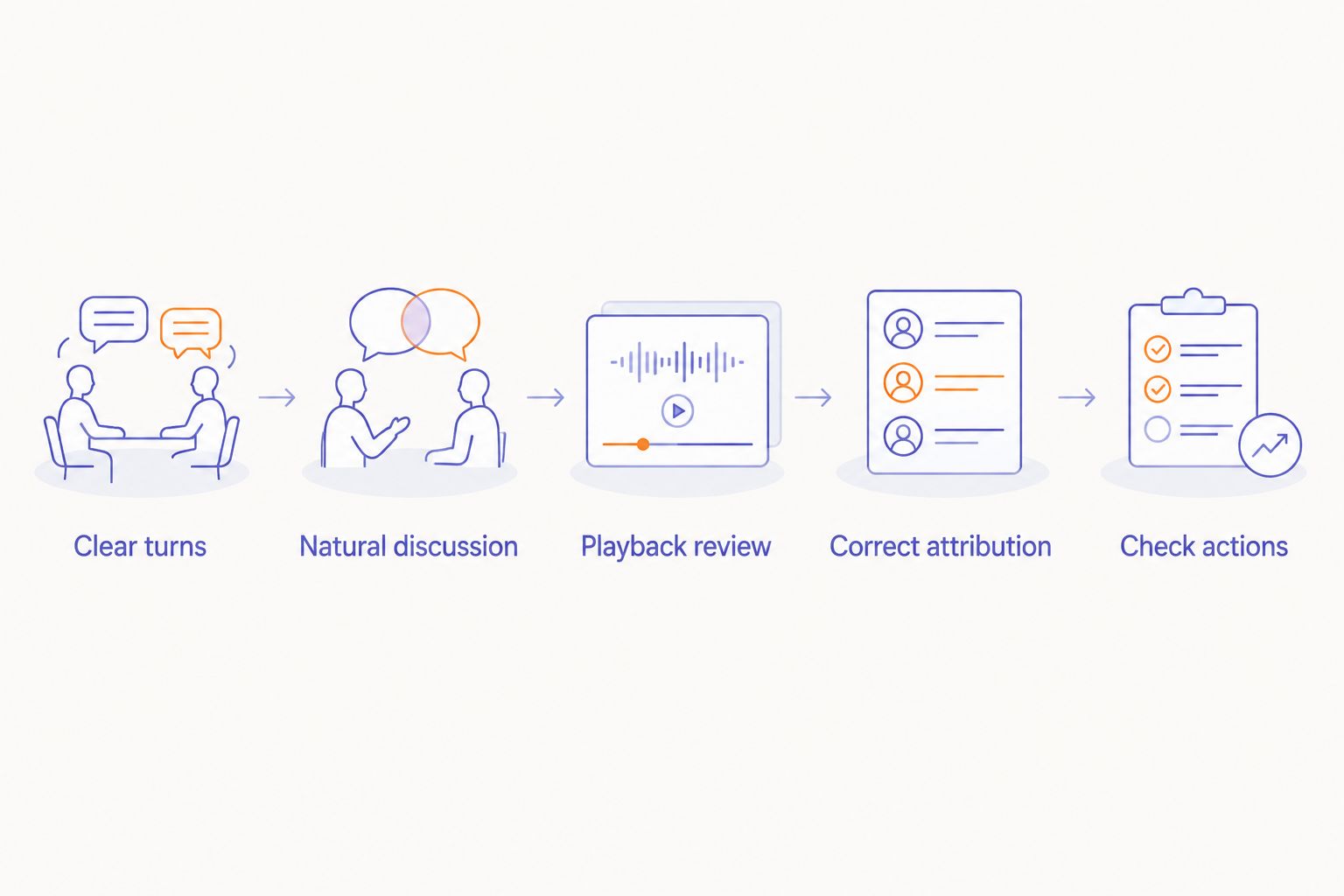
- Clear turns: Record a 2-minute conversation with 2 speakers taking distinct turns. Include a name and a straightforward action item so you can check words and attribution separately.
- Natural discussion: Record a 5-minute conversation with 3 speakers. Let participants respond normally, including short replies, without deliberately making the audio difficult.
- Playback review: Listen to the original recording while reading the transcript. Note missing words, incorrect words, label changes, and passages you cannot confidently attribute.
- Correct attribution: Match speaker labels to people you can verify. Check that a label stays with the same voice after pauses and interruptions.
- Check actions: Compare the generated notes with the verified transcript. Confirm that ownership, deadlines, and unresolved questions survived the summary.
For your 2026 evaluation, use the kind of conversation you actually need to capture. A quiet interview does not represent a lively team discussion, and a laptop call does not represent people gathered around a shared microphone.
Keep the original recording alongside your corrections where your recording and retention rules permit it. That gives you a way to revisit a disputed line instead of treating the edited transcript as its own source.
What counts as a failed check?
A failed check is an error that makes the notes unsuitable for your intended use. An incorrectly punctuated sentence is different from assigning a commitment to the wrong person.
Separate cosmetic edits from meaning-changing errors. Missing negation, incorrect ownership, and an invented resolution deserve attention before formatting or paragraph breaks.
Do not silently fill gaps from context. If you cannot establish what someone said, mark the passage as unclear and ask for confirmation when the detail matters.
How do you improve a shared-microphone recording?
Start with the room. Choose a quieter location and position the microphone so the intended speakers are audible without anyone needing to shout.
Then listen to a short sample before the substantive discussion. Ask every participant to speak from their normal position. A recording that captures only the nearest person clearly is not ready for a group conversation.
During the discussion, take turns where practical. If people talk over a decision, restate it clearly afterward and ask the responsible person to confirm. That helps the people in the room as well as the transcript.
For names and unfamiliar terminology, spell out the term or provide a permitted reference list when the transcription service supports it. This assists word review; it does not establish speaker identity.
Finally, agree on recording before you begin. Follow the consent requirements and organizational rules that apply to the conversation. A small or screenless recorder does not remove that responsibility.
Where does Present-ring-ai fit?
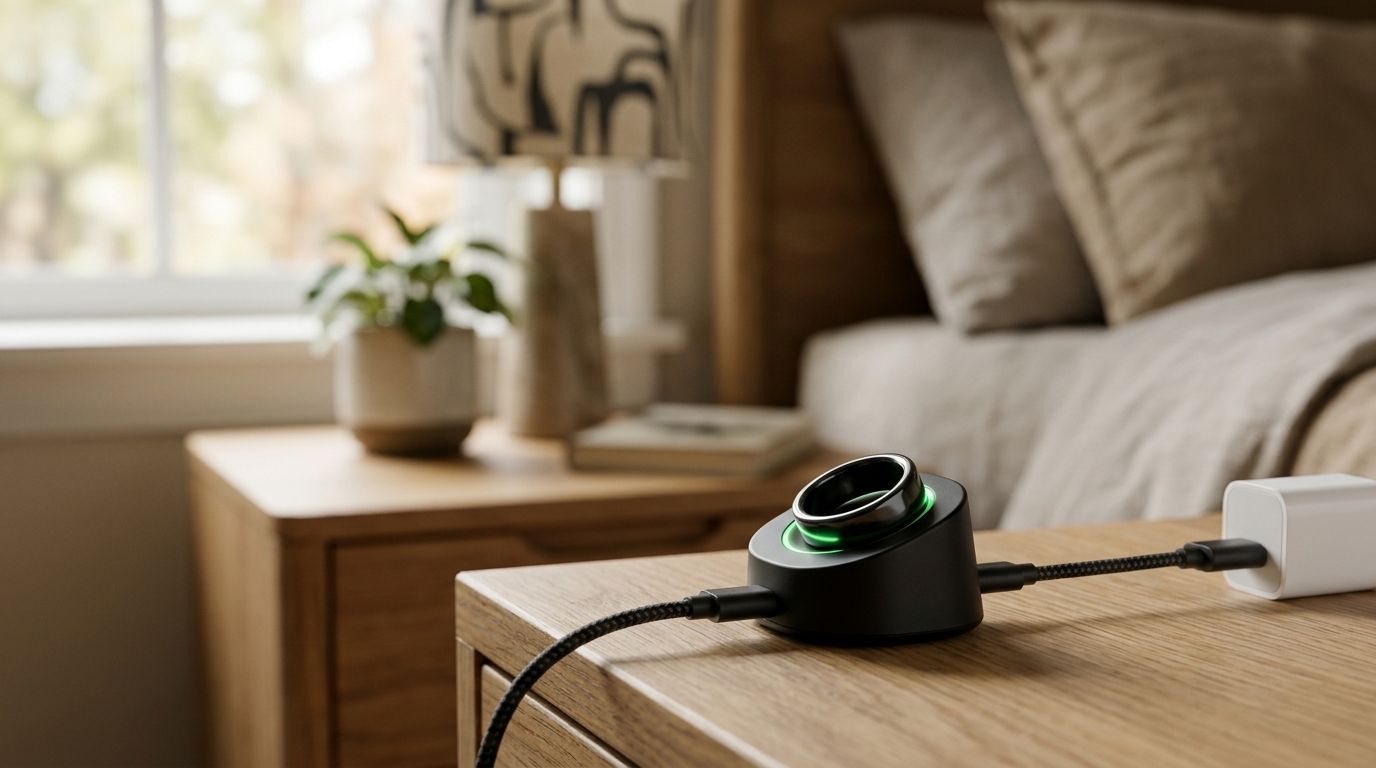
Present-ring-ai’s R1 is best suited to people seeking a screenless ring for voice note-taking. It has a built-in microphone and transcribes spoken ideas and conversations. Its intended appeal is quieter capture without a screen.
That format addresses how you capture a thought. It does not, by itself, establish how accurately a group conversation will be divided between speakers.
The benefit is a screenless approach to spoken notes. The limitation is equally important: device format is not evidence of speaker-identification accuracy. Evaluate conversation capture using the same words, attribution, and meaning checks you would apply to any note taker.
Choose around your main use. Capturing your own spoken idea and producing an attributed record of a group discussion are different requirements. Keep that distinction clear before making either task depend on a wearable.
Can AI note takers tell who is speaking by name?
AI note takers do not establish someone’s name merely by separating voices. Speaker diarization identifies changes and groups speech; a personal identity requires additional information or verification.
Check the names against the recording and your participant information. If you cannot verify a mapping, retain a neutral speaker label rather than attaching a confident but uncertain name.
Can AI note takers transcribe people talking over each other?
AI note takers can attempt overlapping speech, but you should not treat the result as a dependable account without listening. Simultaneous voices make both the wording and attribution harder to establish.
Replay consequential overlap. If the recording remains unclear, ask participants to confirm the decision instead of choosing the most plausible-looking transcript line.
Can you use an AI transcript as final meeting minutes?
You can use an AI transcript to draft meeting minutes, but review the decisions and ownership before circulating a final record. A transcript records speech; minutes also require judgment about what was agreed.
Keep suggestions separate from commitments. Confirm unresolved items explicitly rather than allowing a summary to make the discussion sound more settled than it was.
FAQ
Can AI note takers transcribe multiple speakers accurately?
Yes, AI note takers can transcribe multiple speakers, but word accuracy and speaker attribution require separate checks. Review important passages against the recording before relying on names, decisions, or assignments.
What is speaker diarization in an AI note taker?
Speaker diarization divides a recording into speaker turns and groups speech by speaker. It addresses who spoke when, but does not automatically verify a person’s name.
Does a correct transcript mean the speaker labels are correct?
No, correct words do not guarantee correct speaker labels. A sentence can be transcribed accurately and still be assigned to the wrong participant.
Is separate participant audio better than a shared microphone?
Separate participant audio keeps voices on distinct tracks, while a shared microphone mixes them into a common recording. Check track identity and audio quality either way; neither setup removes the need to review important details.
How can I check whether a note taker mixes up speakers?
Listen to the recording while following each speaker label through the transcript. Check interruptions, short replies, and returns after pauses, then verify that each label still belongs to the same person.
Can a screenless recording device identify everyone in a meeting?
A screenless design does not establish speaker-identification capability. Evaluate the transcription service and verify speaker attribution rather than inferring it from the recorder’s shape.
Should I correct the transcript before summarizing a meeting?
Correct meaning-changing errors before relying on a meeting summary. Prioritize speaker identity, negation, decisions, and action ownership over punctuation or formatting.
One last thing
Check the shortest reply that changes the decision. A brief agreement, refusal, or correction can matter more than a long explanation, yet it is easy to overlook when reviewing a readable summary.
Whether you choose Present-ring-ai for screenless voice capture or another recording format, keep that listening habit. In 2026, the useful question is not just whether the notes sound right. It is whether the recording supports the words and the person attached to them.