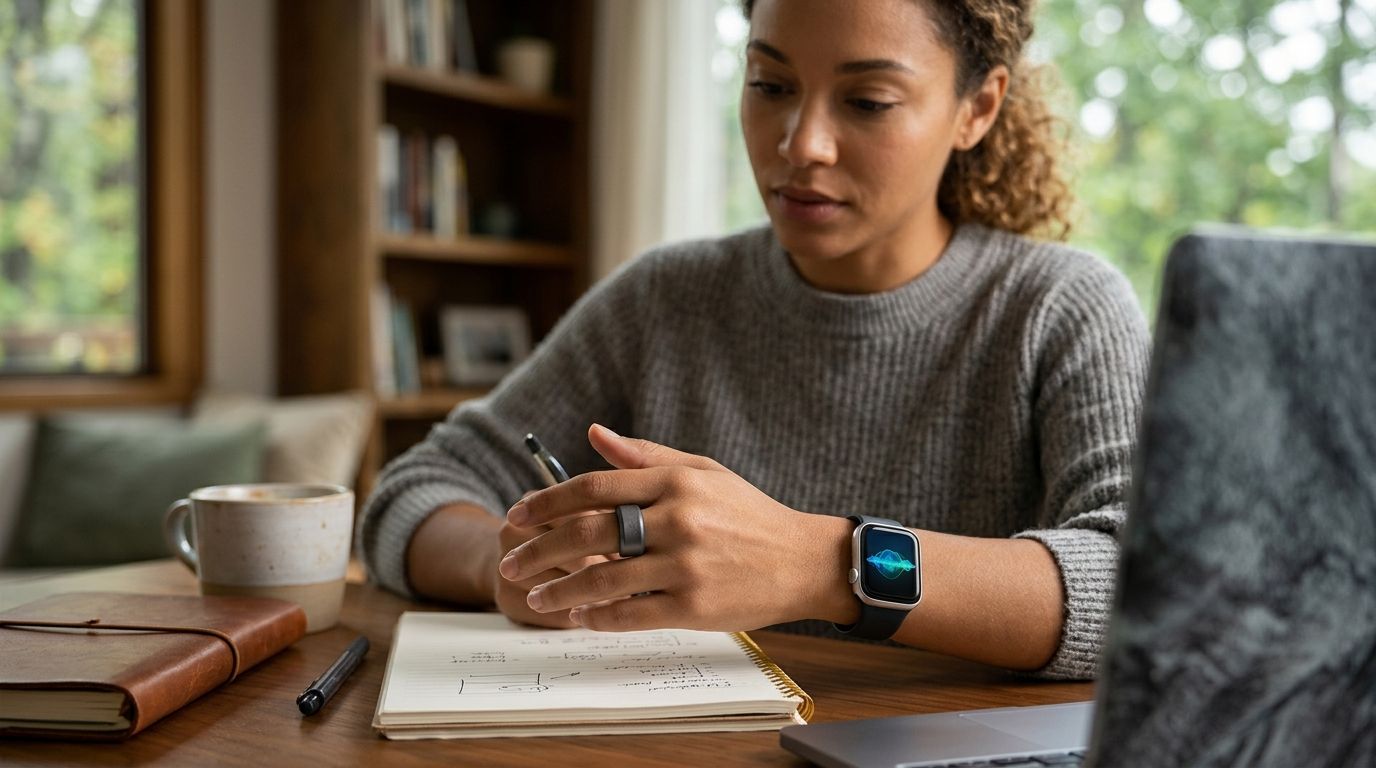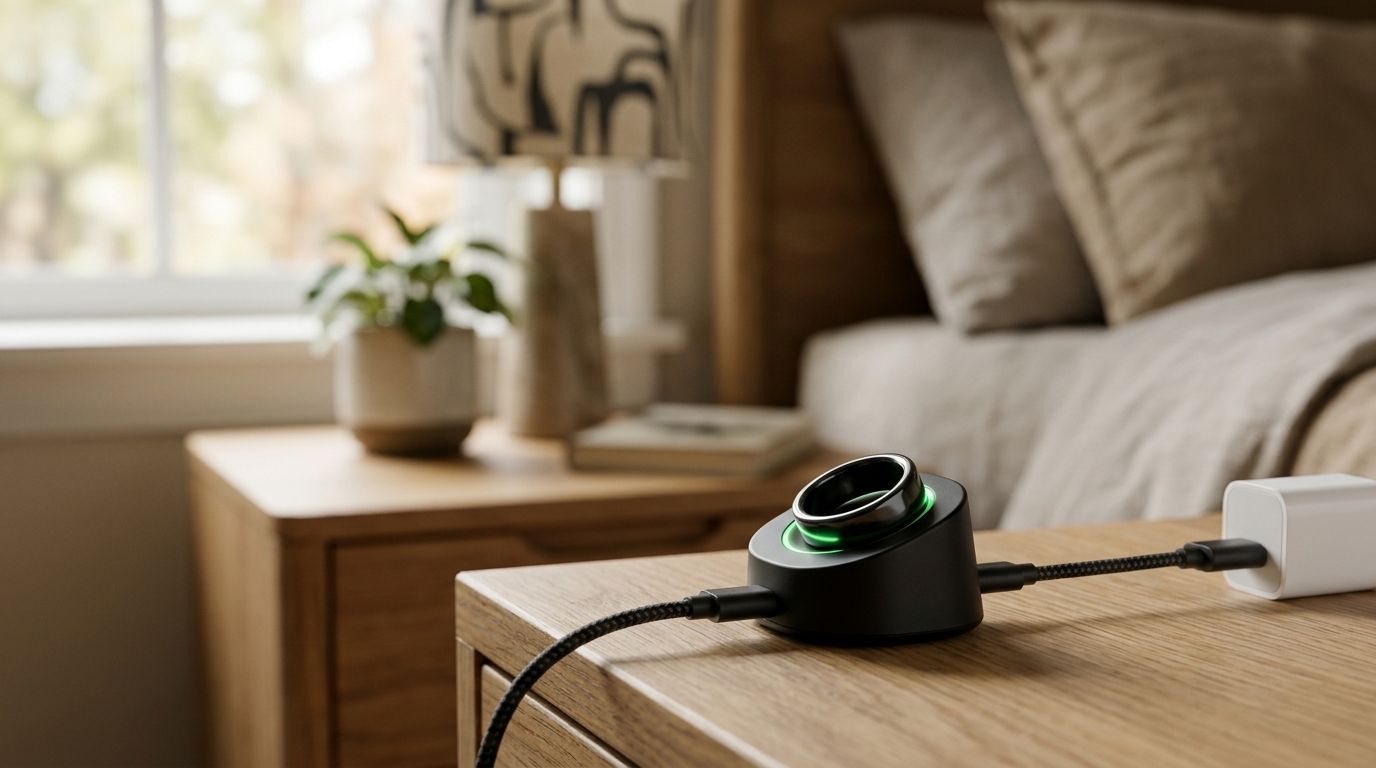
Yes, recording a conversation with a wearable recorder can be legal in the United States when you meet the consent requirements and other laws that apply to the conversation. Federal law generally permits recording with one participant's consent, but some states require every participant's consent for protected conversations. A ring, pendant, or other discreet device does not change those rules, and permission to record does not automatically permit sharing the recording.
- Is it legal to record conversations with a wearable recorder? In the United States, legality depends on consent and context.
- Federal law generally permits one-party consent; state law can impose stricter requirements for protected conversations.
- For wearable recording and voice transcription, explain the capture and obtain everyone's agreement before starting.
- A screenless recorder does not create an exception to recording laws or confidentiality duties.
Why this matters
A wearable recorder changes how easily you capture speech. It does not change another person's privacy rights. The important distinction is not whether the microphone is visible, but whether you have lawful permission to capture the conversation.
For a 2026 meeting, interview, or personal conversation, settle permission before you start. If your question is about discretion rather than legality, the related guide to whether a smart ring can record conversations without anyone noticing addresses a separate issue. Being unnoticed is not the same as being authorized.
Is it legal to record conversations with a wearable recorder?
It is legal when the recording satisfies the laws governing that particular conversation. Start with consent, then check the participants' locations, the setting, and any separate confidentiality obligations. A private conversation and a public announcement do not necessarily receive the same legal treatment.
The federal private-party consent provision is 18 U.S.C. § 2511(2)(d). It generally allows interception when the recorder is a participant or one participant has given prior consent, subject to the provision's criminal-or-tortious-purpose exception. It is not blanket permission to record every conversation you can hear.
| Consent model | What it generally requires | Practical benefit | Important limitation |
|---|---|---|---|
| One-party consent | Consent from one participant, which can be you if you participate | Can permit your own recording without everyone agreeing | Does not override stricter applicable state law |
| All-party consent | Consent from every participant in the protected conversation | Establishes agreement across the group | The scope, exceptions, and form of consent depend on the jurisdiction |
| Everyone expressly agrees | Clear permission from all participants before capture | Gives you a clearer permission process | Does not erase confidentiality duties or authorize every later use |
Best for routine personal and business note-taking: ask everyone before recording. This is a practical recommendation, not a promise that consent resolves every legal issue. Permission, confidentiality, workplace rules, and later disclosure remain separate questions.
What does the federal rule actually cover?
The federal rule concerns interception of wire, oral, and electronic communications. For in-person oral communications, the statutory definition includes an expectation against interception under circumstances justifying that expectation. That distinction matters when assessing a private discussion rather than speech intended for public listeners.
A legal review in 2026 should check both the federal framework and the relevant state rules. Do not treat a summary of federal law as a complete answer for a particular meeting.
One-party consent: one participant's permission
Under a one-party consent rule, your consent generally satisfies the consent requirement when you are part of the conversation. In a conversation involving 2 participants, that means one participant's consent can be enough under that rule. Other applicable restrictions still matter.
The word participant does real work. Wearing a recorder near people does not make you part of their discussion. Leaving a device behind to capture a private conversation you do not participate in raises a different issue from recording your own conversation.
Best for understanding the federal baseline: distinguish participation from proximity. Being in the room, owning the recorder, or owning the premises is not a substitute for checking the legal basis for capture.
All-party consent: every participant's permission
Under an all-party consent requirement, everyone in the protected conversation must consent. In a private conversation involving 3 participants, that means consent from all 3 participants—not just the person who arranged the meeting. The term two-party consent can be misleading when more people are involved.
California Penal Code § 632 generally requires all-party consent to record a confidential communication. Florida Statutes § 934.03(2)(d) provides an all-party prior-consent exception for interception. Those provisions have their own scope and exceptions; neither should be reduced to a rule that every sound recorded anywhere is unlawful.
Best for a routine group conversation: obtain a clear agreement from each participant. Do not assume the organizer speaks for everyone. If someone joins late, pause and explain the recording before continuing.
A visible microphone is not a substitute for this process. Neither is a calendar note that nobody acknowledges. Express agreement gives you a clearer basis than assuming silence means permission.
Why recording requirements vary
The same wearable recorder can be used in very different legal circumstances. These factors explain why a device-level answer is not enough:
- Participant locations. State laws differ, and conversations across state lines raise questions about which laws govern.
- Your participation. Recording your own discussion differs from capturing a conversation between other people.
- Privacy expectations. The setting and circumstances affect whether speech receives protection under particular recording laws.
- Consent scope. Permission to capture a conversation does not necessarily include permission to publish, circulate, or repurpose it.
- Professional duties. Employment policies, contracts, and duties involving client, patient, or other confidential information create separate restrictions.
- Recording purpose. Federal law's private-party consent provision includes an exception involving a criminal or tortious purpose.
For your 2026 recording routine, turn these factors into a short check before capture. Identify who is involved, where they are, what you intend to record, and what you will do with the result. If the answers remain uncertain, take written notes instead.
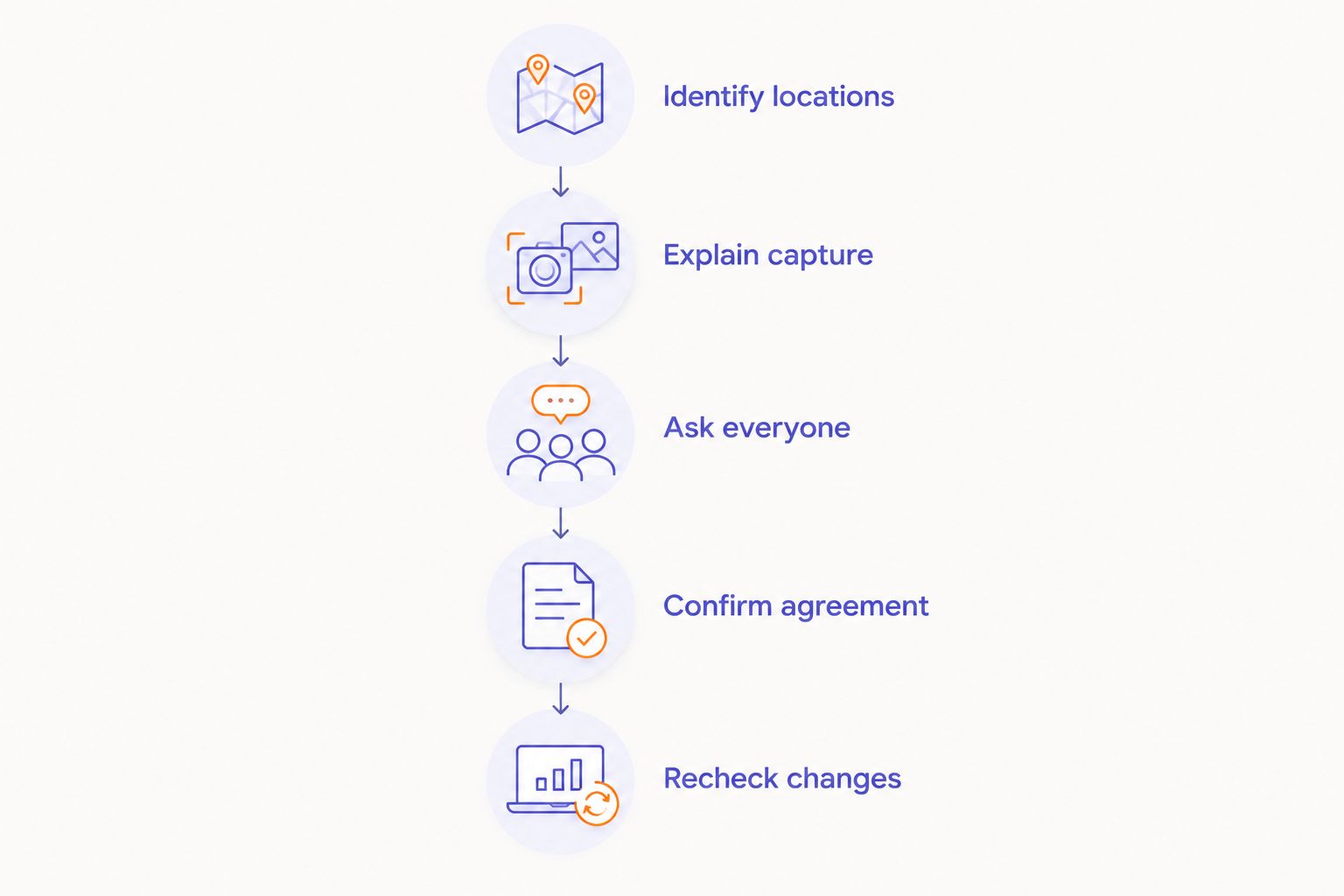
How do you ask permission before using a wearable recorder?
Ask before the microphone captures the conversation. Explain both recording and transcription if you intend to create a written record. People should understand the activity they are agreeing to, not just see a device on your hand.
- Identify locations. Establish where participants are joining from, especially during remote conversations.
- Explain capture. Say that you want to record audio and create notes or a transcript. Describe the intended audience and use.
- Ask everyone. Get a clear response from each participant before starting. Offer an unrecorded conversation if someone declines.
- Confirm agreement. Once permission is established, document it appropriately. A recorded confirmation does not retroactively authorize earlier unauthorized capture.
- Recheck changes. Pause when someone joins or the discussion moves into material outside the original agreement.
An example request is to explain that you would like to record the discussion for your own notes, create a transcript, and keep it within the agreed audience. Then ask each participant whether they agree. This is an example permission process, not a legally sufficient script for every jurisdiction.
Keep the process simple. If someone declines, stop the proposed recording rather than debating whether a less restrictive law might allow it. For ordinary note-taking, preserving a workable conversation is more useful than turning consent into a dispute.
Can I record a conversation if I am part of it?
One participant's consent generally satisfies the federal consent requirement, so your participation matters. It does not settle whether stricter state law applies or whether another duty restricts the recording. Check those questions before relying on your own consent alone.
For example, a private call between people in different states needs more care than assuming the rule where your device sits controls. Asking everyone is a practical safeguard, but obtain jurisdiction-specific legal advice when the stakes involve litigation, sensitive information, or a contested recording.
Do I need permission if I only want a transcript?
A transcript-only goal does not create a general exemption from recording or interception laws. If a device captures protected speech to turn it into text, assess that capture before it happens. Not keeping an audio file does not, by itself, answer whether the initial capture was lawful.
For a 2026 transcription workflow, separate the stages: capture, processing, storage, and sharing. Check where speech is processed, who receives the text, and what retention controls apply before using any service for confidential conversations. Do not assume a feature is private simply because the device has no screen.
Is recording in a public place automatically legal?
No. A public location does not automatically remove every privacy interest in a conversation. A quiet private discussion at a café differs from a speaker addressing an audience, and recording statutes differ in how they define protected speech.
Also distinguish recording from trespass, venue rules, harassment, and publication. Permission under one legal rule does not answer those separate issues. If a specific recording matters to a dispute, get advice on the actual circumstances rather than relying on the location alone.
Where a screenless ring fits
Present-ring-ai's R1 is best suited to people seeking screenless voice note-taking, not a way around consent. The company is pre-launching a ring with a built-in microphone that transcribes spoken ideas and conversations. Its stated purpose is minimalist capture without a screen.
That format fits the desire to keep a display out of a conversation. Its limitation is equally clear: a screenless design does not establish another person's permission. You still need an intentional recording boundary.
If that approach matches your needs, explore Present-ring-ai. Keep the product decision separate from the permission decision: choosing a quieter device does not make recording a private conversation automatically lawful.
FAQ
Can I secretly record a conversation with a smart ring?
Secret recording is not automatically lawful, even when you participate. Federal law generally allows one-party consent, but stricter applicable state laws and other restrictions can prohibit a particular recording.
Do all states require everyone to consent to recording?
No. State consent rules differ, and the protection given to a conversation depends on the relevant statute and circumstances. Do not assume the federal one-party rule resolves every state-law question.
Is wearing a recorder enough notice that I am recording?
Wearing a recorder does not itself establish that everyone has consented. Explain that you want to capture the conversation and obtain a clear agreement before starting.
Can my employer stop me from recording meetings?
Workplace policies and confidentiality obligations can restrict recording separately from consent statutes. Employment and labor-law protections also affect particular situations, so get specific advice before recording a disputed workplace conversation.
Can I share a transcript after everyone agrees to recording?
Consent to recording does not automatically authorize unrestricted sharing of the transcript. Confirm the intended recipients and use, and respect any applicable confidentiality obligations.
What should I do if someone refuses to be recorded?
For routine note-taking, do not record the conversation when someone refuses. Continue without capture and ask whether written notes are acceptable.
Can I use a wearable recorder to capture my own ideas?
Recording your own spoken ideas is different from capturing another person's conversation. Choose a setting where you are not also capturing private speech from people nearby.
Is this a substitute for legal advice about my recording?
No. This is general U.S. information for a 2026 recording decision, not advice about a specific jurisdiction or dispute. A qualified lawyer can assess the participants, locations, setting, purpose, and intended use.
One last thing
The permission to start is not the permission to keep going indefinitely. A new participant, a changed topic, or an objection deserves a pause. The simplest useful habit is to stop capture first and clarify the boundary second.
For personal idea capture, find a quiet place and speak your own thought. For conversations, make permission part of the conversation. A quieter device still needs a clear boundary.