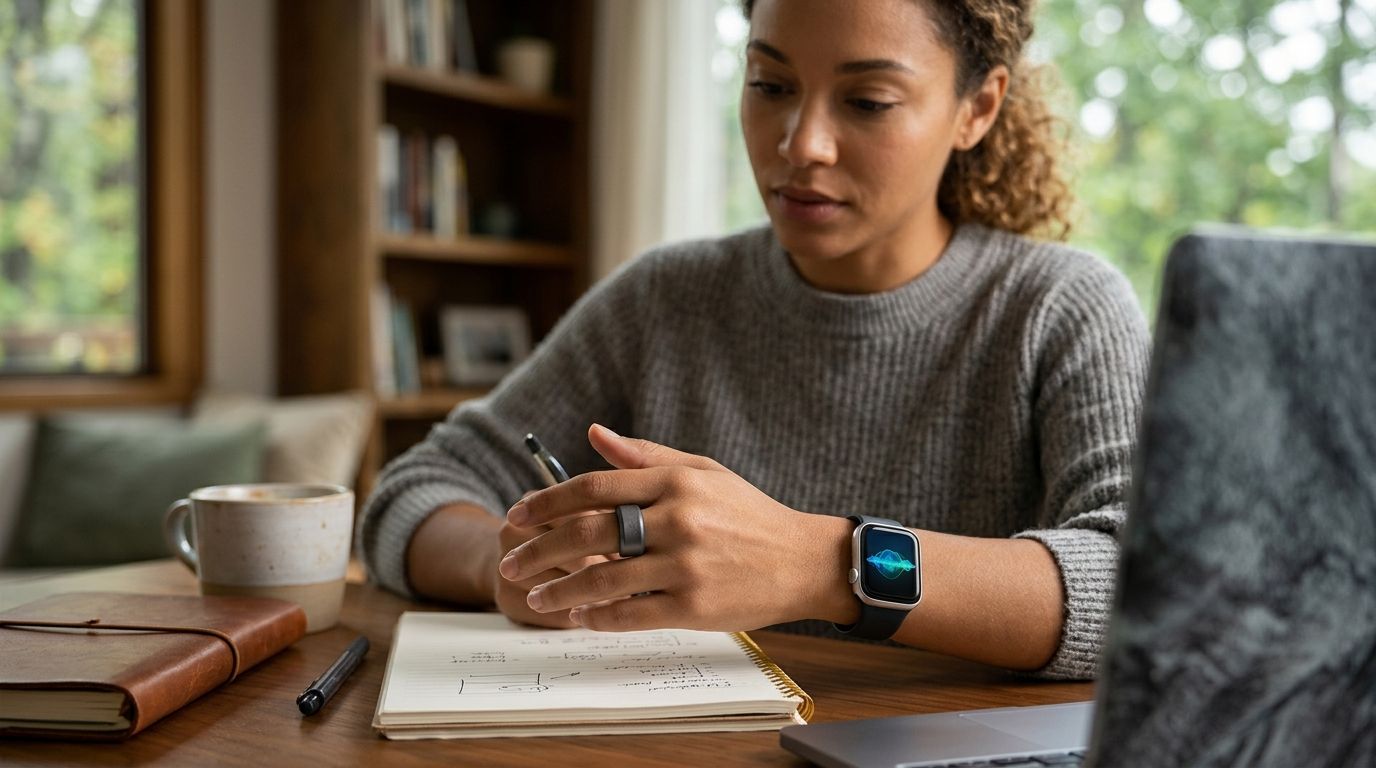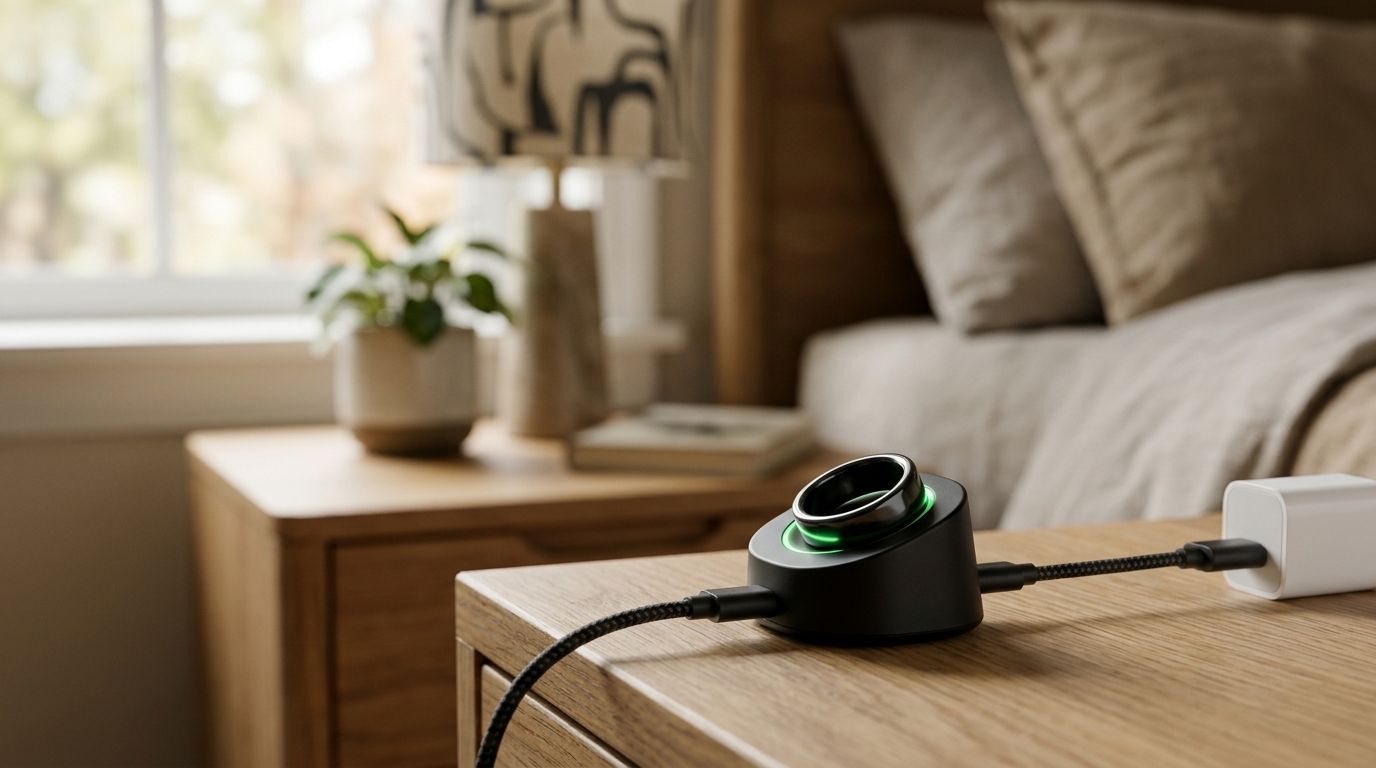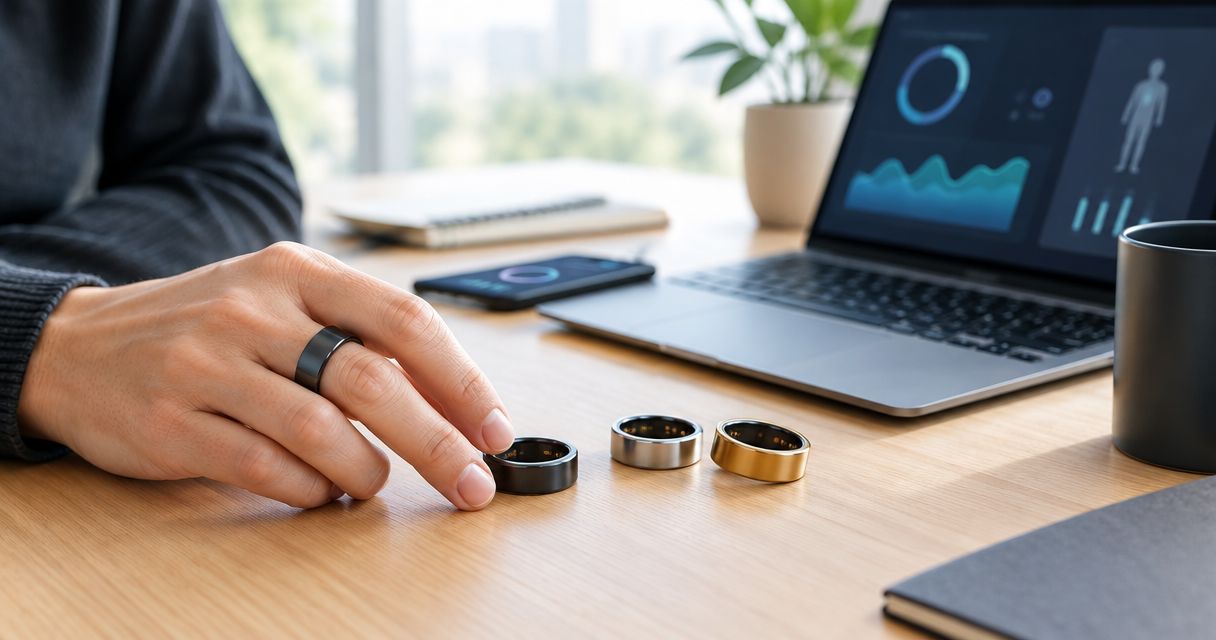
Best overall for spoken idea capture: R1, the pre-launch smart ring from Present-Ring-AI. Best for sleep-focused reflection: Oura Ring. Best for Samsung Health users: Samsung Galaxy Ring. Best for taking voice notes without adding another wearable: your smartphone. This 2026 guide compares each option by the work it supports—not by treating health tracking and note-taking as the same job.
- Smart rings compared for productivity: R1 is designed for spoken notes; Oura Ring and Samsung Galaxy Ring focus on health tracking.
- Present-Ring-AI's R1 suits people seeking screenless voice capture, but its pre-launch design is not a proven performance result.
- Choose Oura Ring for sleep insights or Samsung Galaxy Ring for health tracking within Samsung Health.
- Use smartphone voice notes as your baseline before deciding whether a dedicated ring solves a real problem.
Why this matters
A ring that records an idea and a ring that tracks sleep support different kinds of productivity. One helps preserve something you want to remember. The other gives you information about your body that you can use when planning your day.
Neither job is automatically more useful. Your recurring problem decides the answer.
If ideas disappear while you reach for your phone, focus on capture. If you want to understand your sleep patterns, focus on health tracking. If you already keep useful voice notes on your phone, a new wearable needs a clear reason to replace that habit.
For your 2026 shortlist, separate direct work tools from health-information tools. A smaller device does not make those categories interchangeable. It only changes how you interact with them.
What makes the best smart ring for productivity?
Use these criteria before choosing a product. They explain the order of the recommendations below.
- Task fit: Does the device capture information you need, or provide health information you want to interpret? Start with the actual task.
- Attention required: Can you use the device without opening a screen? Also consider where you will eventually review its output.
- Useful output: A recorded thought needs an intelligible note. A sleep record needs an interpretation that helps you make a decision.
- Everyday context: Speaking works differently at home, in a shared office, and during a conversation. Your surroundings matter.
- Review habit: Capturing more information is not the same as using it. Decide when you will read, correct, or act on the result.
- Privacy boundaries: Distinguish your own spoken ideas from other people's conversations. Check recording controls and data handling before relying on any device.
For this 2026 comparison, task fit comes first. Battery specifications, transcription benchmarks, and comfort rankings do not determine the recommendations here. The ranking is about the purpose of each option, not a measured performance contest.
Productivity options at a glance
The smartphone row is a reference point, not another smart ring. It helps you judge whether changing the form of your note-taking tool would actually help.
| Option | Best for | Standout role | Key limitation |
|---|---|---|---|
| R1 | Spoken idea capture with a screenless ring | Built-in microphone and transcription for note-taking | Pre-launch design; speaking is not suitable in every setting |
| Oura Ring | Sleep-focused reflection | Sleep and health information in the Oura app | Health insights do not capture spoken work notes |
| Samsung Galaxy Ring | Samsung Health users | Ring-based health tracking connected with Samsung Health | Health tracking is not a conversation transcript |
| Smartphone voice notes | Establishing a capture habit without another wearable | Recording spoken thoughts with a device you already use | Handling the phone can interrupt the moment |
Choose a capture tool for notes. Choose a health ring for health information. Combining both under the word productivity does not remove that distinction.
1. R1: best smart ring for spoken idea capture
R1 is a pre-launch screenless smart ring from Present-Ring-AI. Its stated design includes a built-in microphone that transcribes spoken ideas and conversations for note-taking.
That places R1 in a different category from rings built around sleep and activity tracking. Its purpose is to preserve what you say, rather than infer something about your day from health measurements.
Present-Ring-AI's R1 smart ring is best suited to people seeking screenless capture of spoken ideas. That is a fit verdict based on its stated purpose, not a claim about tested transcription quality.
R1 pros
- Direct note-taking purpose: Spoken ideas and conversations are the focus of the device.
- Screenless form: The ring itself does not add another display to look at.
- Built-in microphone: Voice capture is part of the stated design, rather than an unrelated health feature.
- Minimalist intent: The product targets people seeking a distraction-free wearable.
R1 cons
- Speaking has social limits: A private thought spoken aloud becomes audible to the people around you.
- No on-ring text review: A screenless ring cannot display a transcript for you to read on the ring itself.
- Pre-launch status: The product's stated design is not equivalent to evidence of everyday performance.
Best for: People whose main problem is losing spoken ideas, and who want a quieter alternative to reaching for a screen.
Before making R1 part of a work routine, check how you start and stop capture, where you review notes, and how recordings are handled. For conversations, establish permission before recording. These are practical requirements, not optional extras.
Verdict: Hold — keep R1 on your shortlist for screenless notes, and assess its actual capture and review workflow before committing.
2. Oura Ring: best smart ring for sleep-focused reflection
Oura Ring tracks sleep and health information, with insights presented through the Oura app. Its productivity role is indirect: it gives you information to consider when deciding how to structure your day.
Choose this category because you want to understand sleep patterns. Do not choose it expecting a ring-based notebook.
For a 2026 productivity routine, the useful question is what you will do with the information. Reading a sleep summary without changing any decision is observation, not a completed work habit.
Oura Ring pros
- Sleep-centered use case: Sleep information is relevant when reflecting on how rested you feel.
- Ring format: Health tracking does not require a watch-shaped display on your wrist.
- App-based review: You can review the information separately from the act of wearing the ring.
Oura Ring cons
- Indirect work benefit: Sleep information does not complete a task or preserve an idea for you.
- Not a spoken-note tool: Oura Ring is not the recommendation for dictating thoughts or transcribing conversations.
- Another review habit: You still need to interpret the information rather than treat it as a work instruction.
Best for: People who want sleep information as an input to daily planning, not people shopping for voice capture.
Keep the interpretation modest. A health summary is not a measurement of writing quality, judgment, or the value of your work. Use it alongside how you feel and the obligations already on your calendar.
Verdict: Buy — choose Oura Ring when sleep insight is the actual goal; skip it as a substitute for a note-taking device.
3. Samsung Galaxy Ring: best smart ring for Samsung Health users
Samsung Galaxy Ring is a health-tracking ring that works with Samsung Health. Its strongest fit in this comparison is for someone who wants ring-based health information in that environment.
The productivity connection remains indirect. Health tracking gives you something to review; it does not create a written record of a meeting or capture the idea you just spoke.
Samsung Galaxy Ring pros
- Clear health-tracking role: The product belongs on a health-information shortlist rather than a voice-recorder shortlist.
- Samsung Health connection: It fits a routine centered on reviewing information in Samsung Health.
- Screenless ring format: The ring does not put a watch display on your wrist.
Samsung Galaxy Ring cons
- Not conversation capture: Health tracking is not a replacement for recording or transcribing speech.
- Ecosystem considerations: Check your phone's compatibility and the requirements of the features you intend to use.
- Indirect productivity role: You still need to decide whether the health information changes anything about your day.
Best for: Samsung Health users who want a ring-based approach to health tracking.
The choice between Samsung Galaxy Ring and Oura Ring should start with the information you want to review and the app environment you prefer. Neither should win a spoken-note comparison merely because it is a smart ring.
Keep that boundary clear when comparing product pages. A long list of health features does not answer a voice-capture requirement.
Verdict: Buy — choose Samsung Galaxy Ring for a Samsung Health routine; skip it when your primary requirement is spoken notes.
4. Smartphone voice notes: best for establishing the habit first
A smartphone can record spoken notes using a recording app. It is not a ring, but it is a useful baseline because it separates the value of voice capture from the appeal of a new device.
Start here if you do not yet know whether you will listen to or use the notes you record. A different form factor cannot solve a review habit you have never established.
Smartphone voice notes pros
- No additional wearable: You can evaluate the habit with a device you already use.
- Visible interaction: A screen gives you a place to inspect recording controls.
- Straightforward baseline: You can learn whether spoken notes suit your thinking before choosing a dedicated capture device.
Smartphone voice notes cons
- Phone handling: Retrieving and opening the phone adds an interaction between the thought and its capture.
- Visible screen: Using the recorder puts you back in contact with a display.
- App-dependent output: Recording audio does not guarantee that your chosen app also produces a transcript.
Best for: People deciding whether voice notes belong in their routine at all.
Make the comparison specific. Was the problem reaching the recorder, finding the recording later, or turning the recording into something useful? Only the first of those problems directly concerns the shape of the capture device.
Verdict: Hold — keep using smartphone voice notes until you can name the friction a dedicated wearable needs to remove.
Build a capture routine before choosing the hardware
A useful note-taking routine has a beginning and an end. The recording is only the beginning.
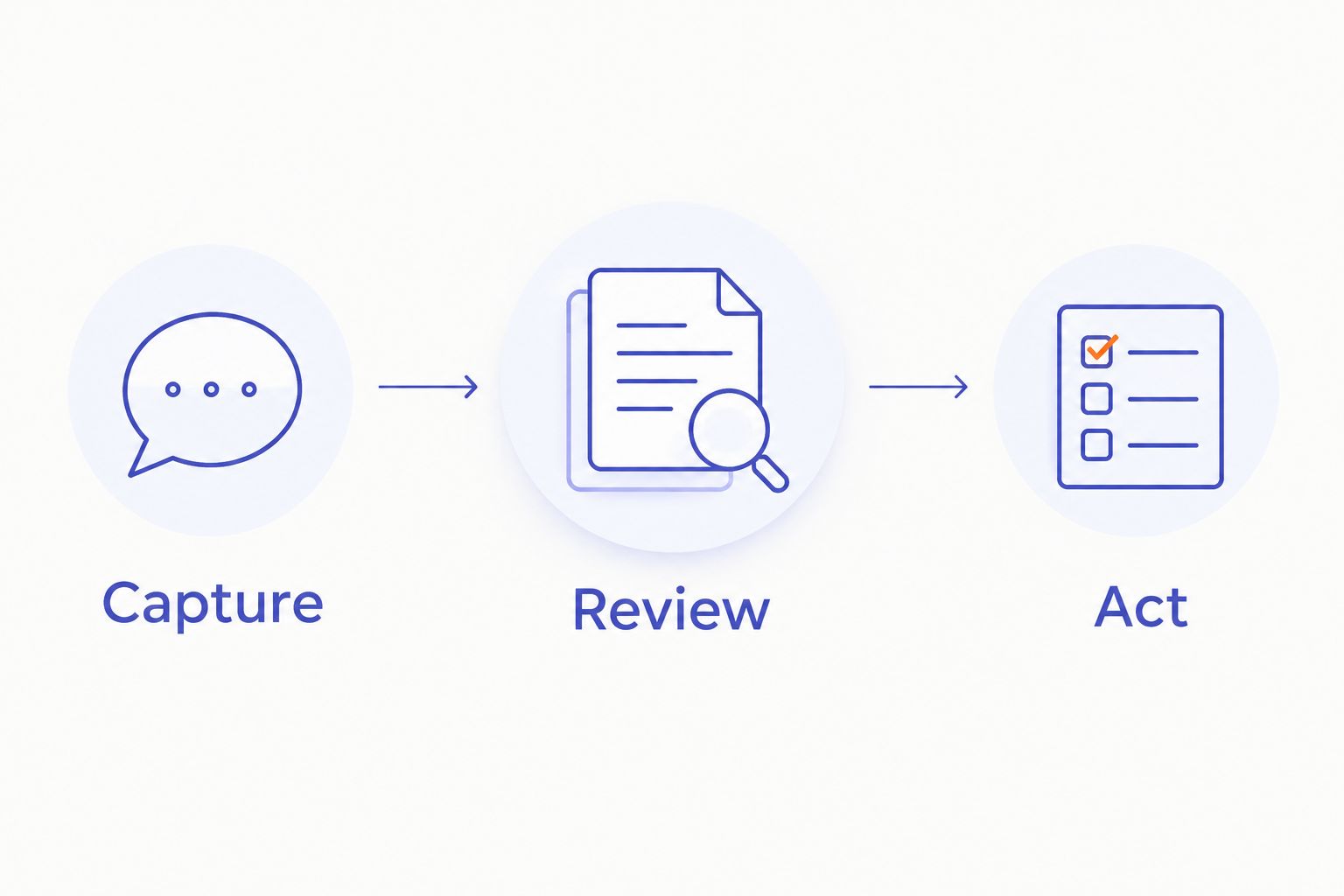
Use this sequence when assessing a voice tool in 2026:
- Capture: Speak a complete thought. Include enough context to understand it later, rather than leaving an isolated phrase.
- Review: Read or listen to the result. Correct important names, distinguish decisions from suggestions, and remove material you do not need.
- Act: Give the useful note a destination. Turn it into a task, a draft, a question, or a reference you can find again.
A ring changes the capture step. It does not automatically complete the review and action steps. That distinction is the most useful test of whether a wearable belongs in your routine.
Apply a similar discipline to health rings. Decide what question you want the health information to answer. Then decide what action, if any, follows from it. Otherwise, you have added another thing to check without defining its purpose.
Keep conversation recording separate from personal notes
Dictating your own idea and recording another person are different activities. Treat them differently.
For a personal note, consider whether speaking aloud reveals confidential information to people nearby. A screenless device is not the same as a private interaction.
For a conversation, get permission and follow the recording rules that apply to your location and setting. Workplace policies, professional duties, and confidentiality agreements also matter. Do not treat a device's ability to record as permission to use it.
Before trusting a transcript, review statements that affect decisions. Names, commitments, and the difference between a suggestion and an agreement deserve particular attention. A readable transcript is still something you need to check.
How the ranking works
The ranking prioritizes the task each option is designed to support. R1 comes first because its stated purpose directly addresses spoken note-taking. Oura Ring follows for sleep-focused reflection, and Samsung Galaxy Ring serves the distinct Samsung Health use case.
Smartphone voice notes close the list as the baseline. That position does not mean a phone is worse at every task. It means the phone helps you decide whether a ring is necessary.
This is a purpose-based buying guide, not a laboratory comparison. The criteria are task fit, attention required, useful output, everyday context, review habits, and privacy boundaries.
Which productivity option should you choose?
For spoken ideas, shortlist R1. For sleep information, choose Oura Ring. For a Samsung Health routine, choose Samsung Galaxy Ring. If you are undecided, begin with smartphone voice notes and identify what interrupts your capture habit.
Present-Ring-AI's smart ring concept addresses a specific problem: capturing speech without adding a screen to the wearable. It does not need to compete with health rings on an unrelated task to earn consideration.
For your 2026 decision, write down the job first. Then choose the device. That order keeps a product category from becoming a substitute for a clear requirement.
FAQ
What's the best smart ring for productivity?
The best fit depends on the task: R1 is designed for spoken note-taking, Oura Ring supports sleep-focused reflection, and Samsung Galaxy Ring supports a Samsung Health routine. R1 is a pre-launch product, so its stated purpose is not a tested performance verdict.
Is R1 better than Oura Ring for taking notes?
R1 is the relevant option for spoken notes because its stated design includes a microphone and transcription. Oura Ring focuses on sleep and health information, not capturing spoken work notes.
Can Samsung Galaxy Ring transcribe meetings?
Samsung Galaxy Ring is a health-tracking ring, not the meeting-transcription recommendation in this guide. Choose a dedicated speech-capture tool when preserving a conversation is the requirement.
Does a screenless ring mean I never need to review a screen?
No. Screenless describes the ring itself, not every part of the workflow. Check where recordings or health information are reviewed before choosing a device.
Should I use my phone before choosing a voice-capture ring?
Yes, use smartphone voice notes to establish whether you capture and use spoken thoughts. Then identify whether reaching for the phone is the problem a dedicated wearable needs to solve.
Can I record conversations with a wearable ring?
Get permission and follow the recording rules that apply to the conversation and location. Workplace policies and confidentiality duties also apply; a recording feature does not grant permission.
Will a health ring make me more productive?
Health tracking alone does not establish a productivity improvement. Oura Ring and Samsung Galaxy Ring provide information you can consider, but you still need to decide whether it changes a useful action.
One last thing
The most useful test is not whether you capture more. It is whether you can find and use what you captured.
Before changing devices, revisit a spoken note from your current routine. Can you understand the thought without reconstructing the moment? Does it have a clear destination? If not, improve the note and its review process first.
A quieter device should remove an interruption, not add a collection you never open. Choose the smallest tool that solves your actual problem.