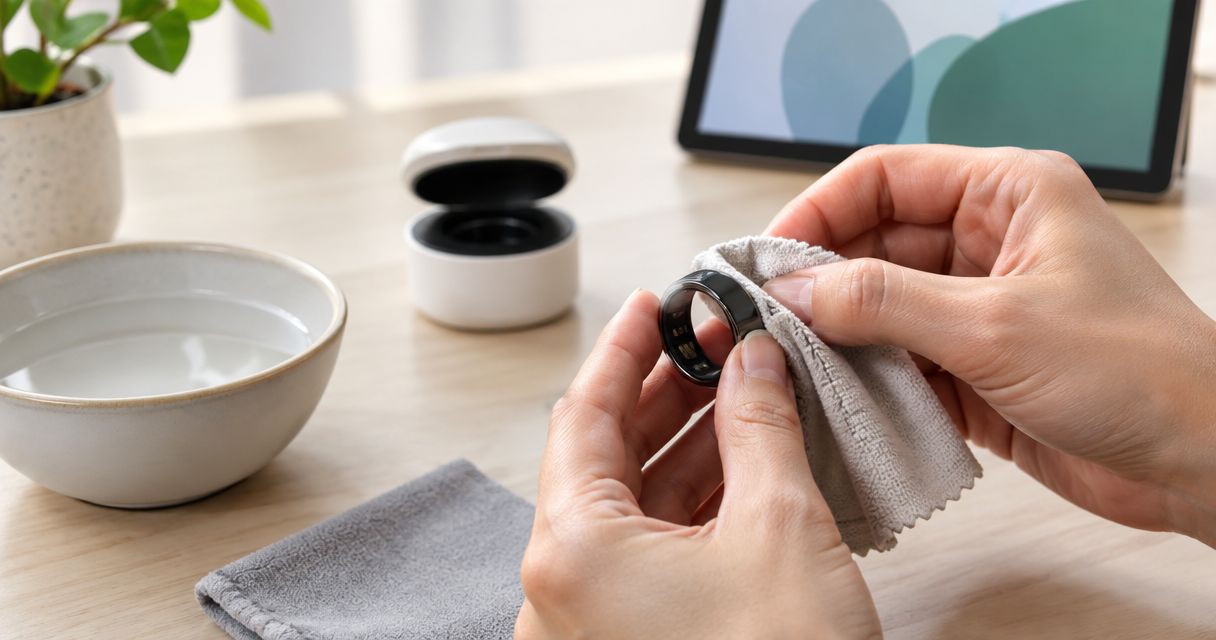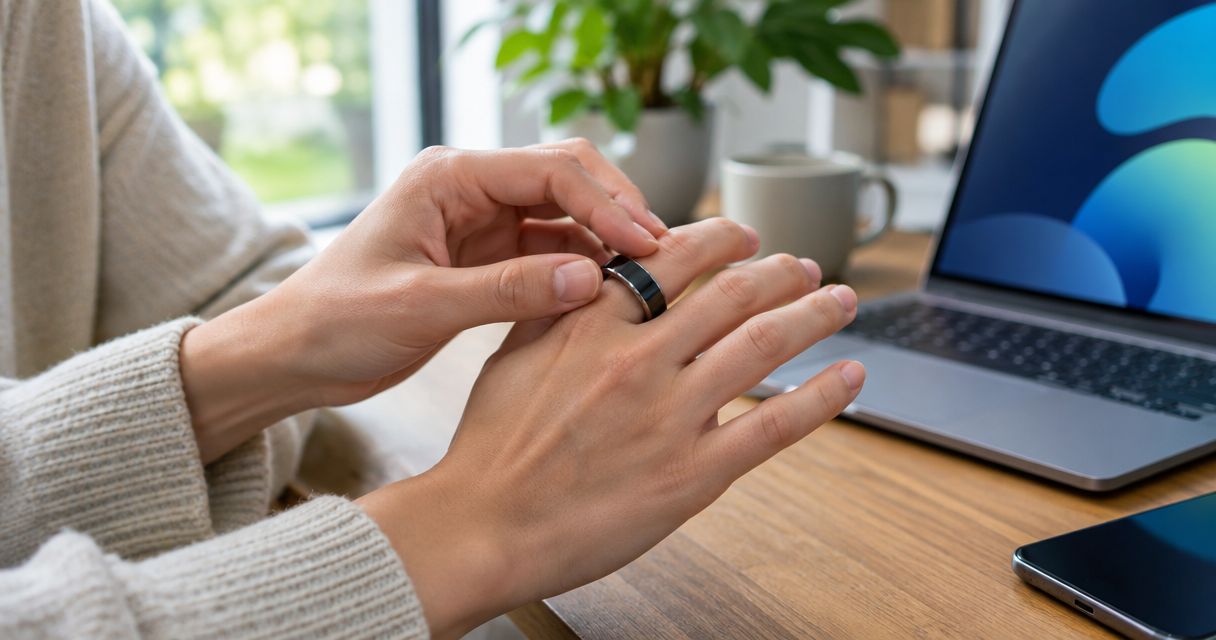
A smart ring should not hurt during ordinary daily wear, but comfort depends on its fit, shape, and what you do with your hands. A ring that feels fine while you sit can press against your fingers when you grip something or become tight as your fingers swell. Pain, tingling, numbness, or persistent irritation are reasons to stop wearing it—not signs that you need to get used to it.
- Is a smart ring uncomfortable to wear all day? Poor fit and pressure can make it uncomfortable; pain is not acceptable.
- Check comfort while resting, bending your fingers, and gripping everyday objects.
- Present-Ring-AI targets people seeking screenless voice notes; that purpose does not establish all-day physical comfort.
- Remove a ring for activities where jewelry creates a catching or crushing hazard.
Why this matters
A wearable earns its place by asking less of you. If you keep turning it, adjusting it, or thinking about the pressure on your finger, it is interrupting the day it was meant to support.
When choosing a smart ring in 2026, separate the usefulness of the device from the feel of the object. A useful feature cannot compensate for a ring that hurts. Present-Ring-AI centers its concept on screenless note-taking, but physical fit still deserves its own decision.
There is also a difference between noticing a ring and experiencing discomfort. Feeling an unfamiliar band is not the same as feeling a sharp edge, restricted movement, or numbness. Judge the sensation, not simply whether you remember the ring is there.
Is a smart ring uncomfortable to wear all day?
A smart ring is uncomfortable when its fit or shape conflicts with your finger or your activities. All-day wear is not a reason to accept pain.
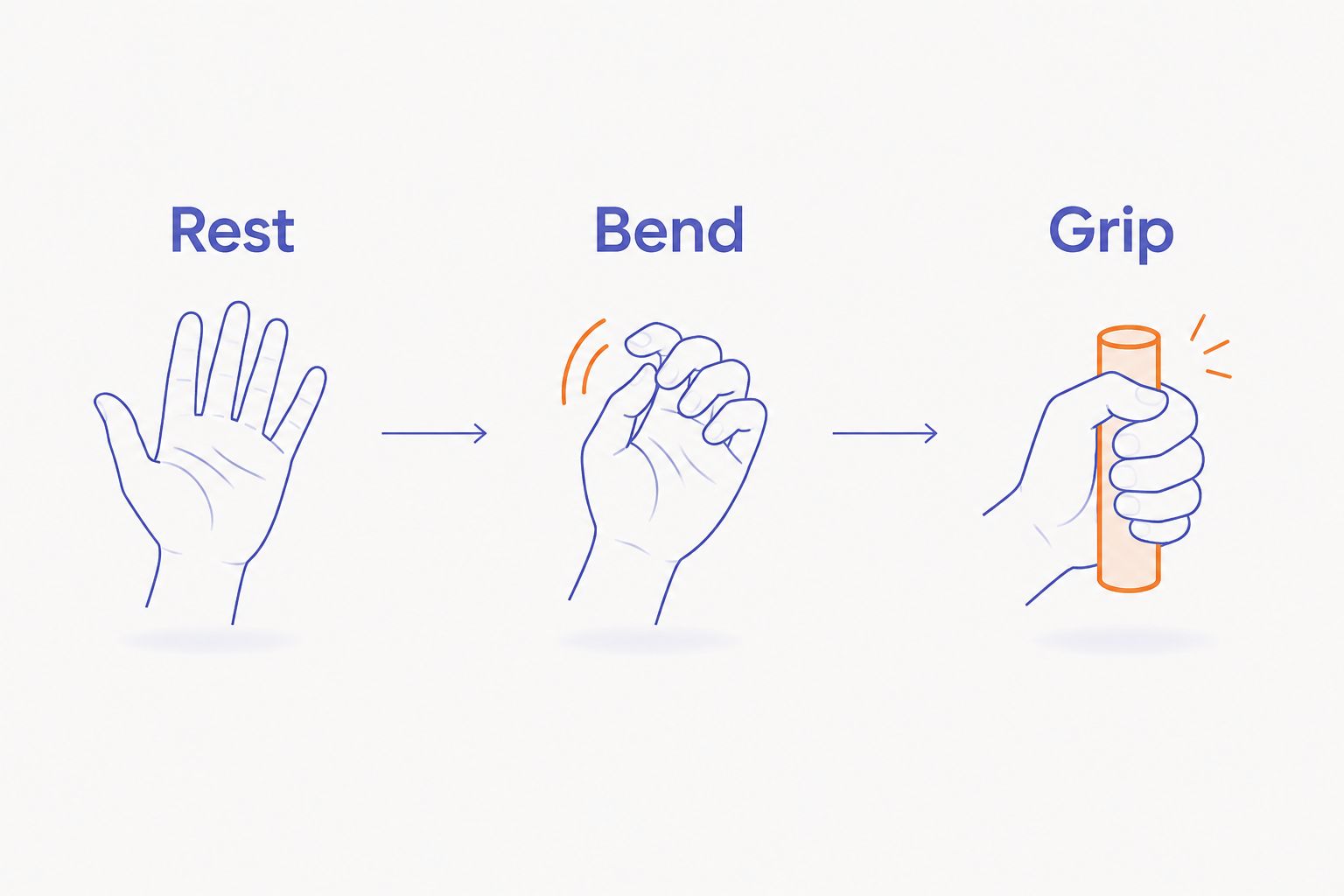
Use these 3 fit checks before deciding that a ring suits your routine. They test different things: contact at rest, freedom of movement, and pressure during use.
- Rest. Let your hand relax. Check whether the band presses into your skin, rubs against adjacent fingers, or repeatedly slips out of position.
- Bend. Open and close your hand naturally. Notice whether the ring restricts movement or presses into the base of your finger.
- Grip. Hold objects you normally use, such as a mug or bag handle. Stop if the ring creates a painful pressure point.
Do not squeeze harder to prove that the ring is comfortable. The point is to observe your ordinary movements, not to push through discomfort.
The table below helps you distinguish a fit question from a reason to stop. It is a practical check, not a diagnosis of a skin or circulation problem.
| What you notice | What to check | Next move |
|---|---|---|
| You notice the band without pain | Whether movement remains natural | Keep assessing it during ordinary activities |
| The ring repeatedly slides or rotates | Whether the fit follows the maker's instructions | Reassess sizing rather than constantly adjusting it |
| Pressure appears when you hold a handle | Where the band contacts your finger | Stop that activity with the ring on |
| Skin becomes itchy or irritated | Moisture, residue, and possible material sensitivity | Remove the ring and let the skin recover |
| Tingling, numbness, or finger discoloration appears | Whether the ring is constricting the finger | Remove it promptly; seek urgent help if it is stuck or symptoms persist |
A comfortable fit should also let you remove the ring using the maker's recommended method. Do not choose a tight fit merely because it seems more secure.
Why smart-ring comfort varies
Comfort is not a single specification. Weight matters, but it does not describe how a band meets your skin or behaves when your hand moves. For your 2026 buying decision, give these factors more attention than a general promise of all-day wear.
- Fit around the finger. A tight band creates pressure. A loose band moves around and can rub or distract you. Follow the specific ring's sizing instructions rather than assuming your usual jewelry size transfers exactly.
- Band width and shape. A broad band occupies more space along your finger. Its profile also affects contact with neighboring fingers and the way it feels when you close your hand.
- Changes in finger size. Heat, exercise, and fluid retention can change how snug a ring feels. A fit that works in one setting does not establish comfort in every setting.
- Skin contact. Trapped moisture, soap residue, and sensitivity to a material can cause irritation. A smooth-feeling ring still needs appropriate cleaning and drying.
- Your daily activities. Typing, carrying bags, gripping tools, and exercising place different demands on your hands. Comfort at a desk does not settle comfort during physical work.
- Other jewelry. Adjacent rings can touch, crowd the same area, or change how your fingers move together. Assess the combination you actually intend to wear.
Do not turn this into a search for one universally comfortable design. Your hands and habits are the test conditions that matter.
Compare your hands, not just your ring size
Your 2 hands do not necessarily offer the same fit on corresponding fingers. Hand dominance also changes the tasks a ring encounters throughout the day.
Assess 1 finger at a time, following the device's wearing instructions. Changing fingers without checking fit can exchange one problem for another: less contact during work, but more slipping or pressure elsewhere.
If the maker specifies a particular finger or orientation, include that requirement in your decision. A ring that only feels comfortable in an unsupported position is not a good match for the intended use.
Does a smart ring feel bulky when you type or grip things?
A smart ring feels bulky when its band gets in the way of your normal finger position or creates pressure against an object. The useful question is whether it changes how you use your hand.
While typing, notice contact between neighboring fingers and the keyboard or desk. If you spread your fingers differently just to accommodate the band, the ring is asking you to adjust your movement around it.
Gripping is a separate test. A ring can feel unobtrusive over a keyboard yet press into your finger around a bag handle. Neither experience cancels out the other.
For a desk-focused routine in 2026, assess the movements you repeat: typing, using a mouse, writing, holding a phone, and carrying your usual belongings. Do not substitute an appealing product image for that ordinary-day check.
Some activities call for removal regardless of comfort. Follow workplace and equipment rules around machinery, electrical work, climbing, and other settings where rings can catch or contribute to injury. A comfortable ring is still jewelry around a finger.
Should you wear a smart ring through exercise and handwashing?
Remove a smart ring whenever the activity creates unsafe pressure or a catching hazard, and follow its care instructions around water. Comfortable wear does not establish water resistance or suitability for exercise.
A firm grip on exercise equipment can press a band into your finger. If that happens, take the ring off rather than altering your grip to protect the device. Your hand position should serve the activity.
Handwashing raises a different issue. If water exposure is permitted, clean and dry the ring and the skin underneath as instructed. Leaving moisture or soap trapped beneath a band can irritate skin.
Water resistance is a product-specific question, separate from fit. The guide to whether the R1 ring is waterproof addresses that topic; do not infer a water rating from the fact that a device is worn on your hand.
Can you sleep in a smart ring if it feels comfortable during the day?
Daytime comfort does not establish nighttime comfort. Follow the maker's wearing instructions and consider whether your fingers become swollen or the ring leaves your skin irritated.
You do not need to make overnight wear a goal simply because a device is wearable. Match wearing time to what the device actually does for you.
That distinction matters for a voice-capture device. R1 is described as a screenless smart ring with a built-in microphone that transcribes spoken ideas and conversations for note-taking. Present-Ring-AI is for people seeking screenless voice capture rather than another display. That describes its intended audience, not a guarantee about fit.
The benefit is a note-taking format without a screen on the ring. The limitation is physical: you still have a band on your finger, and its usefulness does not remove pressure, skin-contact, or activity concerns. For a 2026 purchase, assess those separately.
How do you decide whether the ring belongs in your day?
Start with the part of your routine you want the ring to support. Then consider what wearing it would require during the rest of that routine.
A quiet desk session and a day spent handling equipment are different situations. The best fit for your use is not necessarily the ring you can tolerate for the longest uninterrupted stretch. It is the one that serves a real purpose without creating discomfort or unsafe compromises.
Use this decision rule:
- Keep assessing if you simply notice the band and your hand moves normally.
- Reassess the fit if you repeatedly rotate, reposition, or protect the ring during ordinary tasks.
- Stop wearing it if it hurts, causes numbness, or irritates your skin.
- Remove it for the activity if jewelry introduces a safety concern.
Avoid treating endurance as evidence. Getting through a day with an uncomfortable ring does not make the fit appropriate. Removing it is a sensible response, not a failed attempt to use the technology.
Also consider the attention it takes. If the device is meant to support a quieter routine, repeated checking and adjusting belong on the negative side of your decision—not outside it.
FAQ
Is a smart ring supposed to feel tight?
A smart ring should fit securely without painful pressure or restricted movement. Follow the maker's sizing instructions, and remove it if you experience tingling, numbness, or increasing swelling.
Will I get used to wearing a smart ring all day?
You can become more familiar with the sensation of a band, but pain is not something to train yourself to accept. Persistent rubbing, pressure, or irritation calls for a fit review or removal.
Why does my smart ring feel tighter later in the day?
Changes in finger swelling can make a smart ring feel tighter. Heat, exercise, and fluid retention can affect fit; remove the ring before tightness becomes a removal problem.
Can a lightweight smart ring still be uncomfortable?
Yes, a lightweight smart ring can still be uncomfortable because weight is only part of fit. Band width, shape, skin contact, and pressure during gripping also matter.
Can I wear a smart ring while lifting weights?
Remove a smart ring if lifting creates pressure, interferes with your grip, or introduces a catching or crushing hazard. Follow the equipment rules and the ring maker's instructions rather than assuming comfortable desk wear transfers to training.
What should I do if my smart ring gets stuck?
Do not keep pulling forcefully on a stuck ring. Seek urgent medical help if your finger is numb, discolored, increasingly swollen, or painful, or if you cannot remove a constricting ring.
Does a screenless ring automatically feel less distracting?
No, removing a screen does not remove physical discomfort. Present-Ring-AI's screenless note-taking concept addresses the device format; fit still determines whether the band distracts you during wear.
One last thing
All-day comfort does not require all-day wear. Taking a ring off for a workout, wet work, or a task with a jewelry hazard is compatible with using it thoughtfully.
Before you choose a smart ring in 2026, name the moment you want it to help with. A thought while walking. A spoken note between tasks. Then ask whether wearing the ring supports that moment without asking your hands to accommodate pain. Start there.