
Buying a pre-launch smart ring is not risk-free. Wait unless you can verify the order terms, assess the recording and privacy controls, and accept uncertainty about the finished device. In 2026, the hidden commitment is not just the purchase: it is trusting a new device with your spoken notes and conversations.
- Is buying a pre-launch smart ring safe? Treat it as an early commitment, not a proven everyday tool.
- Present-ring-ai targets people seeking screenless voice capture; that purpose does not establish purchase protection or recording privacy.
- Check written order terms, working demonstrations, data controls, and your payment provider’s dispute rules before committing.
- Wait if your work depends on reliable notes or you cannot accept uncertainty about the finished device.
Is buying a pre-launch smart ring safe?
A pre-launch purchase is reasonable only when the unresolved risks fit your situation. A product concept explains what a device is intended to do. It does not establish how the finished device performs, how your information is handled, or what happens if plans change.
Start with the current information from Present-ring-ai, then separate the intended experience from the written commitments. Keep a copy of the terms attached to any decision you make.
| Your next move | Best for | Main benefit | Main drawback | Verdict |
|---|---|---|---|---|
| Commit before launch | Early adopters who accept unresolved questions | You can pursue a device concept that fits your preferences | You commit before evaluating the finished experience | Proceed only after checking the terms |
| Wait for independent reviews | Buyers who need evidence before deciding | You can assess real use rather than a proposal alone | You postpone trying the device | Wait if reliability matters most |
| Keep your current capture method | People whose notes already support daily work | You avoid changing a working routine prematurely | You do not gain the proposed screenless experience | Keep it as your fallback |
These choices answer different needs. Wanting quieter technology is a valid reason to investigate a ring. It is not a reason to skip purchase checks.
Why this matters
A voice-capture ring sits close to ordinary life. You speak an unfinished thought. Someone else joins a conversation. A personal note becomes a work note without much ceremony.
That makes the buying decision broader than comfort or appearance. You need to understand both the transaction and the information the device will handle. A clear explanation of one does not settle the other.
For a 2026 purchase, read the terms attached to the specific commitment in front of you. Do not use an older announcement, a discussion thread, or an attractive demonstration as a substitute for those terms.
The right question is not whether the idea feels useful. It is whether the evidence supports the commitment you are being asked to make.
Check the purchase before you commit
Use this sequence for a pre-launch decision in 2026. Finish each check before moving to the next; unanswered questions belong in the decision, not beneath it.
1. Establish the evidence
Look for a working demonstration that shows the complete capture process. A useful demonstration starts with spoken words and ends with a readable note. It should make clear what happens on the ring and what requires another device or service.
Watch for omissions. A short recording clip does not answer how you start capture, stop it, recover a note, or correct a transcript. Ask for an explanation of the parts that matter to your routine.
Independent hands-on evidence answers a different question from a brand demonstration. The demonstration shows the intended experience. Independent use helps you judge how that experience holds up outside a prepared example.
2. Read the order terms
Identify the legal seller and the nature of the commitment. Joining an interest list, placing a reservation, and entering a purchase agreement are different actions. Read the language attached to the action you are taking.
Check the stated delivery commitment, cancellation process, and treatment of delays. Save the version you accepted, along with the confirmation. If the wording leaves a question unanswered, ask the seller in writing.
Do not translate an estimate into a guarantee. Equally, do not assume that a familiar payment method creates rights beyond its actual rules.
3. Understand the data path
Ask where audio goes after capture. Establish whether recordings leave the device, which services process them, and how you access or delete both audio and transcripts.
Read the guide to privacy for wearable ring recordings alongside the product’s actual privacy terms. A category guide helps you form questions. Only the applicable terms and documented controls answer them for a specific device.
A screenless design describes the physical experience. It does not establish that processing stays on the device or that recordings remain private.
4. Check your exit
Before committing, understand how you would leave. That includes cancelling an order, exporting your notes, deleting an account, and handling a device you no longer want to use.
Check your payment provider’s applicable dispute rules directly. Ask how those rules apply when the expected delivery date falls after the transaction date. Do not assume a dispute remains possible indefinitely.
An exit should be understandable before you need it. If getting a clear answer is difficult now, leave that uncertainty visible in your decision.
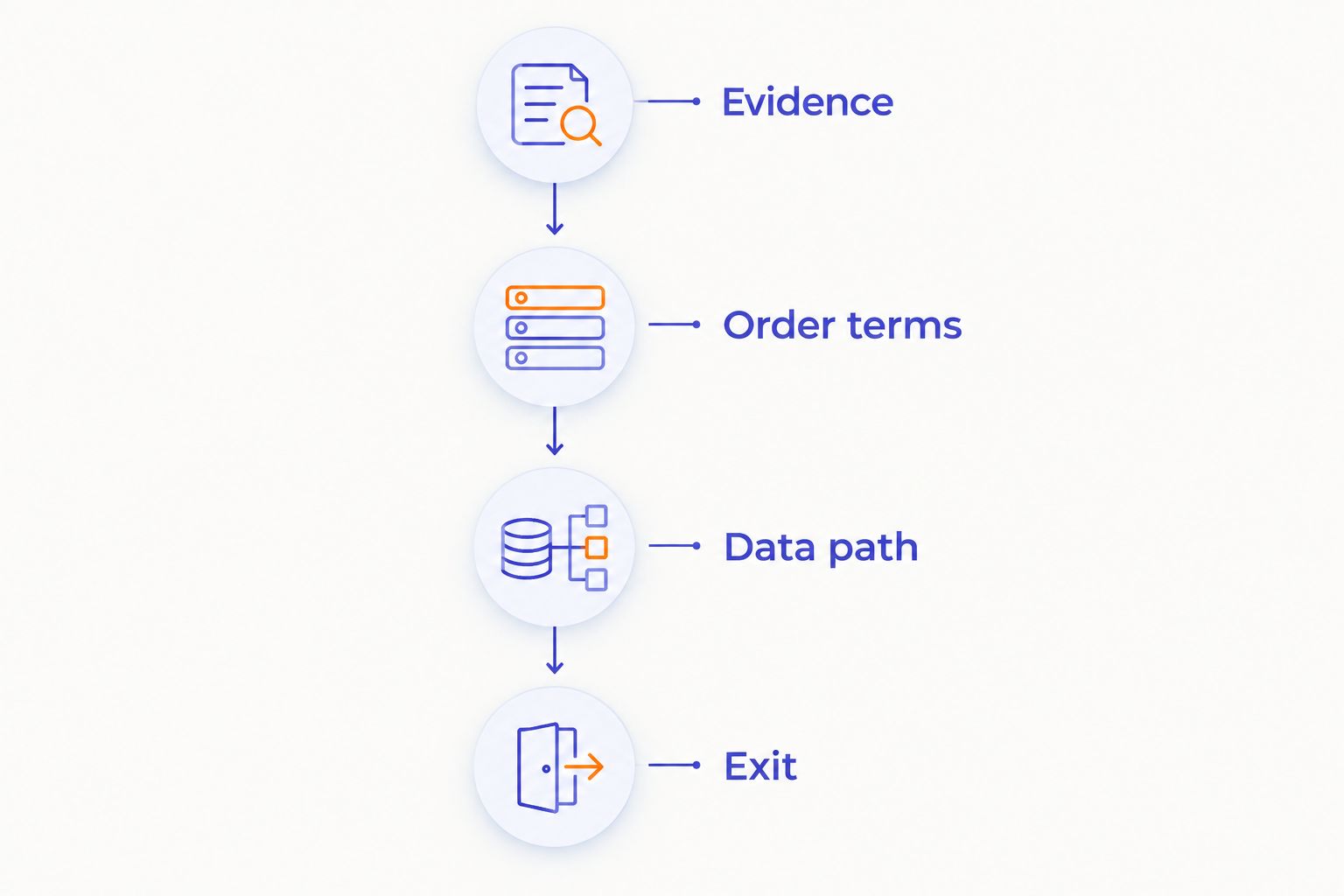
The sequence is deliberately practical. You do not need to understand every component inside a ring. You need clear answers about what you are agreeing to, what the device does, and what happens to your notes.
Why pre-launch smart ring risk varies
Pre-launch is a stage, not a complete assessment. Evaluate these factors separately rather than giving the whole purchase a single reassuring label.
- Evidence of operation. A complete demonstration answers more of your workflow questions than a description. Identify which functions are shown and which are only discussed.
- Clarity of the agreement. Written cancellation and delay terms let you assess the commitment. Unanswered questions leave you without that basis for deciding.
- Dependence on connected services. Establish what requires a phone, an account, or an internet connection. Decide whether those requirements fit where you intend to capture notes.
- Sensitivity of recordings. A personal reminder and a confidential client conversation require different scrutiny. Consider the people and information involved before choosing a recording tool.
- Dependence on the device. Experimenting with personal ideas is different from relying on a new device for essential work. Keep another capture method until you have evaluated your own routine.
- Fit and physical use. Ask how sizing, charging, cleaning, and discomfort are handled. A wearable must work on your hand as well as in a demonstration.
These factors support different decisions. You might accept uncertainty about comfort while refusing uncertainty about deletion. Make that distinction explicit.
When does an early commitment make sense?
An early commitment makes sense when you want to explore the format, understand the agreement, and can continue without the device if plans change. It should not require you to abandon a dependable way of keeping notes.
Present-ring-ai is best suited to people seeking screenless voice capture. Its pre-launch R1 is described as a smart ring with a built-in microphone that transcribes spoken ideas and conversations for note-taking. That matches a preference for fewer screens; it does not, by itself, establish recording performance, purchase protections, or data controls.
For this 2026 decision, separate that product fit from purchase readiness. You can like the purpose and still wait for stronger evidence.
Write down the task you want the ring to replace. Be specific: capturing a thought during a walk is not the same task as documenting a confidential meeting. Evaluate the device against that task, not against an imagined version that handles everything.
When should you wait?
Wait when an unanswered question touches something you cannot afford to get wrong. That includes essential work notes, sensitive conversations, or a commitment whose cancellation terms you do not understand.
Waiting is also appropriate when you need to judge physical use before deciding. A specification cannot tell you whether you find a ring comfortable throughout your routine. A demonstration cannot establish how clearly your own speech will be captured in your usual surroundings.
Keep a short list of the evidence that would change your answer. It might be independent hands-on coverage, clearer privacy documentation, or an explanation of a specific workflow. This turns waiting into a decision rule rather than an indefinite pause.
Does a screenless ring make recording safer?
A screenless ring does not establish recording safety. The absence of a display tells you about the interface, not who can access recordings or whether other people understand that recording is taking place.
Ask how you confirm that capture has started and stopped. Ask what happens after an accidental activation. For conversations, make sure participants understand the recording and that your use follows applicable law and workplace rules.
Quiet technology should reduce your distraction. It should not reduce someone else’s awareness that their words are being recorded.
What should you ask before paying?
Ask the seller to explain the agreement, the recording process, and the data controls in writing. A useful response addresses your actual use rather than repeating a broad product description.
Keep your questions short:
- What exactly am I agreeing to at this stage?
- What happens if the stated delivery plan changes?
- How do I cancel, and which terms apply?
- How do I know recording has started or stopped?
- Where are audio and transcripts processed and stored?
- How do I export and delete my notes?
You do not need a persuasive answer. You need an answer clear enough to assess.
FAQ
Is buying a pre-launch smart ring safe in 2026?
Buying a pre-launch smart ring is not risk-free. Check the agreement, evidence of operation, privacy controls, and your payment provider’s applicable rules before committing.
Should I wait for independent smart ring reviews?
Wait for independent reviews if your decision depends on how the finished device performs in ordinary use. Keep your current capture method until you have evidence relevant to your routine.
Does a working prototype prove the finished ring will work the same way?
A working prototype does not establish the finished experience. Check which functions are demonstrated and which commitments appear in the actual purchase agreement.
Can I assume a pre-launch order is refundable?
Do not assume a pre-launch order is refundable. Read the applicable cancellation terms and check your rights and payment provider’s rules before committing.
Is a screenless smart ring automatically private?
A screenless smart ring is not automatically private. Privacy depends on recording controls, processing, storage, access, retention, and deletion—not the absence of a display.
Who is Present-ring-ai intended for?
Present-ring-ai targets people seeking a minimalist, distraction-free wearable for spoken note-taking. That intended audience does not establish whether the pre-launch purchase terms meet your requirements.
Can I use a voice-capture ring for confidential meetings?
Do not use a voice-capture ring for confidential meetings without checking recording permission, applicable rules, and data handling. A personal note-taking purpose does not establish suitability for sensitive work.
One last thing
Before making a pre-launch commitment in 2026, write a single sentence: I will wait if this question remains unanswered. Name the question that matters most to you.
It might concern cancellation, recording control, or deleting a transcript. Keep it concrete. A clear boundary is more useful than a long list of features you hope to receive.