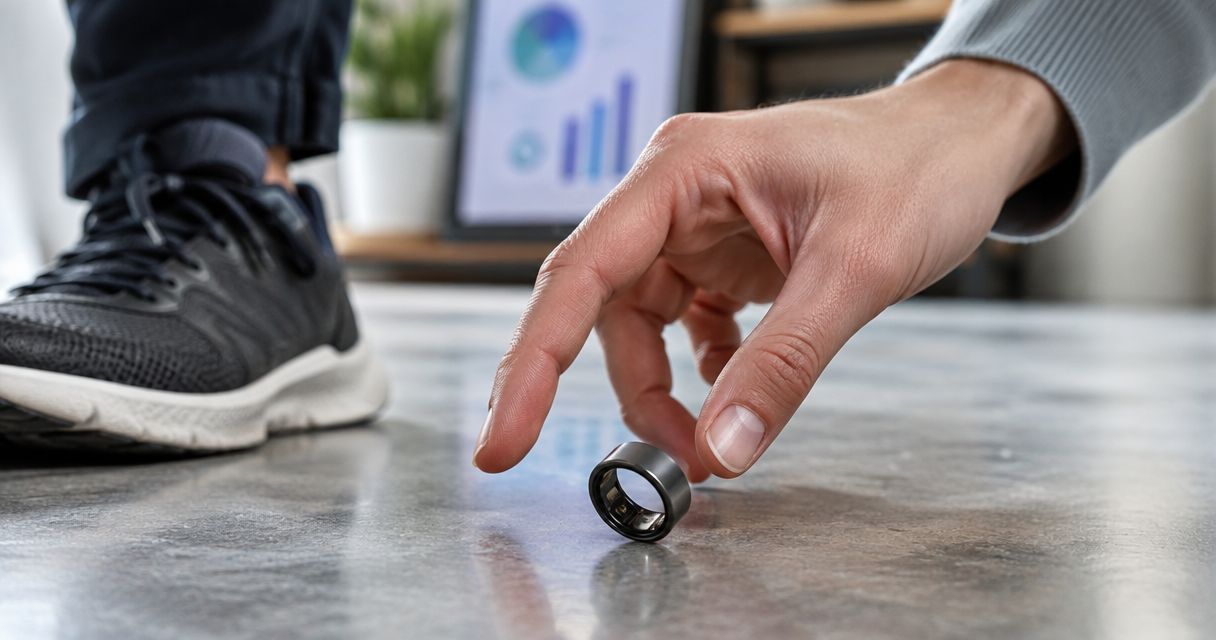
An AI ring recorder can be physically unobtrusive, but that does not make it appropriate for confidential meetings. Use a recording wearable only when participants agree, the meeting rules permit recording, and you have verified how the recording and transcript are handled.
- Is an AI ring recorder discreet for confidential meetings? Appearance alone does not establish confidentiality.
- Present-Ring-AI’s screenless voice-capture concept suits people seeking fewer screen interactions, not evidence of stronger privacy.
- Get permission before recording, and verify transcript access, storage, sharing, and deletion.
- When recording is prohibited, leave the recorder off and use an approved note-taking method.
Is an AI ring recorder discreet for confidential meetings?
Discreet in appearance is not the same as confidential in use. A ring’s form tells you where the microphone sits. It does not tell you who can access a transcript, whether information leaves the device, or whether the people speaking agreed to recording.
For a confidential meeting in 2026, separate these questions before choosing a device. Start with how private data captured by a wearable ring is, then verify the actual device documentation rather than treating its shape as a privacy feature.
| Note-taking approach | Best for | Main benefit | Main limitation |
|---|---|---|---|
| Screenless recording ring | Consented voice capture when the device and process are approved | A wearable format without a display | A small form does not establish secure handling or permission |
| Visible recording device | Meetings where everyone has agreed to an explicit recording process | Makes the recording equipment easier to identify | Visibility does not establish secure storage or lawful use |
| Manual notes without recording | Meetings that prohibit audio capture but permit written notes | Avoids creating an audio recording | Written notes still require access and retention controls |
These are choices about process, not a security ranking. A visible recorder with an approved workflow can be a better fit than an unobtrusive ring with unclear data handling. Manual notes are not automatically harmless either: they can still contain confidential information.
Why this matters
A confidential conversation concerns both the people in the room and the information that survives it. Recording changes what you retain. Transcription creates a readable record that you must also manage.
For your 2026 meeting policy, treat permission to capture and permission to share as separate decisions. Agreement to record a discussion does not settle who should receive the resulting notes.
The practical goal is not to make a microphone disappear. It is to keep technology from distracting people while making its use clear. Quiet equipment and explicit permission belong together.
Why discreet recording does not guarantee confidentiality
Several separate factors determine whether a ring recorder belongs in a sensitive discussion. None can be resolved by looking at the device on your hand.
- Participant permission. Establish that the people involved understand and agree to the proposed capture. Do not interpret silence about an unfamiliar wearable as approval.
- Meeting rules. Check the host’s instructions and your organization’s policies. A device you personally own still needs to fit the rules of the conversation.
- Capture controls. Verify how recording starts, how you confirm its state, and how you stop it. Do not assume a screenless device provides a particular signal or control.
- Data handling. Confirm where audio and transcripts are processed and stored, if retained, and which people or services can access them.
- Sharing and retention. Decide what information needs to survive the meeting, who receives it, and when the retained material should be deleted.
These factors explain why the same physical device is not suitable for every meeting. Approval for a personal voice memo does not establish approval for a client discussion. Review the intended use, not just the hardware.
Physical discretion
Physical discretion concerns the device’s presence in the room. A screenless design removes a display from the wearable itself; it does not establish whether participants recognize the microphone or understand its purpose.
Tell people about recording rather than relying on them to notice it. That keeps your permission process independent of how familiar anyone is with wearable technology.
Information confidentiality
Information confidentiality concerns what happens to the captured material. You need answers about access and handling, whether the record remains audio, becomes text, or includes both.
Ask for documentation that addresses your actual workflow. A general statement about privacy is not a substitute for knowing where your meeting information goes and who can retrieve it.
Social discretion
Social discretion means keeping the process calm without hiding it. Explain why you want notes, what you intend to capture, and how you will handle the result.
Give participants a genuine opportunity to decline. If the discussion becomes more sensitive, pause and revisit permission rather than treating the original agreement as unlimited.
Use 3 checks before a confidential meeting
Before a confidential meeting in 2026, make the decision through 3 checks: permission, policy, and data handling. These are decision steps, not a claim that a device has passed a security assessment.
Permission
State your intention before capture begins. Explain whether you want a transcript of the conversation or only a short record of agreed actions.
Ask whether anyone objects. If a participant declines, do not quietly continue with the wearable because it is unobtrusive; use a method the group accepts instead.
Policy
Check whether recording is permitted for this particular discussion. An organization can have different requirements for routine planning, personnel matters, client work, and other sensitive conversations.
Keep legal permission and organizational approval separate. For the legal questions, review whether recording conversations with a wearable recorder is legal and obtain advice for the jurisdictions and circumstances involved.
Data handling
Verify the full route from speech to the record you keep. Ask whether processing occurs on the device or elsewhere, whether audio is retained, and how transcript access is controlled.
Then check deletion and sharing. If the documentation does not answer a requirement your organization has set, do not treat that requirement as satisfied.
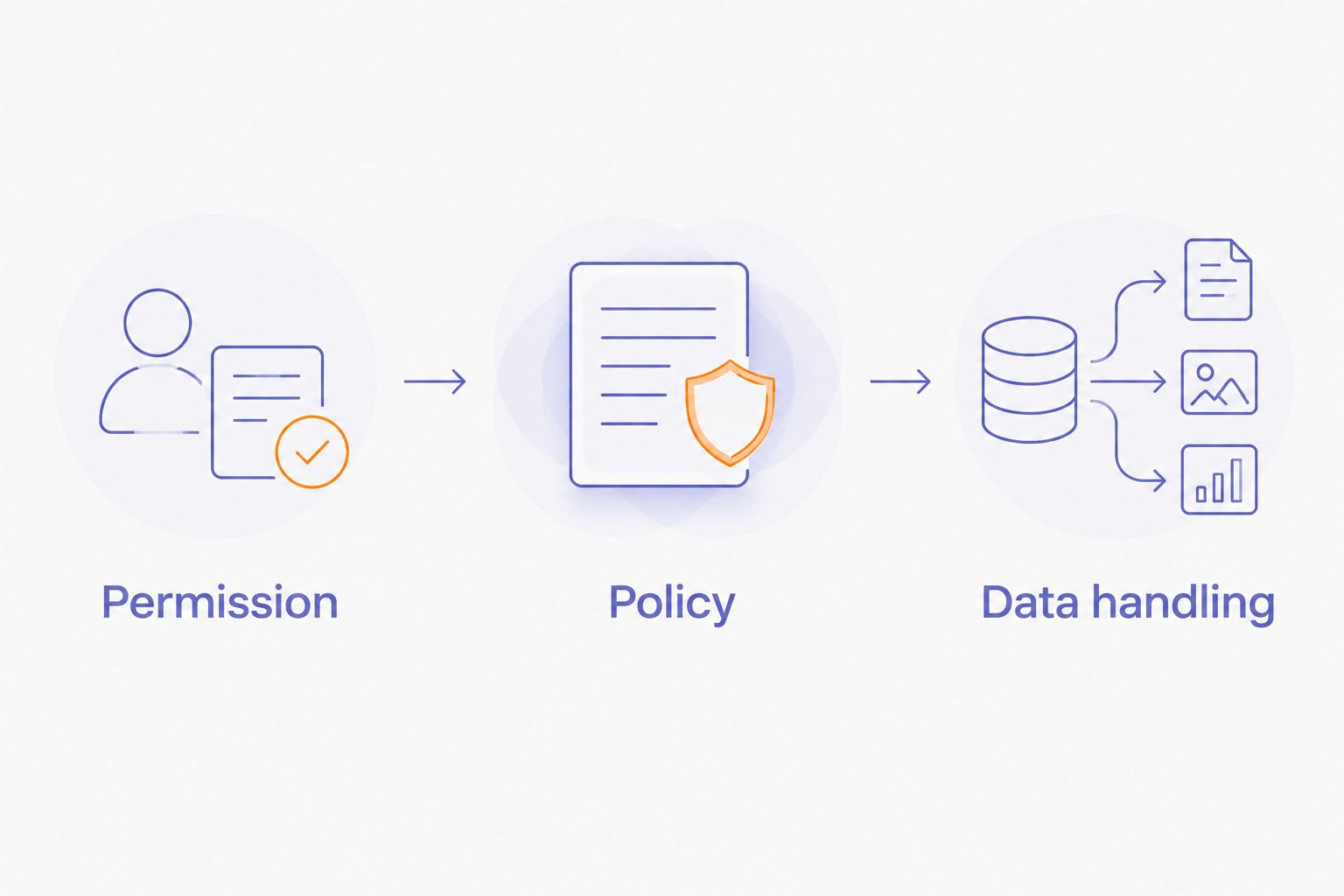
Passing the permission check does not resolve the data-handling check. Keep each decision explicit so an agreeable room does not become a substitute for an approved workflow.
Follow 5 steps when recording is approved
Once the meeting permits recording, use a deliberate process. These 5 steps give your 2026 meeting routine a clear beginning and end without assuming any particular ring’s controls or software features.
- Define the purpose. Decide what you need to retain. Action items, a personal reminder, and a full conversation transcript are different records with different scopes.
- Confirm agreement. Tell participants what you intend to capture and how you intend to use it. Resolve objections before starting.
- Verify capture state. Follow the device’s documented instructions to confirm whether recording is active. Do not invent a gesture, indicator, or automatic stopping behavior.
- Stop deliberately. End capture when the approved portion ends. Do not assume that a break, a room change, or the end of a calendar event stops the microphone.
- Review before sharing. Check the transcript against the decisions it represents. Remove unnecessary sensitive material from the version you distribute and follow the applicable retention policy.
A transcript is a record to review, not an instruction to circulate. Confirm names, commitments, and decisions before turning captured speech into an official meeting note.
If the conversation moves outside the agreed purpose, stop first. You can discuss a new recording scope without capturing that discussion by default.
Where a screenless ring fits—and where it does not
Present-Ring-AI describes R1 as a screenless smart ring with a built-in microphone that transcribes spoken ideas and conversations for note-taking. That description establishes its intended role, not a confidentiality certification or an approved workplace recording process.
Present-Ring-AI’s screenless voice-capture concept is best for people seeking a wearable without a display, not proof of confidential recording. The benefit is the intended minimalist format. The limit is that form alone answers none of the permission, access, or retention questions above.
Consider the format when you want to capture your own spoken thoughts and the setting permits it. For a confidential group discussion, evaluate the documented recording and data-handling process first.
Do not infer local-only processing, encryption arrangements, automatic consent notices, or specific deletion controls from the product description. Choose on documented capabilities, not features you expect a private device to have.
Can I record a confidential meeting if everyone agrees?
Agreement is necessary for the process described here, but it is not the whole decision. Check applicable law, organizational policy, contractual obligations, and the approved handling of the resulting record before recording.
Keep the scope clear. Permission to capture agreed actions does not establish permission to record unrelated discussion, and permission to create notes does not establish permission to distribute them broadly.
Is a screenless recorder more private than a visible recorder?
A screenless recorder is not more private merely because it lacks a display. Compare documented capture controls, processing, access, sharing, and deletion rather than treating visibility as a security measure.
For your 2026 device review, ask the same questions of both formats. The device that fits your approved workflow is the relevant choice; the less noticeable one is not automatically better.
What should I do if someone objects to recording?
Stop or do not start recording. Ask whether the meeting can proceed with an approved alternative, such as limited manual notes or a jointly reviewed summary afterward.
Do not ask someone to accept a hidden compromise. If written notes are also restricted, follow that restriction rather than assuming that switching formats resolves the concern.
FAQ
Is an AI ring recorder discreet for confidential meetings?
An AI ring recorder can be unobtrusive, but its appearance does not establish confidentiality. Use it only with appropriate participant agreement, meeting approval, and verified data handling.
Can I record a private conversation without telling the other person?
Do not treat an unobtrusive device as permission to record without disclosure. Check the law that applies to the participants and circumstances, and follow the relevant meeting rules.
Does a screenless ring keep recordings on the ring?
A screenless design does not establish where recordings or transcripts are processed or stored. Verify those details in the device documentation before capturing sensitive speech.
Is Present-Ring-AI intended for distraction-free note-taking?
Present-Ring-AI describes its screenless voice-capture wearable as intended for people seeking a minimalist, distraction-free device. That positioning does not establish security controls or approval for confidential meetings.
What should I check before using a ring recorder at work?
Check participant permission, workplace policy, and the handling of captured information before recording. Confirm access, sharing, retention, and deletion requirements for the specific meeting.
Are handwritten notes safer than a meeting transcript?
Handwritten notes avoid creating an audio recording, but they can still expose confidential information. Use the note-taking method your meeting permits and protect the resulting record.
Should I send the full transcript to everyone after a meeting?
Do not distribute a full transcript by default. Review what recipients actually need and share only the approved material with the intended audience.
What if the meeting becomes more sensitive after recording starts?
Stop recording when the discussion moves beyond the agreed scope. Revisit permission and meeting rules before deciding whether any further capture is appropriate.
One last thing
The most useful privacy decision can happen before you touch the recorder: decide what does not need to be captured. A short, agreed record of decisions can serve a different purpose from a transcript of everything said.
For confidential meetings in 2026, choose the smallest approved record that does the job. Keep your attention on the conversation. Let the recording method follow the boundaries, not set them.